
← All festivals

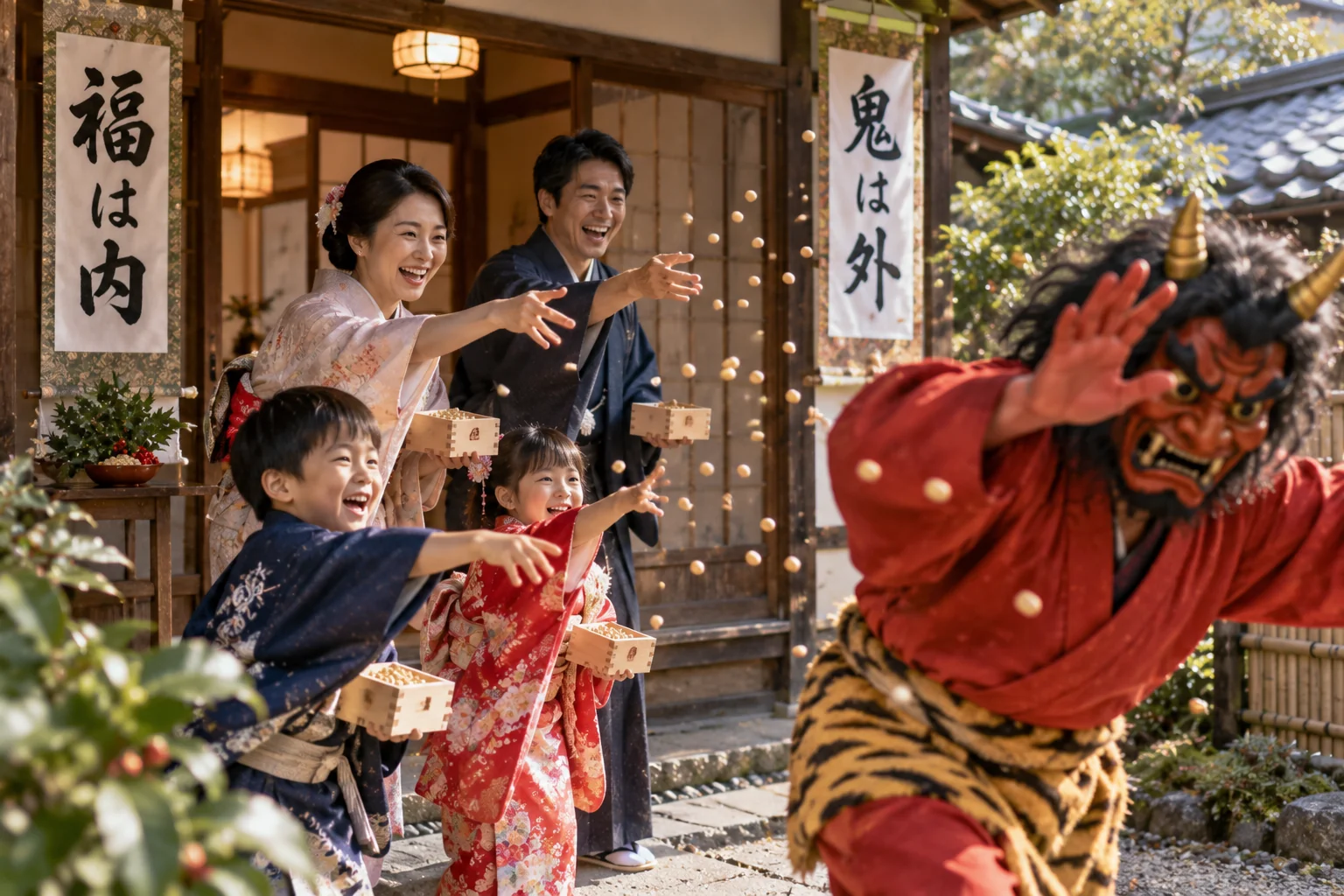
The eve of spring in the old Japanese reckoning. Roasted soybeans are thrown out of the door with the shout that demons go out and fortune comes in, and one bean is eaten for each year of age.

When it falls

3 February, the eve of the first day of spring in the old Japanese reckoning. It shifts to the 2nd or 4th in some years, because it tracks the solar term rather than the date.

The Phala almanac gives the exact day for your own city; the lunar and solar rules above are what it computes from.

The story

Setsubun means the division between seasons, and this one, winter into spring, was the one that mattered — the old year ending. The turn was held to be when demons get through.

So they are thrown out. Roasted soybeans are cast at the door and out of the window with the shout oni wa soto, fuku wa uchi: demons out, fortune in.

How the day is kept

  • Mamemaki at home, usually by the father of the house wearing a demon mask while the children throw beans at him.
  • One bean is eaten for each year of age, and one more for the year to come.
  • Ehomaki, a thick uncut sushi roll, is eaten in silence facing the year's lucky direction; the custom is Osakan and spread nationally through convenience stores.
  • Temples and shrines hold public throwings, with sumo wrestlers and actors casting beans and small gifts into the crowd.

More spring and the seasons

The Phala almanac shows this day where it falls for your own city — sunrise, tithi and all five limbs, anywhere on earth. See how the almanac works →