
← All festivals

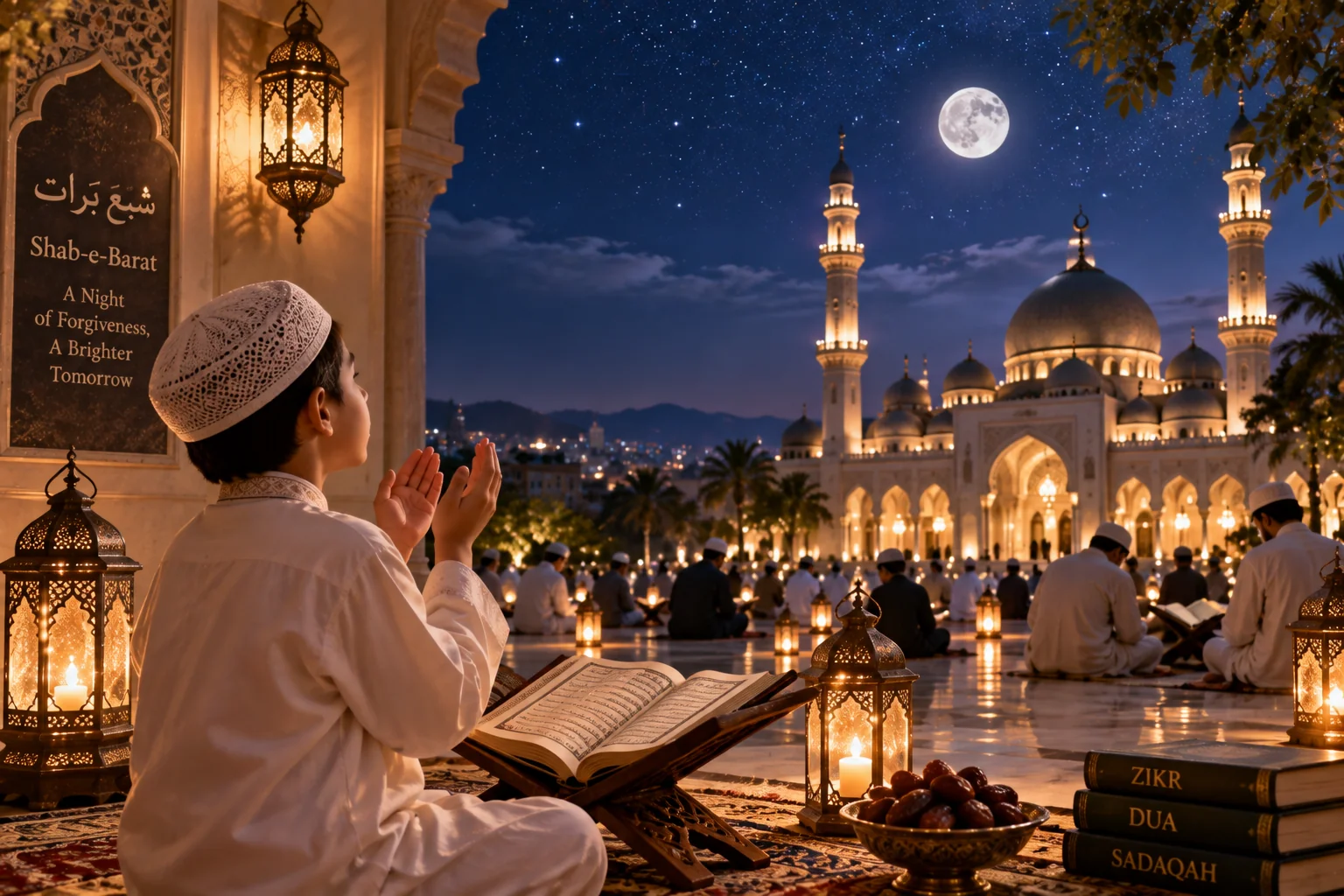
The night of the fifteenth of Shaʿbān, kept across South Asia and Turkey as a night of prayer and of asking pardon. Graves are visited, and in many houses the night is spent awake.

When it falls

The night of the fifteenth of Shaʿbān, the month before Ramaḍān. The Islamic calendar is lunar and shifts about eleven days earlier each Gregorian year.

The Phala almanac gives the exact day for your own city; the lunar and solar rules above are what it computes from.

The story

Barāʾah means release or acquittal. The night is held in much of the Muslim world to be one on which the coming year is written and pardon is given to those who ask for it.

It falls a fortnight before Ramaḍān and is treated as the preparation for it: a night of asking, so that the month of fasting begins with a clear account.

As with Mawlid, whether to mark the night is disputed. It is kept widely across South Asia, Turkey, Central Asia and Indonesia, and is not observed in Salafi practice.

How the day is kept

  • The night is spent in prayer, often at the mosque, often until dawn.
  • Graves are visited and cleaned, and prayers are said for the dead by name.
  • Sweets are cooked and shared with neighbours — halwa and bread in the subcontinent, and given away as much as eaten.
  • Many keep a voluntary fast on the following day.

More holy days

The Phala almanac shows this day where it falls for your own city — sunrise, tithi and all five limbs, anywhere on earth. See how the almanac works →