
← All festivalsShichi-Go-San

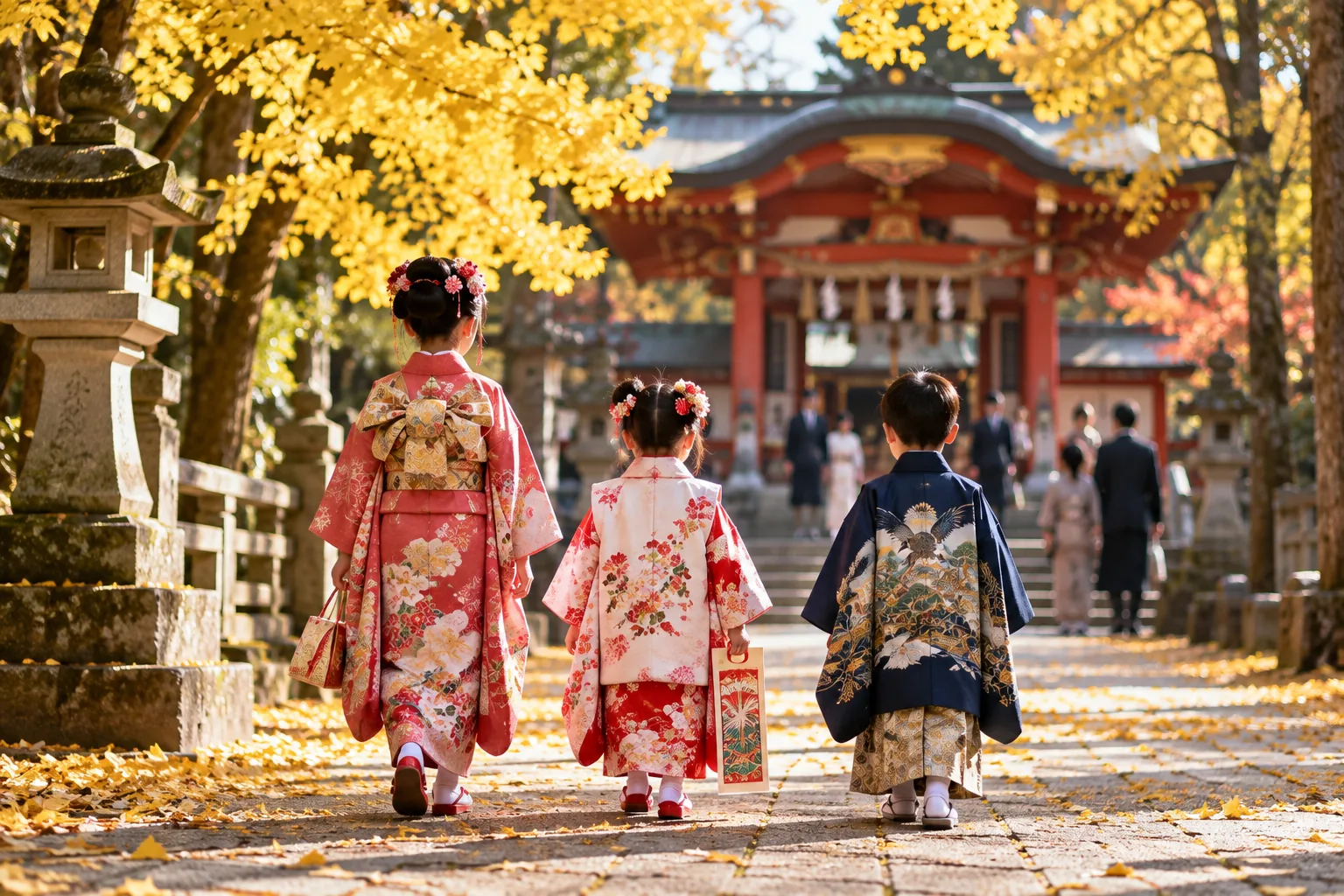
15 November, when girls of three and seven and boys of five are dressed in kimono and taken to a shrine to give thanks for their growth. Chitose-ame, the thousand-year candy in its long bag, is bought for them on the way out.

When it falls

15 November, or the nearest weekend on either side of it, since it is not a public holiday and the shrines are open all month.

The Phala almanac gives the exact day for your own city; the lunar and solar rules above are what it computes from.

The story

The three ages come from three separate Heian court rites: at three a child's hair was allowed to grow, at five a boy first wore hakama, at seven a girl first tied an obi instead of cords. Edo-period commoners folded them into one shrine visit.

The day is a thanksgiving for a child having reached the age at all. The rites were kept when most children did not, and the odd ages were chosen because odd numbers are lucky.

How the day is kept

  • Girls of three and seven and boys of five (and often three) are dressed in kimono or hakama and taken to the local shrine for a blessing, and the family photograph is taken.
  • Chitose-ame, the thousand-year candy, a long red-and-white stick in a bag printed with a crane and a tortoise, bought at the shrine for the child to carry home.
  • A meal out afterwards with grandparents, which for many families is the point of the day.

More family bonds

The Phala almanac shows this day where it falls for your own city — sunrise, tithi and all five limbs, anywhere on earth. See how the almanac works →