← All festivalsTu BiShvat

The new year of the trees: fruit of the land is eaten and saplings are planted.

When it falls

The fifteenth of Shevat, in late January or February. The Mishnah lists it as the new year of the trees, the date from which a tree's age was counted for the tithe.

The Phala almanac gives the exact day for your own city; the lunar and solar rules above are what it computes from.

The story

It began as a date in the tax code: fruit that set before this day belonged to the old year's tithe, fruit after it to the new. In the land of Israel the almond flowers in this week, the first tree to bloom, and the sap is held to rise in the trees from now.

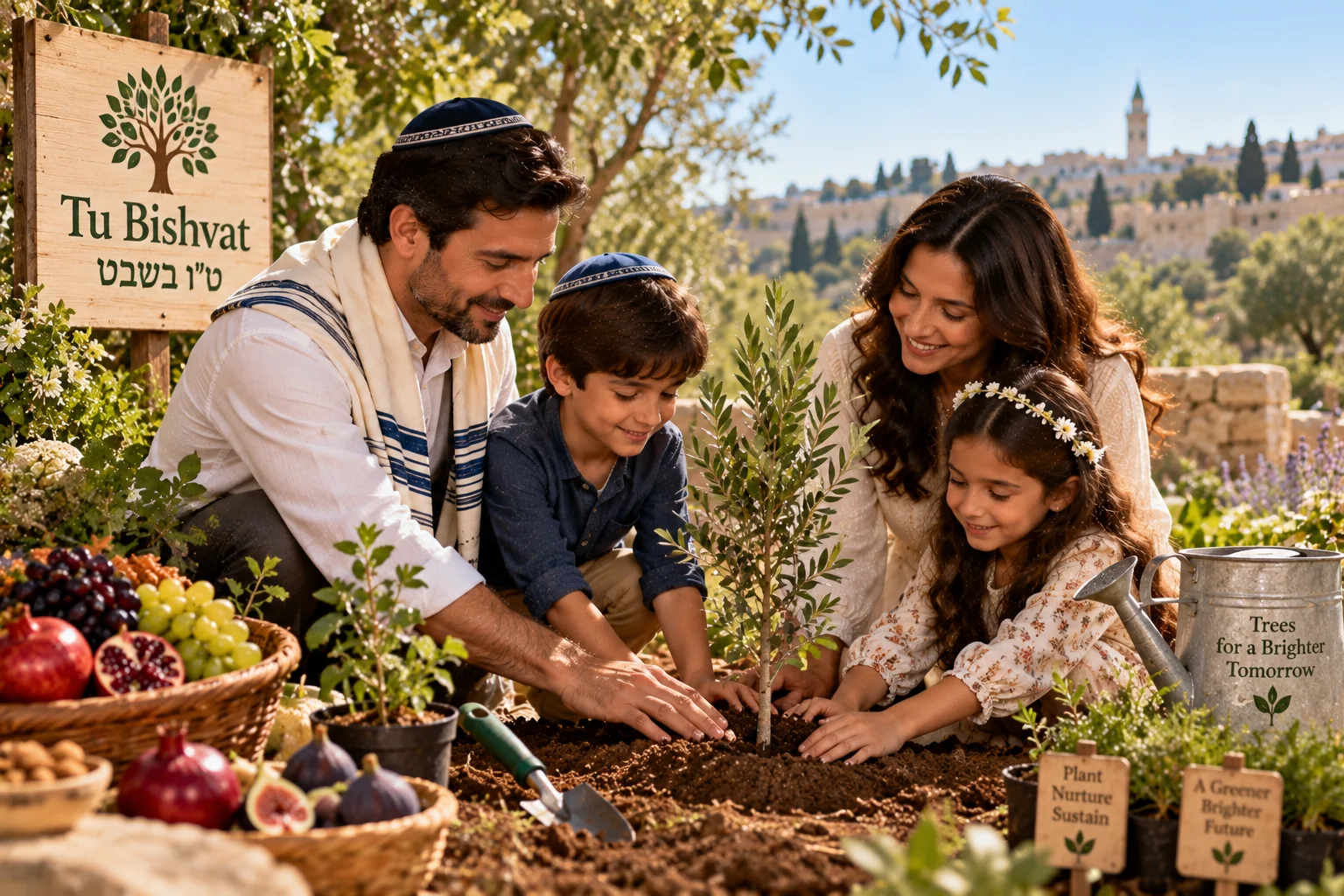
The kabbalists of Safed in the sixteenth century made it a festival, with a seder of fruit and four cups of wine from white to red for the seasons. Modern Israel made it the day of planting: schoolchildren plant saplings, and the Jewish National Fund's forests were planted by the day's collection boxes in every diaspora school.

How the day is kept

  • The fruits of the land of Israel eaten, the seven species first, with a new fruit of the year for the blessing.
  • A Tu BiShvat seder in synagogues and homes, fruits in courses with readings on the trees and the land.
  • Tree planting in Israel, and increasingly an environmental day for Jewish communities elsewhere.

At the table

Dried figs, dates, almonds, carob (bokser), raisins and pomegranates, and the etrog jam kept from Sukkot.

Watch

Videos from YouTube, each credited to its channel. Tap one to play it here, or open it on YouTube.

The story
The Tu BiShvat seder, for childrenThe fruits, the four cups and the new year of the trees, explained for children.Courtesy of Shaboom! · Watch on YouTube
Celebrations
Eight facts about Tu BiShvatWhat the new year of the trees is, where it came from, and how Israel plants on it.Courtesy of Tamar Meisels · Watch on YouTube

More spring and the seasons

The Phala almanac shows this day where it falls for your own city — sunrise, tithi and all five limbs, anywhere on earth. See how the almanac works →