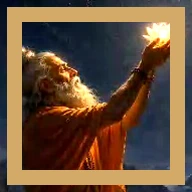
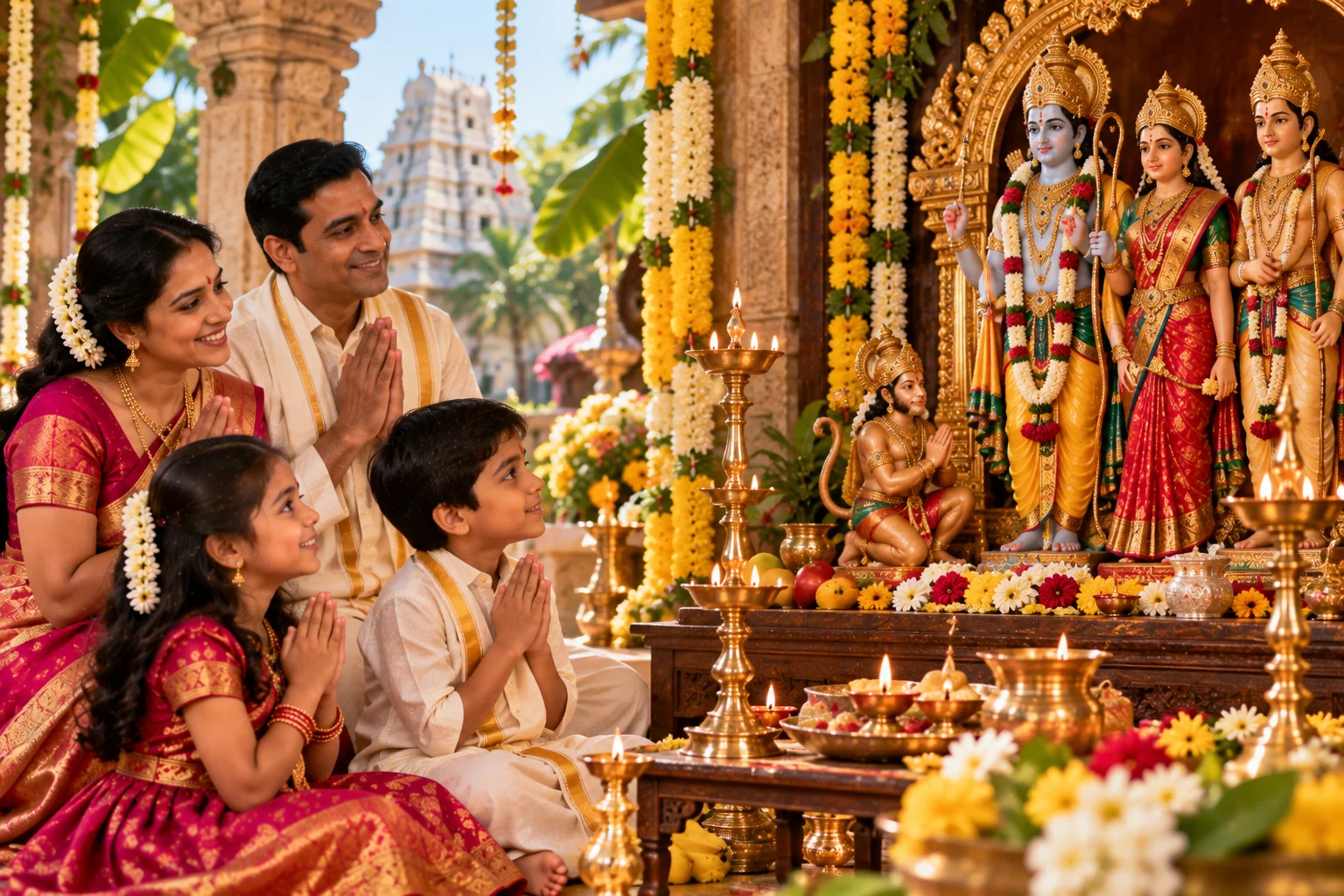
Rāma's birthday, the ninth day of Caitra. His birth star is Punarvasu (meaning 'the return of light'), and readings of the Rāmāyaṇa fill the day.
How Vedic Phala finds the date
Rāma Navamī is Caitra śukla navamī, the ninth tithi of the bright fortnight. Vedic Phala derives Caitra and navamī from the local pañcāṅga at sunrise. The birth worship is associated with midday, so traditional calendars may examine whether navamī covers the madhyāhna interval as well as which tithi is present in the morning. This can produce an apparent one-day difference near a boundary without either calendar using a fixed Gregorian rule.
Ayodhyā centres the day on Rāma’s birth and the Sarayū bath, while Bhadrachalam is known for the ceremonial wedding of Rāma and Sītā. Many homes complete a Rāmāyaṇa reading begun earlier in the Caitra Navarātri. These practices share the same lunar ninth but occupy different parts of the day. The app marks the local date and leaves the detailed temple muhūrta to the institution conducting the rite.
Rāma’s Punarvasu birth star is part of the traditional account, but the annual festival is ordinarily scheduled by navamī rather than waiting for an exact repetition of every natal factor. That distinction matters when comparing a nakṣatra-focused temple notice with a general holiday calendar.
The nine-day Caitra Navarātri frame is also important in many homes. Reading or singing the Rāmāyaṇa may begin on pratipadā and conclude with the birth celebration on navamī. In Ayodhyā the midday moment is central; at Bhadrachalam the public Sītā–Rāma wedding can dominate the programme. These are different liturgical emphases around the same lunar ninth.
A fast may be broken after the midday worship or according to a lineage’s rule. Because sunrise, madhyāhna and tithi end are all local, an exact observance schedule needs more than a date printed at the top of a page. The app provides the place-based day and leaves the vow’s completion to the local authority.
The story
Rāma was born at Ayodhyā to King Daśaratha and Queen Kausalyā after the king's sacrifice for a son, the eldest of four brothers, the Sun at its height in Meṣa and the Moon in Punarvasu (meaning 'the return of light'). He is the seventh descent (avatāra) of Viṣṇu.
The Rāmāyaṇa is his life: the exile of fourteen years, Sītā's abduction by Rāvaṇa, the bridge of stones to Laṅkā, the war, the return. The tradition holds him up as the man who kept every word he gave (maryādā puruṣottama, the best of men within the bounds), and the ideal king; Rāma-rājya still means a just state.
Ayodhyā's temple, opened in January 2024, keeps the day with a beam of sunlight directed onto the forehead of the child image at noon.