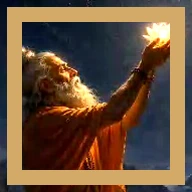
The sighted crescent opens Ramadan, the month of dawn-to-dusk fasting.
When it falls
The first day of Ramaḍān, the ninth month of the Islamic year, from the sighting of the crescent. The fast runs every day from dawn to sunset for twenty-nine or thirty days, ending at Eid al-Fitr.
The Phala almanac gives the exact day for your own city; the lunar and solar rules above are what it computes from.
How Vedic Phala finds the date
Ramadan begins when the new crescent establishes the first day of the ninth Hijri month. Vedic Phala places a predicted date through its Hijri calendar conversion, while the page keeps the observational caveat explicit. The astronomical new moon and a visible crescent are not the same event. The crescent must have enough separation and altitude to be seen after sunset, and cloud, latitude and the authority’s evidence rules can change the accepted start.
The religious day begins at sunset. Once the month is announced, the first tarāwīḥ prayers are that evening and the first fast runs from the following dawn to sunset. Suḥūr and ifṭār times are therefore local solar times, not one schedule for an entire country or a time copied from Mecca. The app’s festival marker indicates the month opening; daily prayer and fasting tables need the reader’s location.
Some communities accept verified sightings from a broad region, some require a national decision, and others use astronomical calculation. A responsible calendar can state which method it uses but cannot erase those differences. Readers should follow the mosque or body they ordinarily follow when the predicted date and an announcement diverge.
The same caution applies at the month’s end. Twenty-nine completed fasts lead to a search for the next crescent; if it is not accepted, Ramadan completes thirty days. Eid al-Fitr therefore has its own page and date decision rather than being produced by adding a fixed number of hours to the predicted opening.
The story
The Qurʾān was first revealed to the Prophet Muḥammad in this month, on the Night of Power (Laylat al-Qadr), held to be one of the odd nights of the last ten. Fasting in it is the fourth of the five pillars of Islam: from the first light until sunset nothing is eaten or drunk, and the month is for prayer, the Qurʾān read through, charity and the mastering of the self.
The fast is ended each evening at the call to the sunset prayer with dates and water, as the Prophet broke his; the meal is ifṭār, and the meal before dawn is suḥūr (sehrī in India). Because the month moves through the seasons, a Ramaḍān in June in the far north can mean a fast of nineteen hours.
Old Delhi around the Jāmaʿ Masjid, Hyderabad's streets of haleem, Lucknow's Aminabad and Mumbai's Mohammed Ali Road become food markets from sunset to sehrī every night of the month.