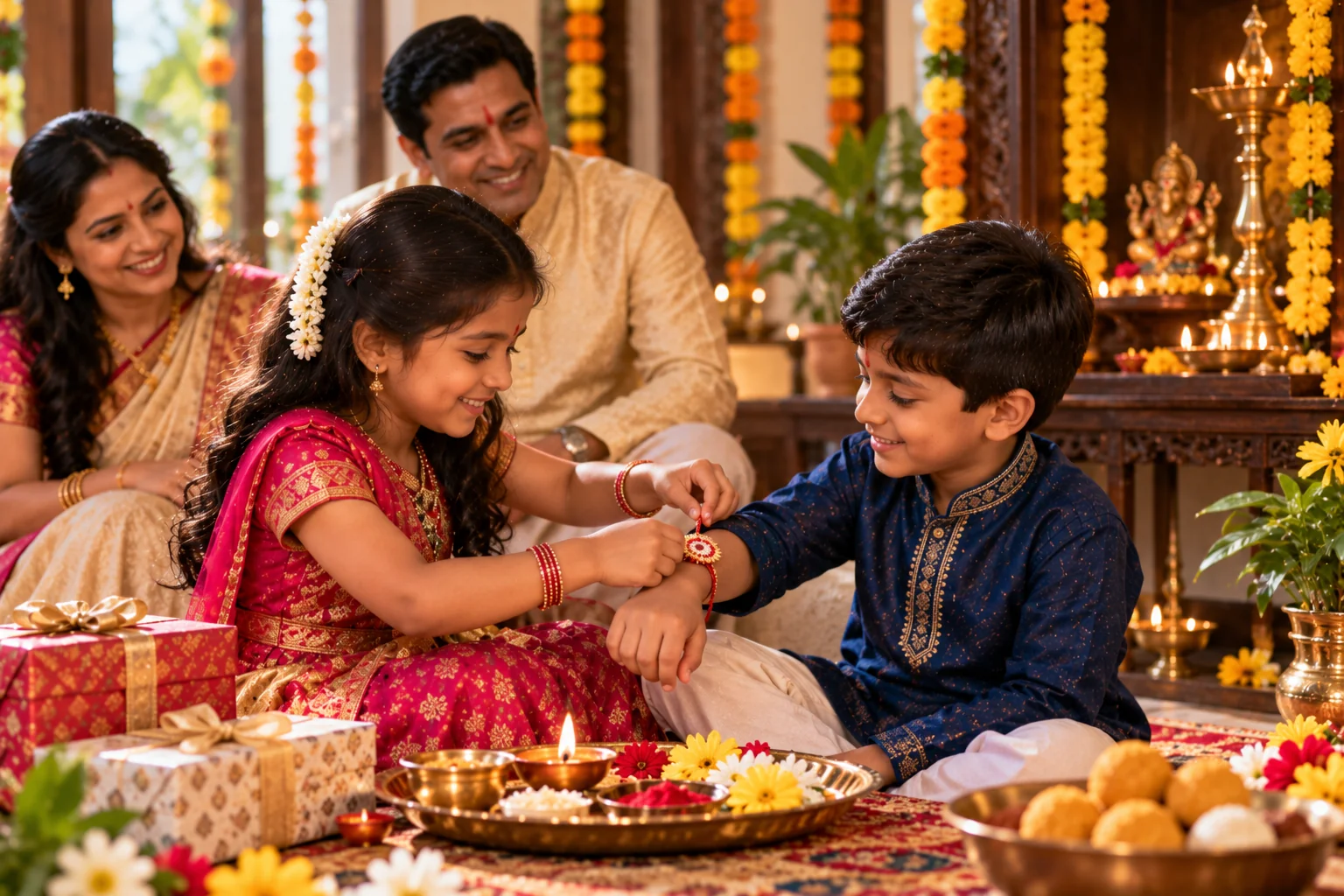
On the Śrāvaṇa full moon, sisters tie a rakhi (protection thread) on their brothers' wrists; brothers pledge protection in return.
How Vedic Phala finds the date
Rakṣā Bandhan is placed on Śrāvaṇa pūrṇimā, the full-moon tithi of the lunar month. Vedic Phala calculates the local tithi from the changing Sun–Moon angle and checks it at sunrise. Pūrṇimā can begin or end during a civil date, so the usable tying interval is not automatically the whole day. Traditional almanacs also avoid bhadrā, a karaṇa-related interval, for the principal rakhi rite. The app marks the full-moon date; a detailed local pañcāṅga supplies the hours.
The same full moon carries several observances. It is Upākarman for many Vedic schools, Nārālī Pūrṇimā on the Maharashtra coast and the close of Jhūlā festivities in some Vaiṣṇava communities. Calling all of these “Raksha Bandhan” would flatten different practices that happen to meet on one tithi. The site keeps the sibling bond at the centre of this page while acknowledging the shared calendar day. A family following a priest’s muhūrta should use that local interval even when a phone calendar and a printed calendar display the same civil date.
Month names may differ between amānta and pūrṇimānta systems, but the full-moon event itself does not. A date quoted for Delhi, London or California can shift at the boundary because sunrise and time zone differ. That is why the app asks for a place before presenting its almanac instead of treating the festival as a fixed August holiday.
The rakhi itself may be tied by a sister, cousin or another person accepted within the family bond, and public ceremonies sometimes extend the symbol to soldiers, neighbours or community leaders. Those social forms explain the festival’s reach, but they do not alter the Śrāvaṇa full-moon rule used to place it.
The story
A rakṣā is a protection and bandhana a tie. The oldest telling is Indra's: his wife Śacī tied a thread on his wrist before his battle with the demon Bali, and he won. Draupadī tore a strip from her sari to bind Kṛṣṇa's bleeding finger, and he counted it a debt; when she was stripped at the dicing hall he made her sari endless.
History adds Rānī Karṇāvatī of Chittor sending a rakhi to the emperor Humāyūn for help against Gujarat, and Rabindranath Tagore having Hindus and Muslims tie rakhis on one another against the partition of Bengal in 1905.
The same full moon is Nāraḷī Pūrṇimā on the Konkan coast, when fishermen offer a coconut to the sea before the boats go out again, and Avaṇi Aviṭṭam in the south, when the sacred thread is renewed.