← All festivalsBuddha's Birthday (East Asian)

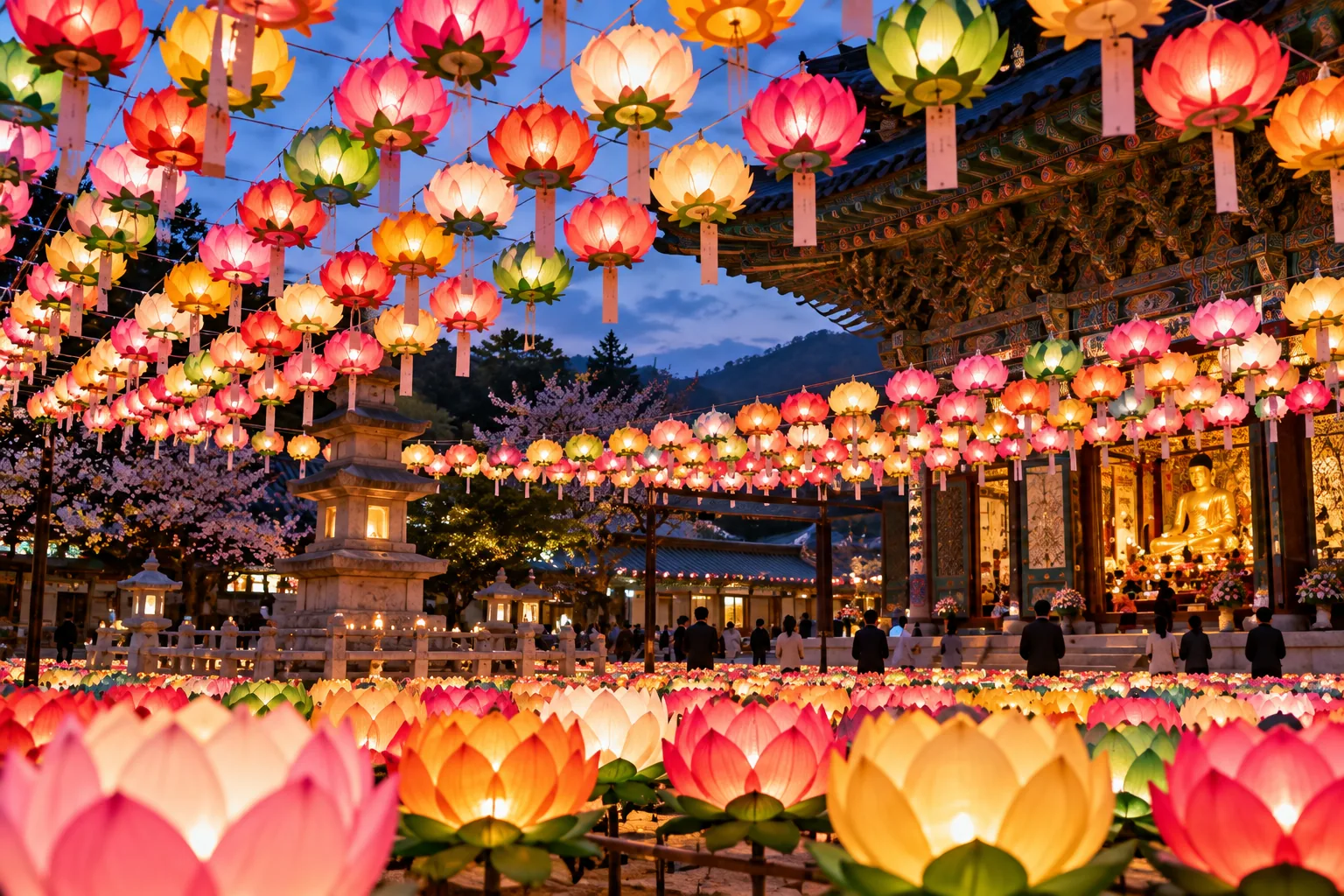
The eighth day of the fourth lunar month, the Buddha's birthday as East Asia keeps it — Seokga Tansinil in Korea, Fódàn in China, a public holiday in both. Temples hang lotus lanterns for weeks beforehand, and the small Buddha image is bathed with ladles of sweet tea.

When it falls

The eighth day of the fourth lunar month, in late April or May. A public holiday in Korea and in Hong Kong and Macau. Japan keeps the birth on 8 April of the Gregorian calendar as Hanamatsuri, and South and Southeast Asia keep it on the Vaiśākha full moon as Vesak.

The Phala almanac gives the exact day for your own city; the lunar and solar rules above are what it computes from.

The story

The Buddha was born in the Lumbinī grove as his mother Māyā reached for a branch of a sal tree, and the tradition says he took seven steps and sweet rain fell on him. The bathing of the small standing image with ladles of tea recalls that rain.

East Asia settled on the eighth of the fourth month early, in the Chinese calendar the region shared, and kept it there when the birth, the awakening and the passing were folded into one full moon further south.

In Korea the weeks before are the Yeon Deung Hoe, the lotus lantern festival, which was a state rite in the Goryeo period and is now on the UNESCO list.

How the day is kept

  • Lotus lanterns hung in rows from every temple courtyard in Korea for weeks beforehand, and a lantern parade through Seoul the weekend before.
  • The small Buddha image bathed with ladles of sweet tea, in Korea and China alike.
  • Free bibimbap and tea at temples for whoever comes; in Hong Kong, bun towers at Cheung Chau fall in the same week.
  • A day off in Korea, Hong Kong and Macau, and in Taiwan since 1999.

More birthdays of gods, saints and teachers

The Phala almanac shows this day where it falls for your own city — sunrise, tithi and all five limbs, anywhere on earth. See how the almanac works →