← All festivals

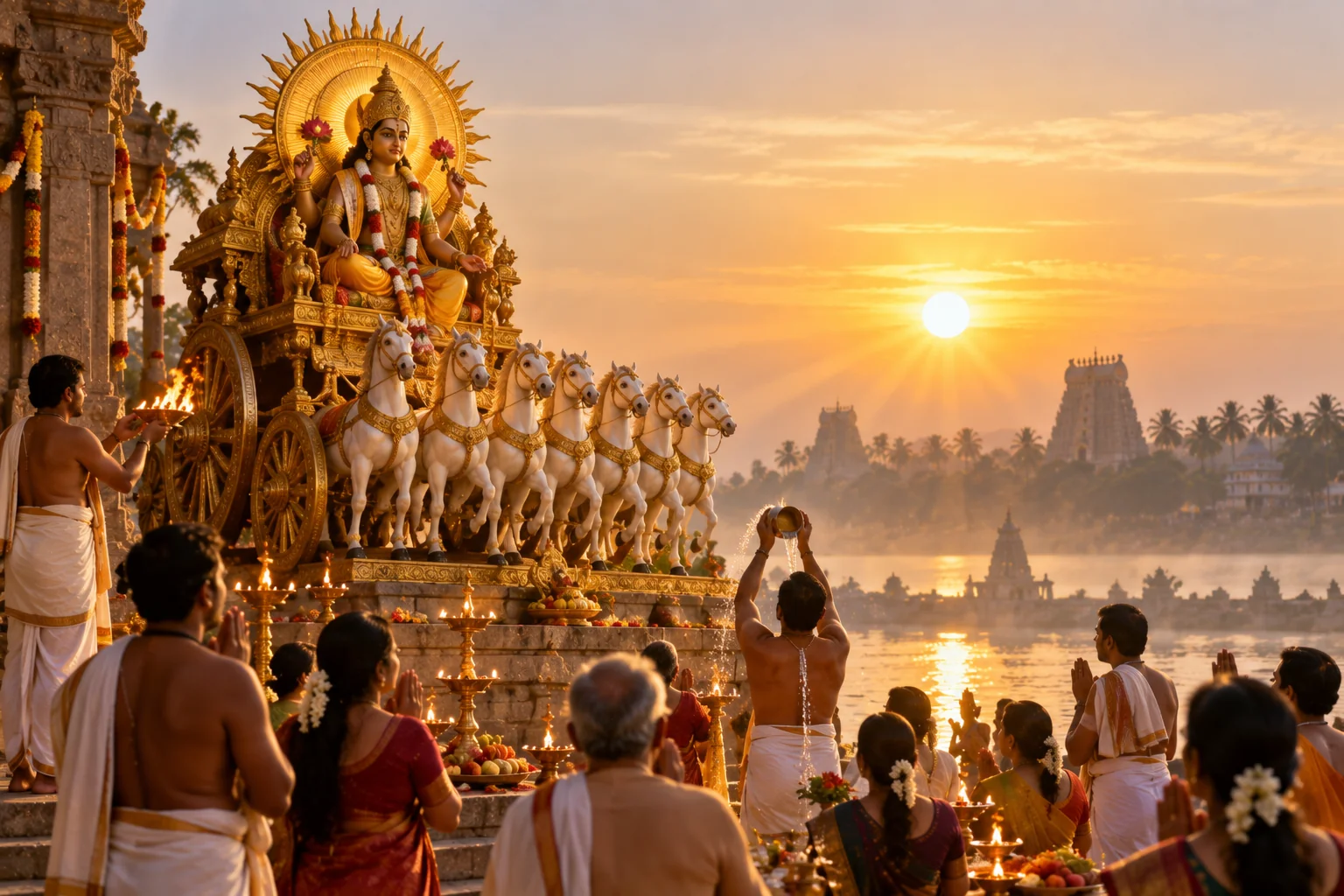
The Sun's own day, kept as the turn of his chariot toward the north. Bathers hold seven arka leaves on the head and shoulders at sunrise; at Tirumala the deity is carried out on seven different mounts between dawn and dusk.

When it falls

The seventh lunar day (saptamī) of the bright half of Māgha, in late January or February.

The Phala almanac gives the exact day for your own city; the lunar and solar rules above are what it computes from.

The story

The Sun's chariot has one wheel, seven horses and a driver with no legs, and today it turns toward the north. The seven horses are read as the seven colours, or the seven days of the week, or the seven metres of Vedic verse.

The day is kept as the Sun's own birthday and as the true beginning of the warm half of the year — Makara Saṅkrānti is the astronomical turn, Ratha Saptamī the ritual one.

It is also called Acalā Saptamī, the unmoving seventh, and a bath taken at sunrise today is held to count for many.

How the day is kept

  • A bath at first light with seven arka (calotropis) leaves held on the head, the shoulders, the knees and the feet, one for each horse.
  • A small rice pudding is cooked in the open on a new earthen stove and offered to the Sun as it rises.
  • At Tirumala the deity is carried out on seven different mounts between dawn and dusk, the one day of the year the whole set is seen.
  • Kolam or rangoli in the shape of a chariot is drawn at the door, and lamps set in it.

More solar turning points

The Phala almanac shows this day where it falls for your own city — sunrise, tithi and all five limbs, anywhere on earth. See how the almanac works →