← All festivals

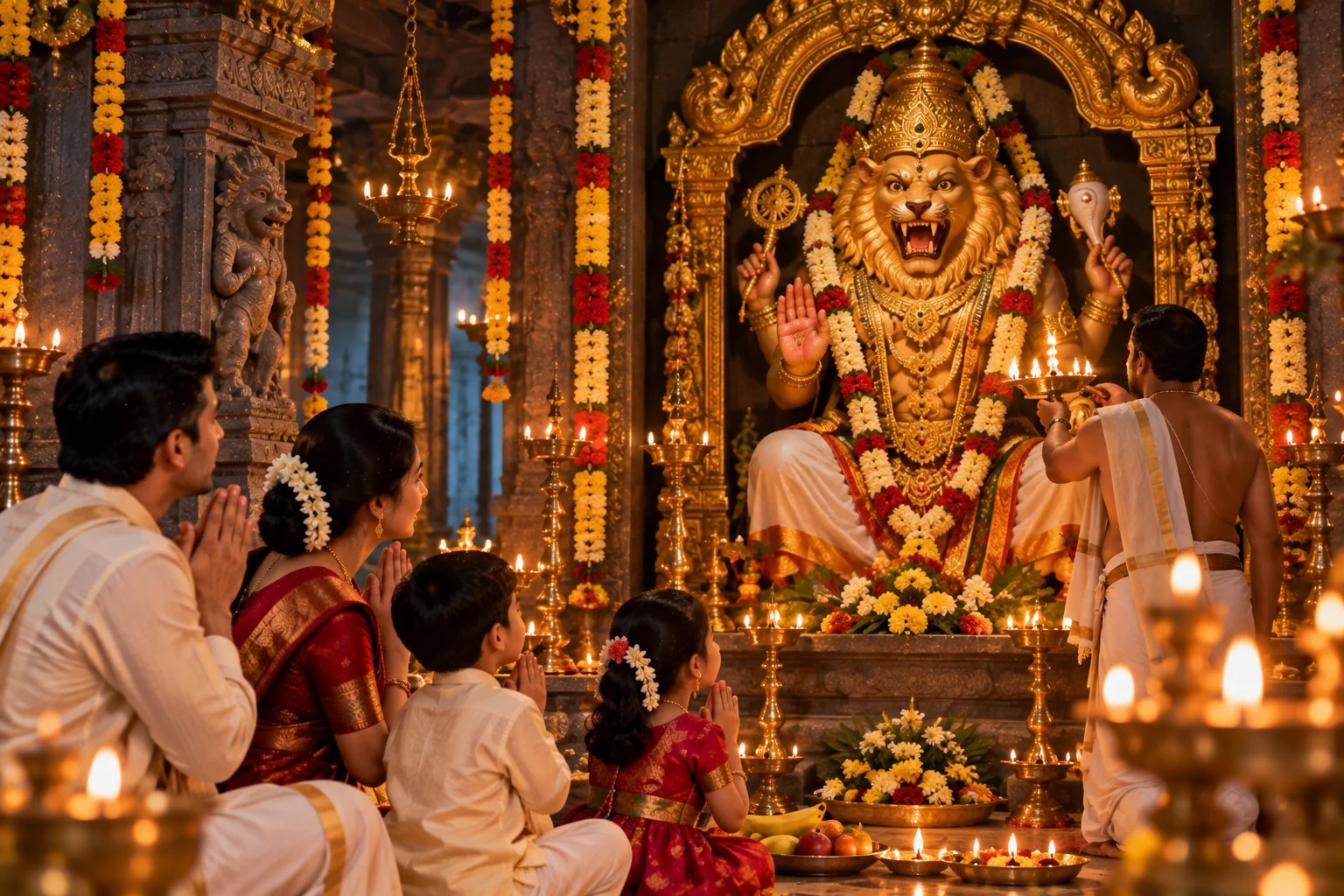
Viṣṇu's fourth descent, half lion and half man, who came out of a pillar at dusk to end Hiraṇyakaśipu — killed neither by day nor night, indoors nor out, by man nor beast, exactly as the boon had allowed.

When it falls

The fourteenth lunar day (caturdaśī) of the bright half of Vaiśākha, in May, kept at dusk rather than at dawn because that is the hour of the appearance.

The Phala almanac gives the exact day for your own city; the lunar and solar rules above are what it computes from.

The story

Hiraṇyakaśipu had a boon: not to be killed by man or beast, indoors or out, by day or night, on the ground or in the air, by any weapon. He then forbade the worship of Viṣṇu, and his own son Prahlāda kept it anyway.

Asked whether his god was in the pillar of the hall, Prahlāda said yes. His father struck the pillar and Narasiṃha came out of it — neither man nor beast, on the threshold, at dusk, on his own lap, with claws.

The story is read as an argument about the letter and the spirit of a promise, and Narasiṃha is invoked as the protector of those who are cornered.

How the day is kept

  • A fast through the day, broken after sunset when the appearance is commemorated.
  • The Narasiṃha Kavaca and the Prahlāda story are recited; cooling offerings — buttermilk, tender coconut, sandalwood paste — are made, because the form is held to be hot.
  • Ahobilam in Andhra, where the pillar is said to have stood, keeps it largest, along with Simhachalam and the nine Narasiṃha shrines around it.

More birthdays of gods, saints and teachers

The Phala almanac shows this day where it falls for your own city — sunrise, tithi and all five limbs, anywhere on earth. See how the almanac works →