← All festivals

Qīngmíng (Tomb-Sweeping Day)

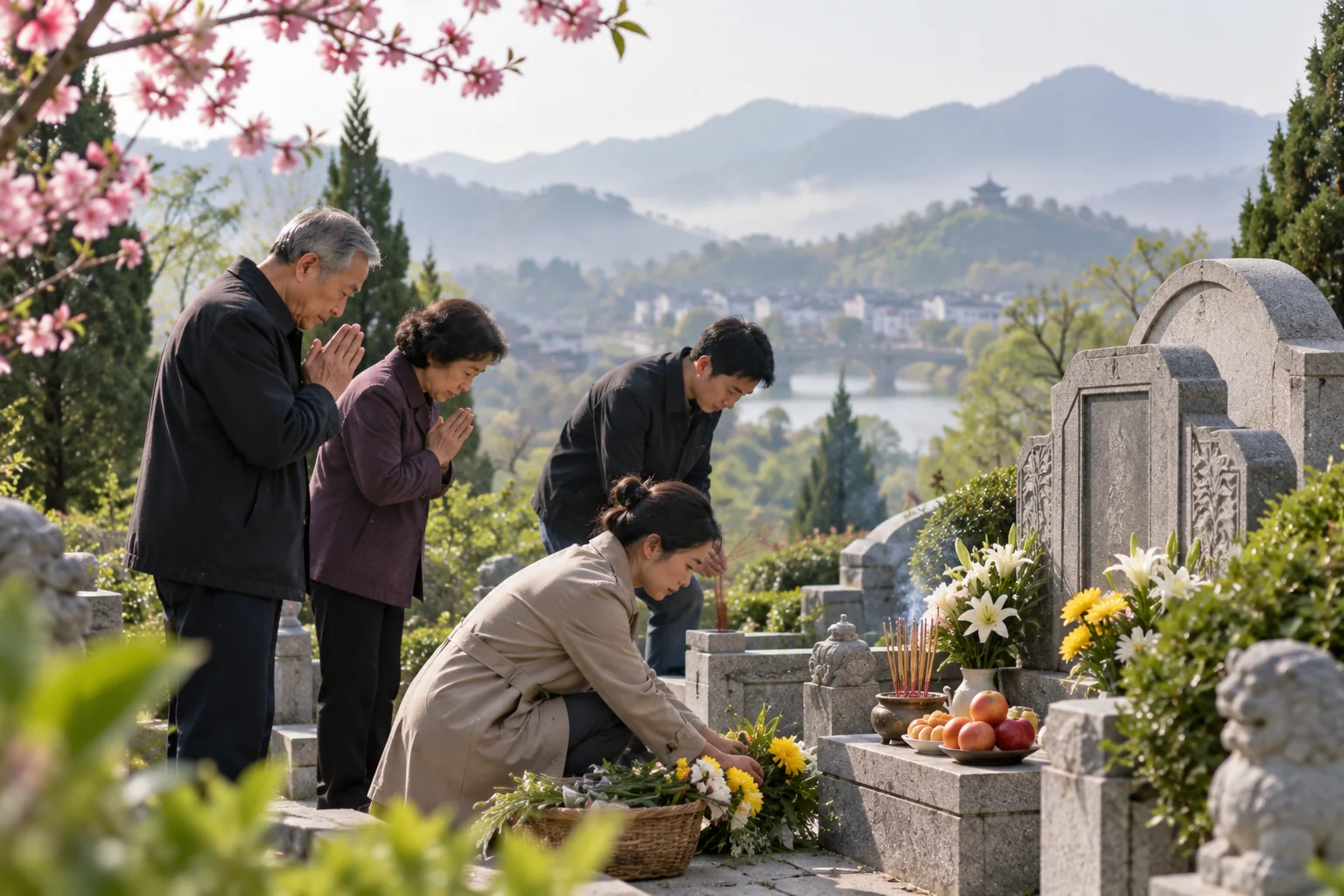
Not a lunar date but a solar term, the sun at fifteen degrees, in early April. Families clean the family graves, pull the weeds, lay food and burn paper money, and then eat outdoors: the day is grave-sweeping and spring outing at once.

When it falls

A solar term, not a lunar date: the day the sun reaches fifteen degrees of celestial longitude, which is 4, 5 or 6 April. A public holiday in China, Taiwan and Hong Kong.

The Phala almanac gives the exact day for your own city; the lunar and solar rules above are what it computes from.

The story

Qīngmíng means clear and bright, which is a description of the weather at that point in the year. The festival absorbed an older one, Hánshí, the cold-food day when no fire could be lit — kept for a retainer who had cut flesh from his own leg to feed an exiled duke, and who later burned to death in a forest the duke set alight to smoke him out.

The day is two things at once and always has been. Families sweep the graves in the morning and then eat outdoors in the spring — the sorrow and the picnic belong to the same afternoon.

Korea keeps the same day as Hansik, still under the cold-food name, and tends the family graves on it.

How the day is kept

  • The grave is weeded, the headstone washed and repainted where the characters have faded, and food, tea and wine laid in front of it.
  • Joss paper — "spirit money" — is burnt, along with paper models of what the dead might want: houses, cars, phones.
  • Willow branches are hung at the door or worn, and kites are flown, some cut loose at night so the string carries trouble away.
  • Green qingtuan dumplings, coloured with mugwort, are the food of the day in the Jiangnan region.

More ancestors and remembrance

The Phala almanac shows this day where it falls for your own city — sunrise, tithi and all five limbs, anywhere on earth. See how the almanac works →