← All festivals

Śarad Pūrṇimā

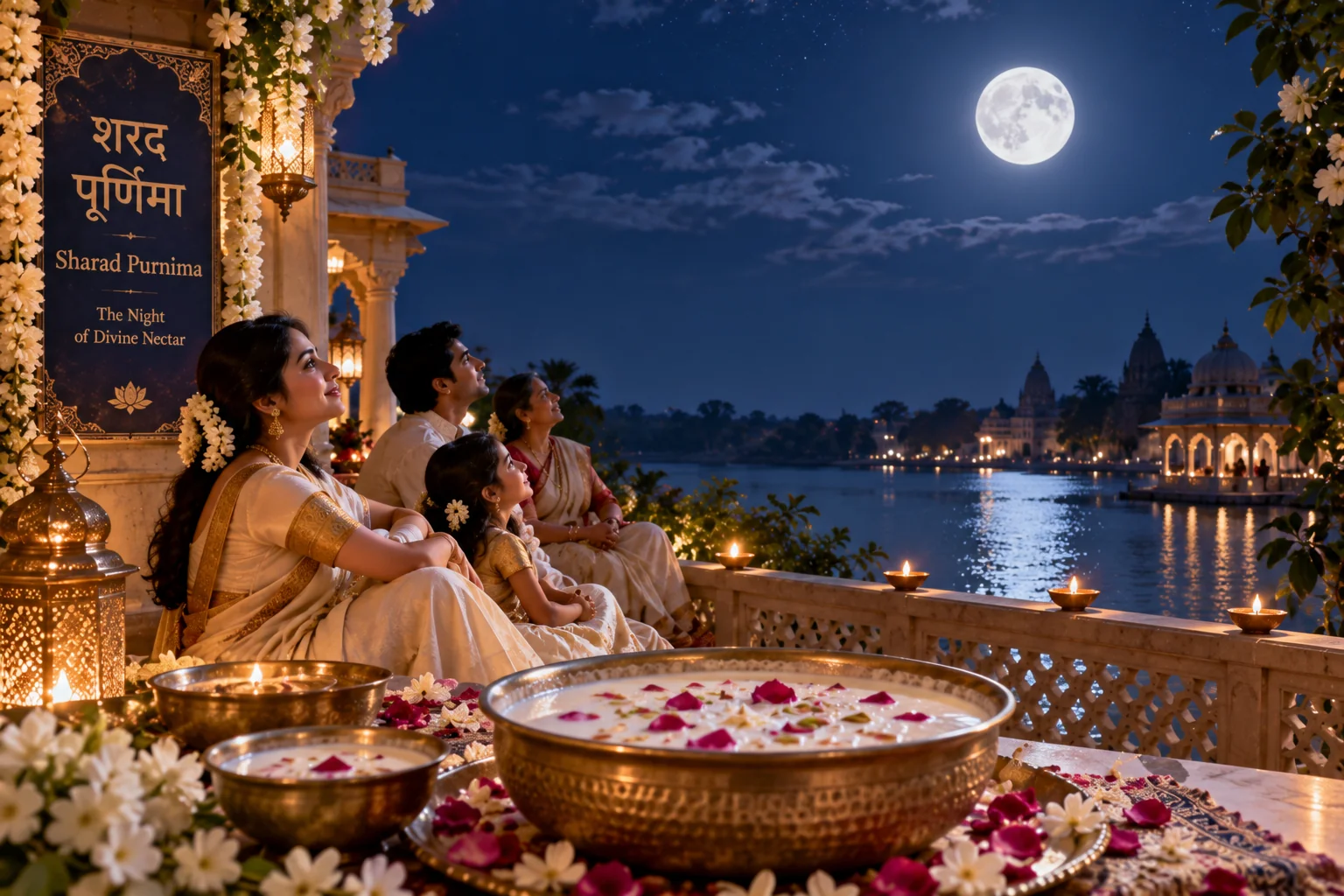
The full moon that ends the monsoon, held to be the brightest of the year. Rice kheer is left out overnight under it and eaten in the morning; in Bengal the night is Kojāgarī Lakṣmī Pūjā, when the goddess asks who is still awake.

When it falls

The full moon of Āśvayuja, in October. It is held to be the brightest full moon of the year, with the monsoon cleared and the winter haze not yet in.

The Phala almanac gives the exact day for your own city; the lunar and solar rules above are what it computes from.

The story

This is the night of the rāsa: Kṛṣṇa played the flute at Vṛndāvana and every gopī who came found him beside her, because he made himself as many as there were.

In Bengal and Odisha the night belongs to Lakṣmī, who walks the earth asking ko jāgarti — who is awake? — and enters the house of whoever answers. Kojāgarī is that question.

The moon is held to drop something medicinal on what is left under it, which is why the kheer is left out and eaten cold in the morning rather than warm at night.

How the day is kept

  • Rice kheer or milk with sugar is set on the terrace under the open moon overnight and shared at dawn.
  • Lakṣmī is worshipped at night in Bengal, Odisha and Assam, with the household staying awake; card games through the night are part of the custom.
  • In Gujarat the night is danced as garbā under the moon; in Maharashtra it is Kojāgirī, with masālā milk passed round.
  • The eldest child of the house is honoured in Odisha on the same night, which is why it is also called Kumār Pūrṇimā.

More holy days

The Phala almanac shows this day where it falls for your own city — sunrise, tithi and all five limbs, anywhere on earth. See how the almanac works →