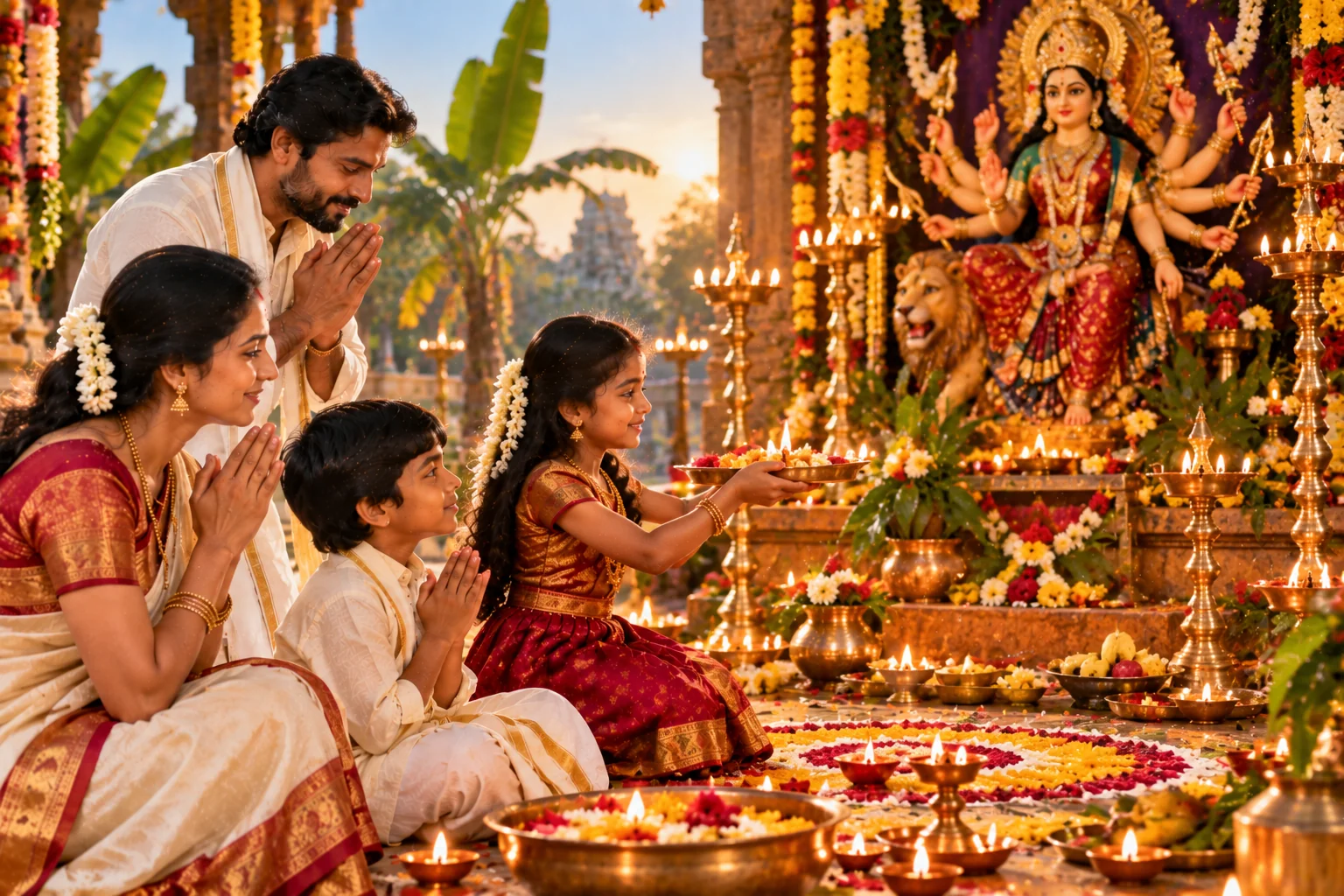
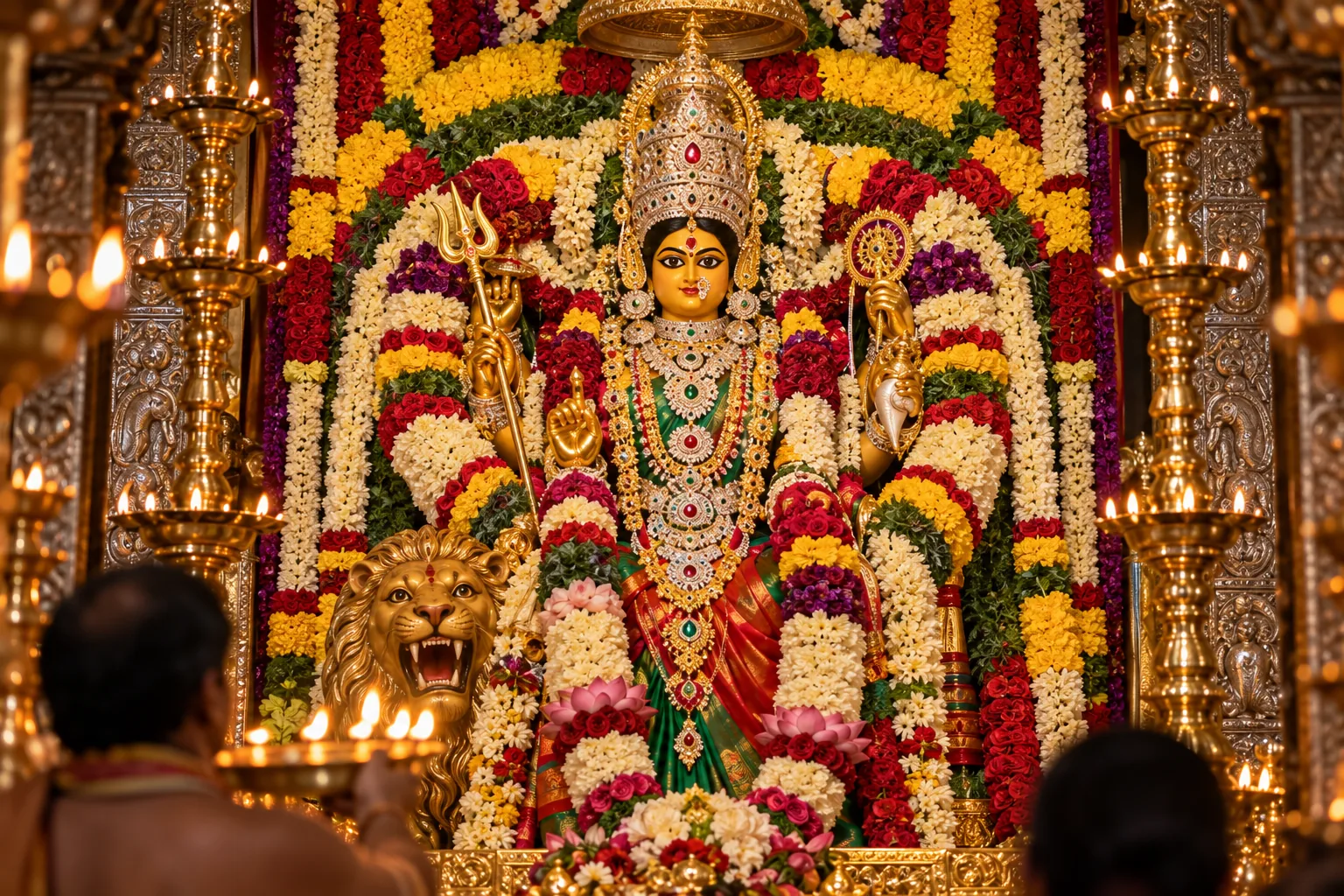
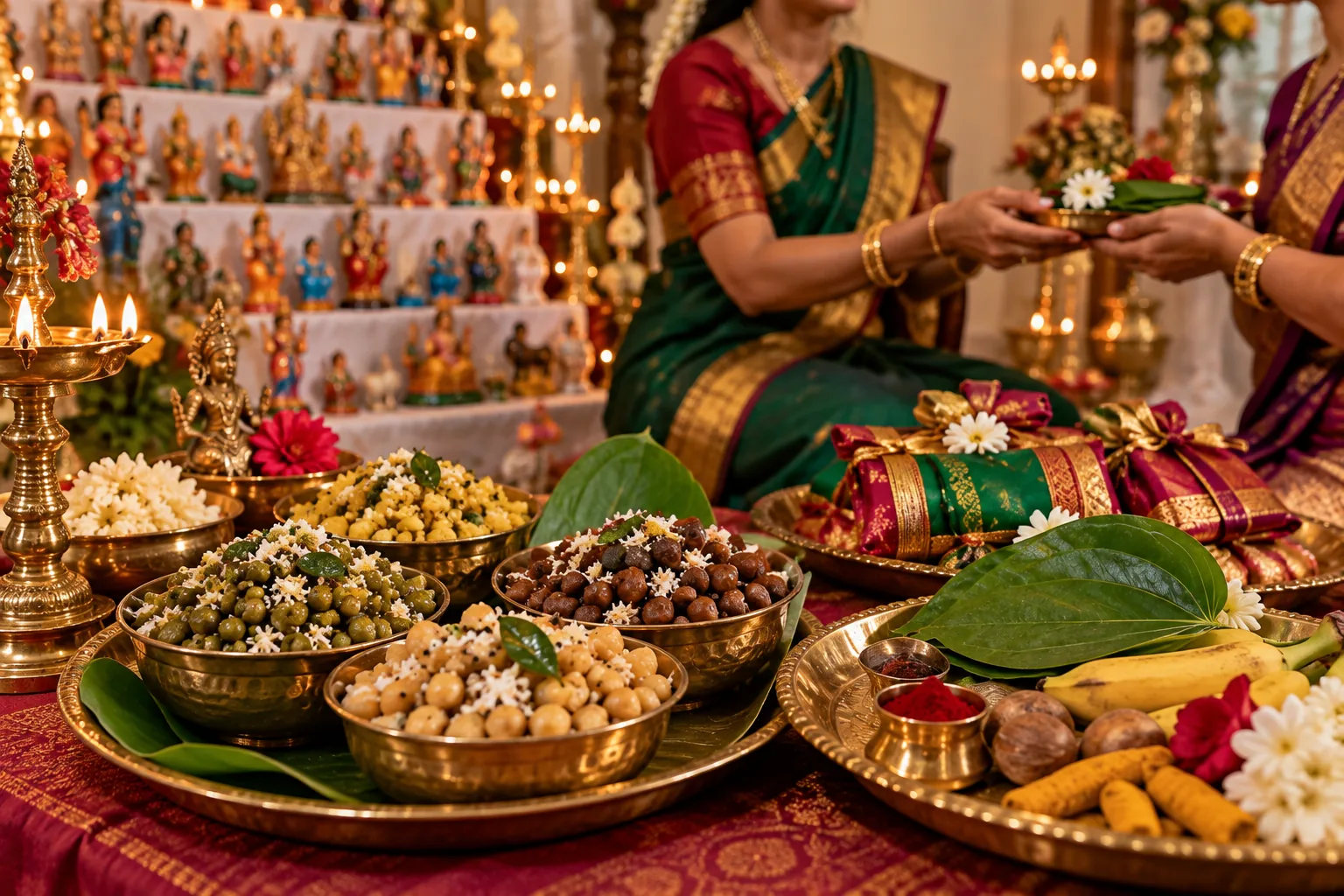
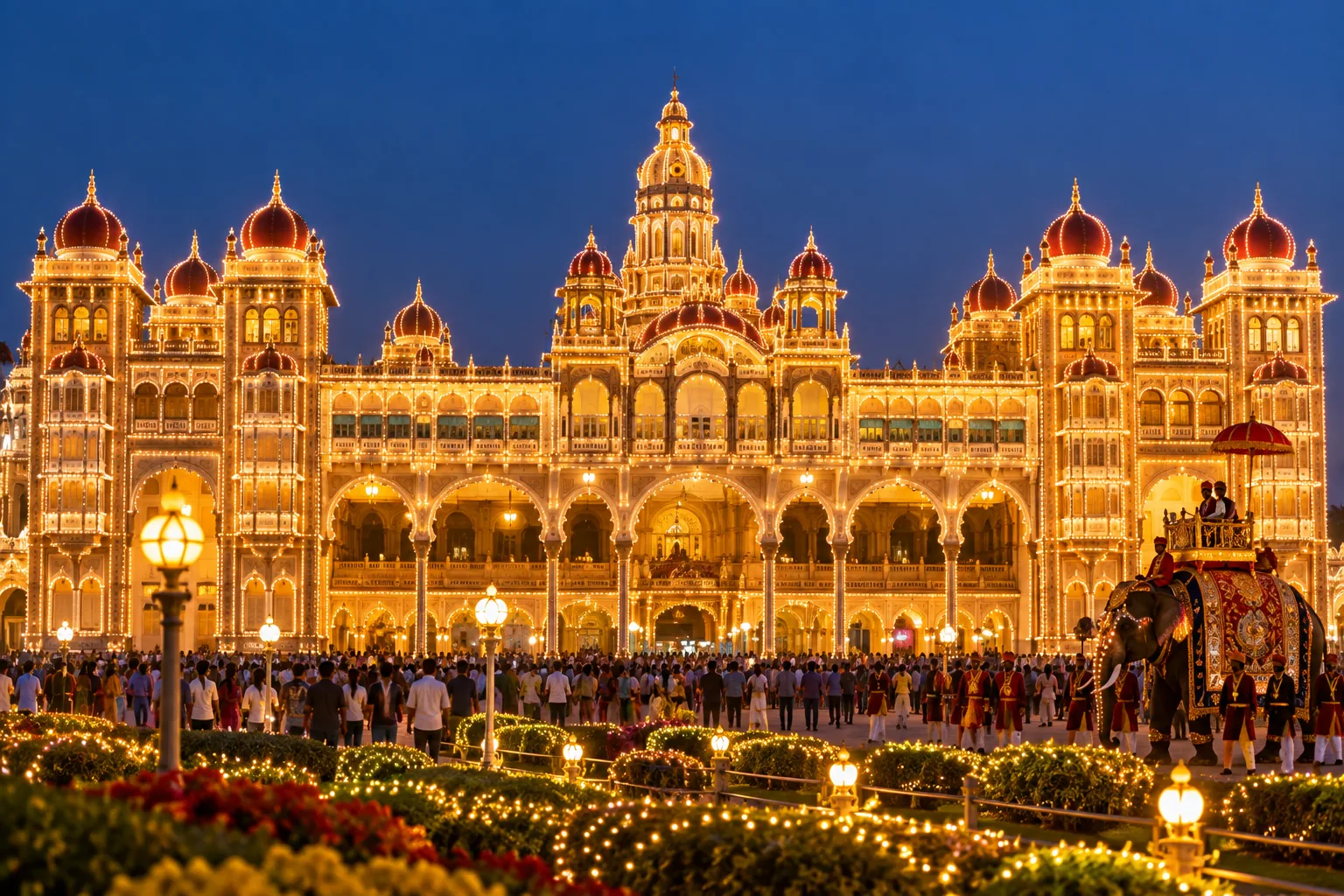
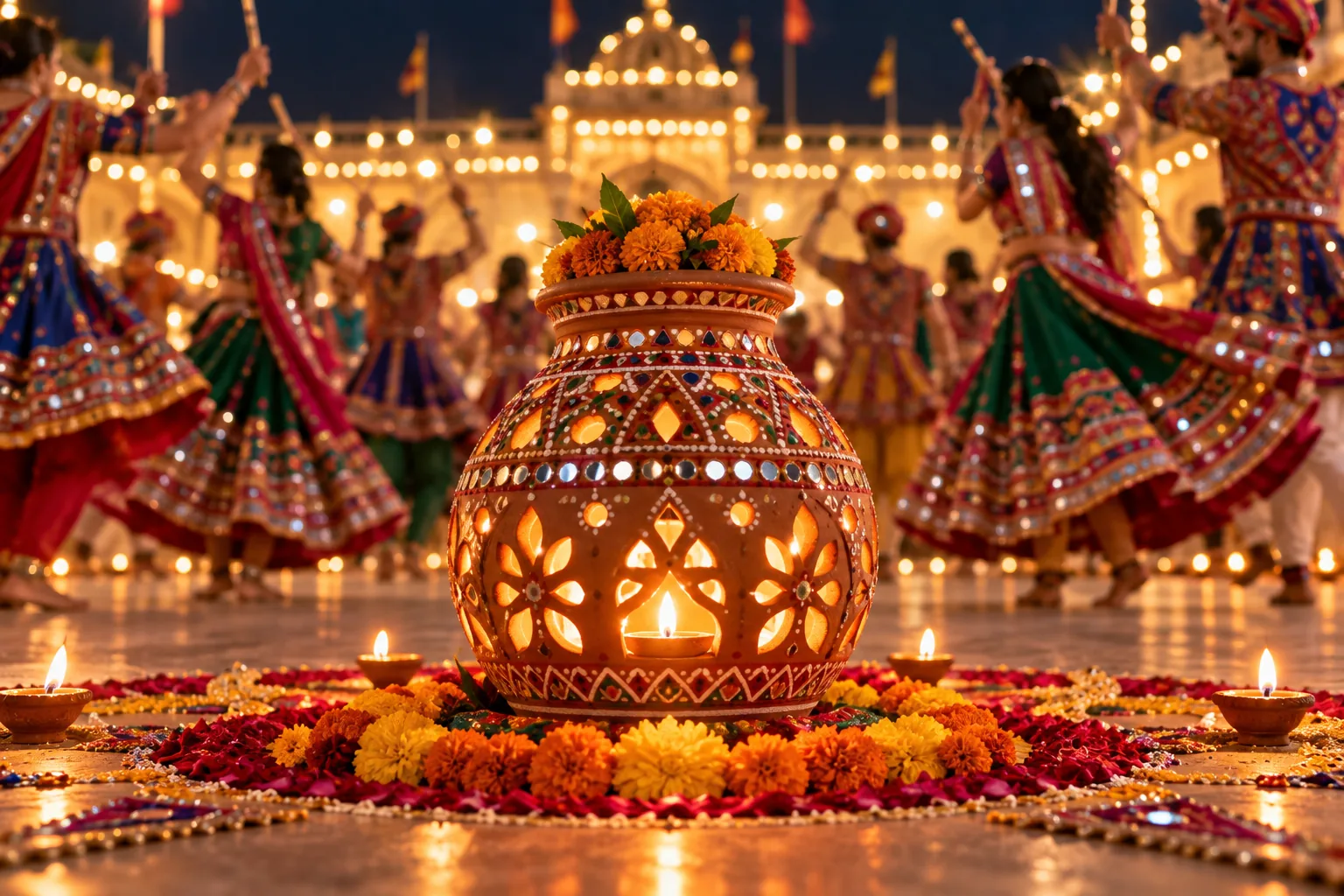
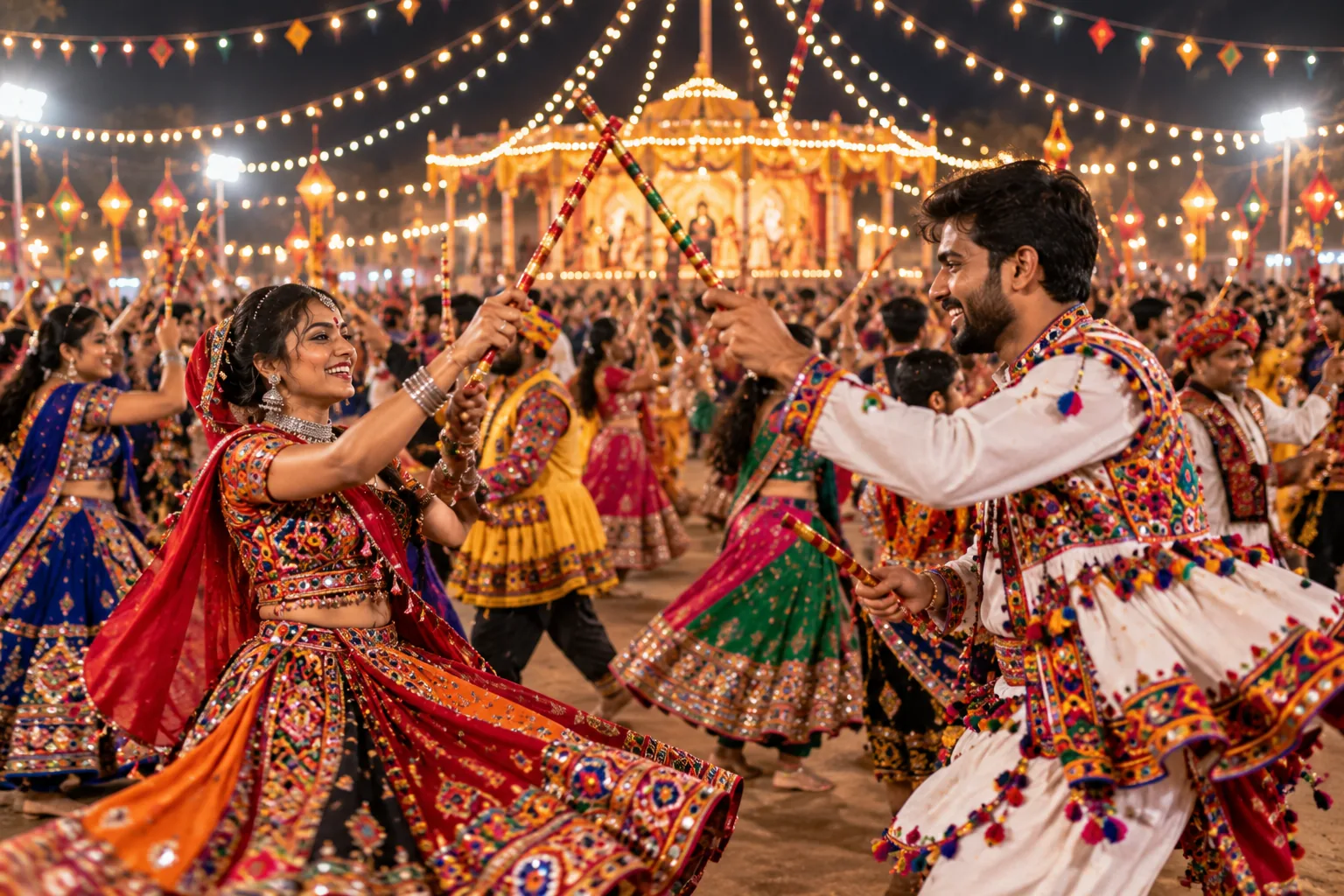
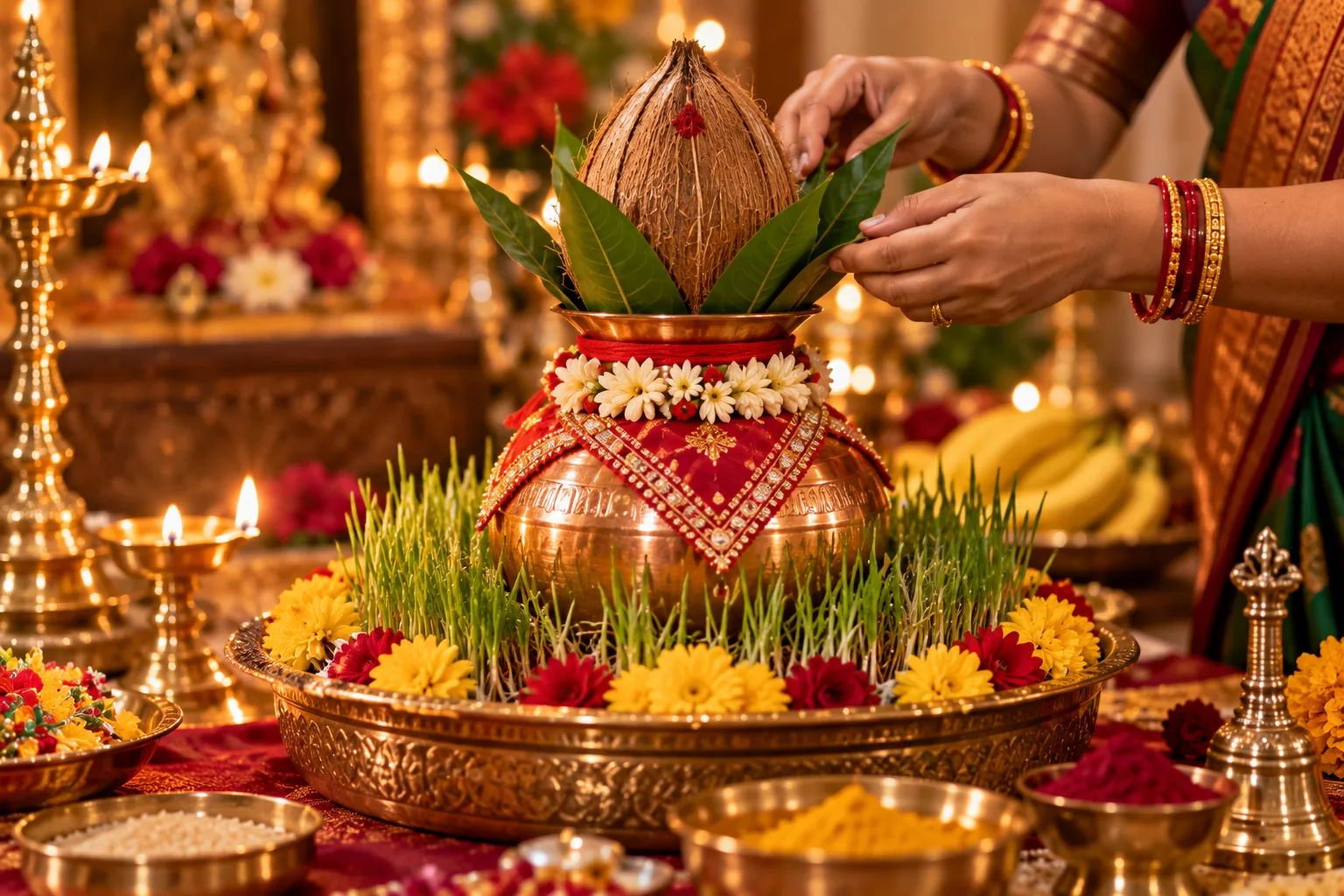
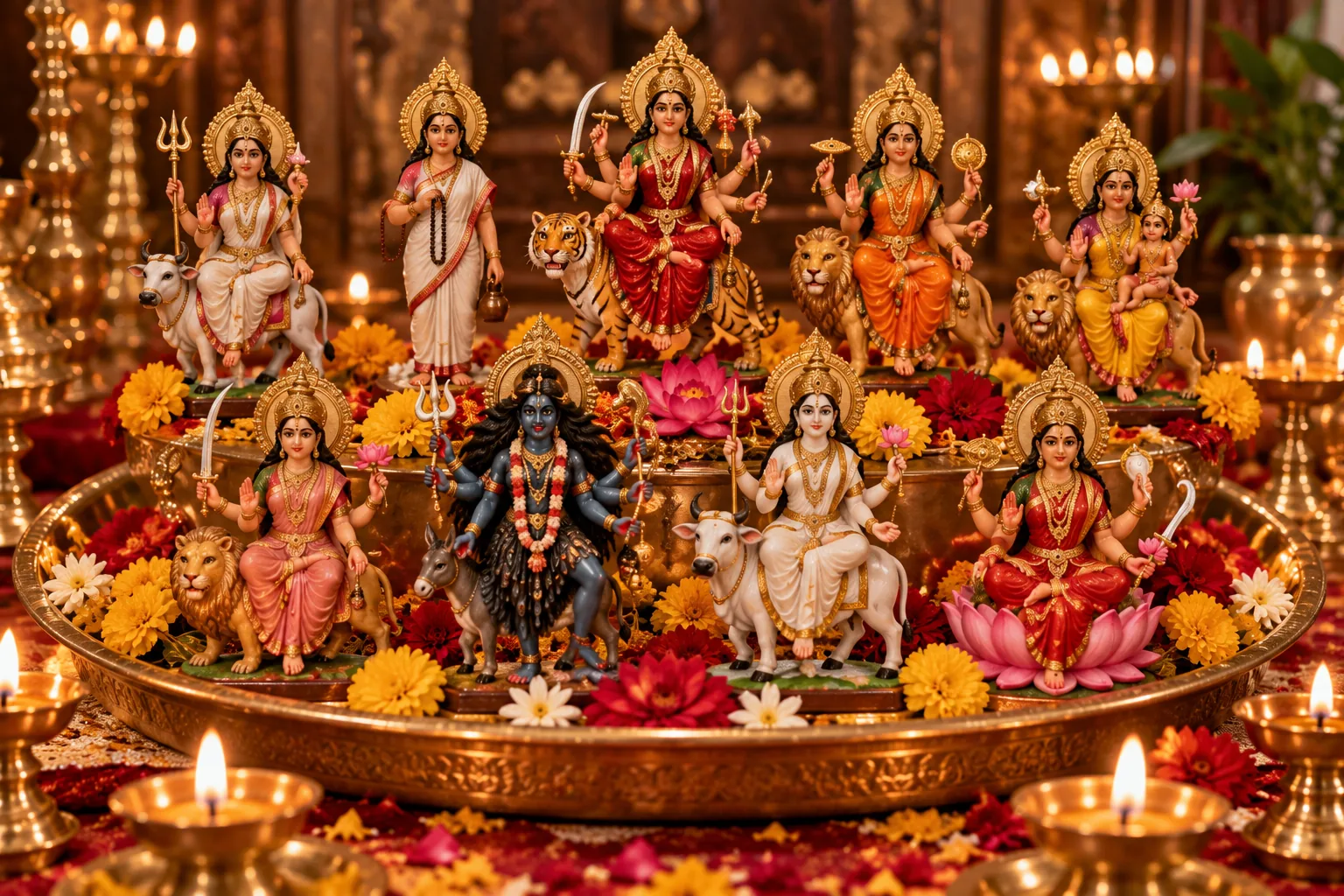
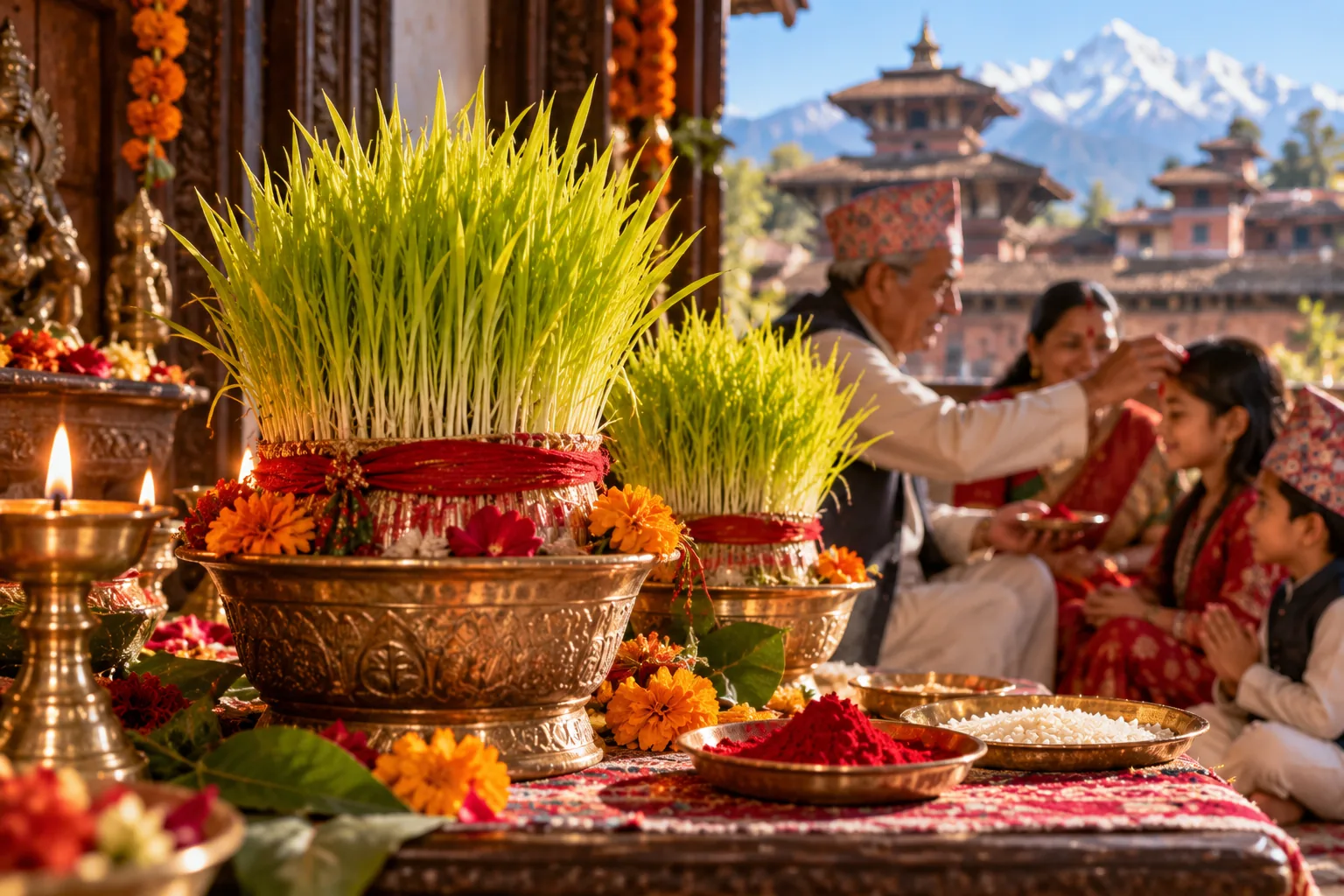
The first of nine nights for the Goddess, each night a different form — the season of Durgā Pūjā in the east and Golu doll displays in the south.
How Vedic Phala finds the date
The autumn Navarātri marker is Āśvayuja śukla pratipadā, the first tithi after the new moon. Vedic Phala computes that tithi at local sunrise and begins the nine-night sequence there. A tithi can be shorter or longer than a civil day, so one may be lost between sunrises or extend over two mornings. The later festival dates are therefore not produced by adding eight or nine blocks of twenty-four hours; each day is checked against the lunar sequence.
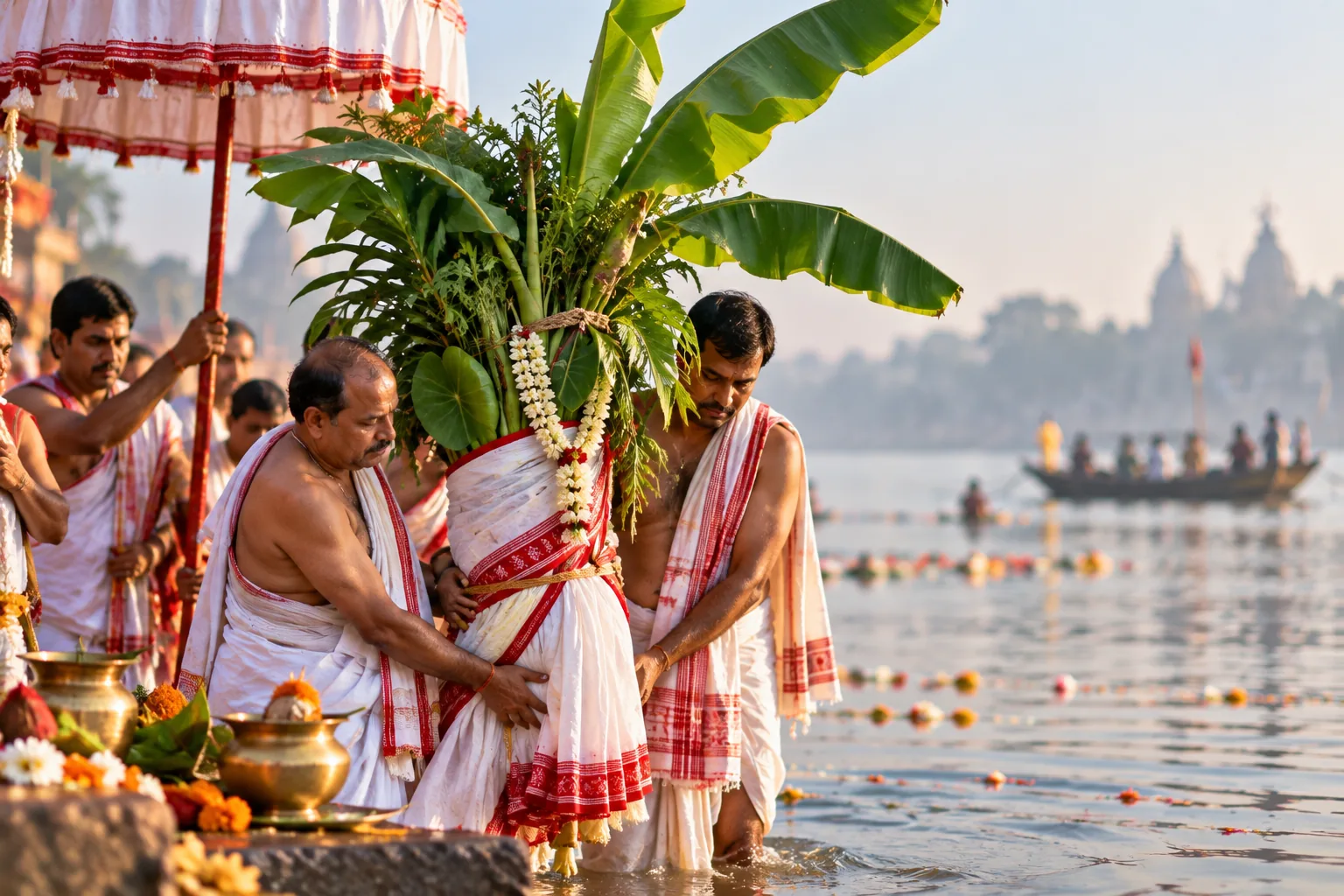
That common starting point does not erase the regional calendars shown below. Bengal’s public Durgā Pūjā opens on ṣaṣṭhī, Telangana’s Bathukamma begins on Mahālaya amāvāsyā, and Kerala concentrates on the final three days. Mysūru, Gujarat and Nepal keep still other sequences. The app marks the pan-Indian Navarātri opening while retaining separate pages for Mahālayā, Durgāṣṭamī, Mahā Navamī and Vijayadaśamī. This lets a reader follow the lunar framework without treating every region’s first public celebration as the same event.
The story
The nine nights are the Goddess's. Mahiṣāsura, the buffalo demon, had a boon that no man or god could kill him; the gods pooled their powers into a woman, gave her their weapons, and she fought him for nine nights and killed him on the tenth. The Devī Māhātmya, seven hundred verses read through the festival, is the account.
Three sets of three: the first three nights are for Durgā, who destroys, the middle three for Lakṣmī, who provides, and the last three for Sarasvatī, who teaches. Some keep nine forms of Durgā, one a night (Navadurgā).
In Bengal the festival is Durgā Pūjā, and the story is a daughter's visit home: Umā comes to her parents' house with her four children for five days, and on the tenth the city weeps to send her back to Śiva on Kailāsa. Kolkata's paṇḍāls, some of them the size of temples, were inscribed by UNESCO in 2021.