← All festivalsSkanda Ṣaṣṭhī

The sixth day of Kārttika, marking Skanda's defeat of Sūrapadma. Murugan temples in the Tamil country keep a six-day fast ending today, and the battle is staged at Tiruchendur.

When it falls

The sixth lunar day (ṣaṣṭhī) of the bright half of Kārttika, in November. The six-day fast that ends on it begins on the new moon.

The Phala almanac gives the exact day for your own city; the lunar and solar rules above are what it computes from.

The story

Skanda — Murugan in Tamil, Kārttikeya and Subrahmaṇya elsewhere — is the son Śiva produced to end the demon Sūrapadma, who could not be killed by anyone older. He was raised by the six Kṛttikā stars, which is why he has six faces, and he took the spear (vel) from his mother.

The battle ran six days. On the last of them Sūrapadma took the form of a mango tree; Skanda split it with the spear, and the two halves became his peacock mount and his rooster banner. The demon was not destroyed but taken into his service, which is the part of the story the tellers dwell on.

In Maharashtra the same tithi is Campā Ṣaṣṭhī, kept for Khaṇḍobā at Jejuri, a form of Śiva that scholars and devotees read together with Skanda.

How the day is kept

  • A six-day fast (Kanda Ṣaṣṭhī Viratam) on one meal a day, ending with the sixth.
  • The Kanda Ṣaṣṭhī Kavacam, a Tamil hymn of protection, is recited daily through the six days; most Tamil households know it by ear.
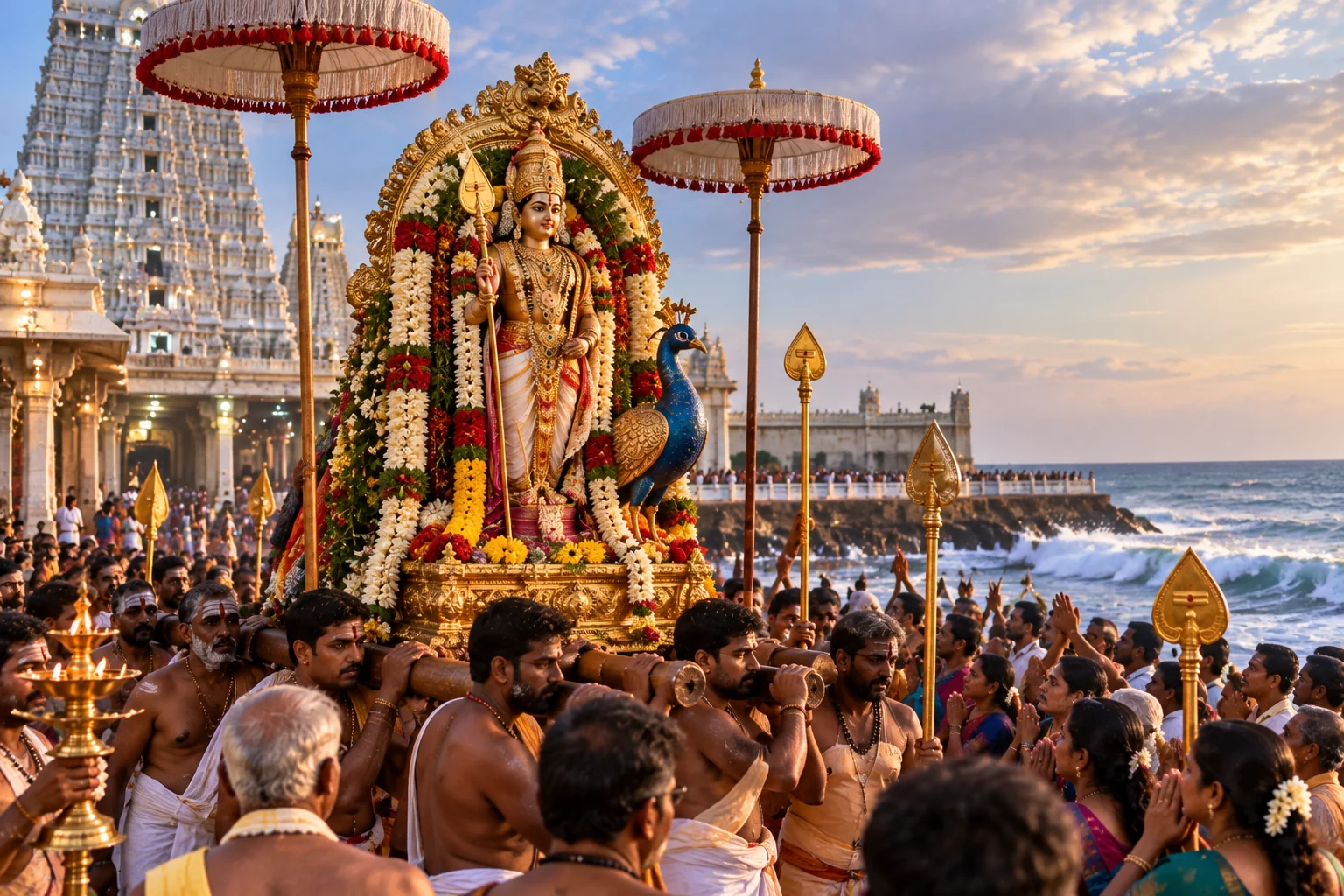
  • On the last evening the killing of Sūrapadma is staged at Tiruchendur on the sea, and at the other five Murugan houses, before crowds that fill the shore.
  • The next day is Tiru Kalyāṇam, Murugan's marriage to Devasenā, and the fast ends with it.
  • Kept most widely in Tamil Nadu, Kerala, coastal Karnataka and wherever Tamils have settled — Malaysia, Singapore, Sri Lanka.

More victory and deliverance

The Phala almanac shows this day where it falls for your own city — sunrise, tithi and all five limbs, anywhere on earth. See how the almanac works →