
← All festivals

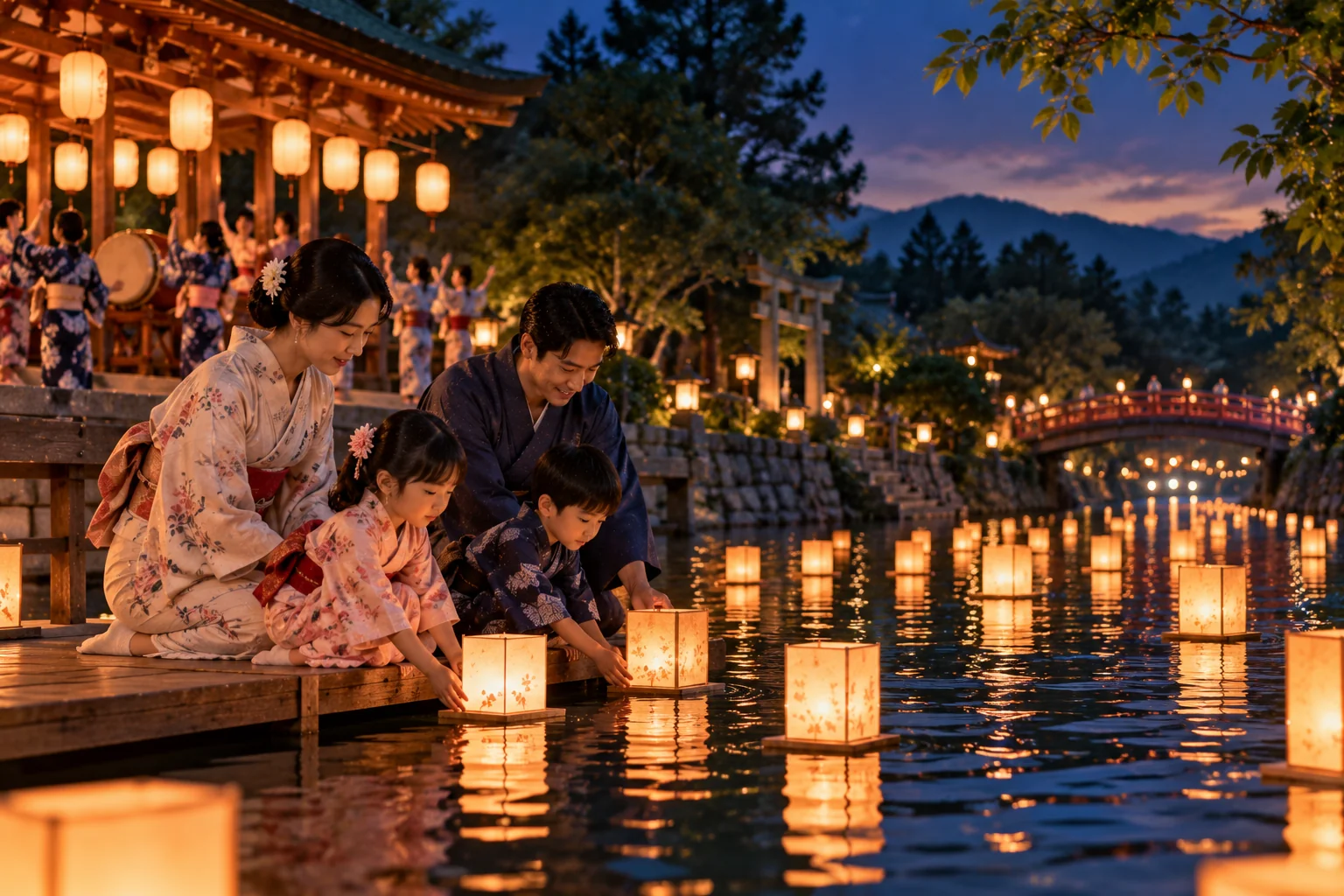
Three days in August when the dead are held to come home. Lanterns are lit to guide them in, the Bon Odori is danced in the street, and floating lanterns see them out again on the last night. Kept in July in Tokyo and by the old lunar reckoning in Okinawa.

When it falls

13 to 15 August in most of Japan. Tokyo and parts of the east keep it in July, and Okinawa on the old lunar reckoning in the seventh month, so the country keeps it three times.

The Phala almanac gives the exact day for your own city; the lunar and solar rules above are what it computes from.

The story

The name is short for Urabon, the Japanese reading of the same Ullambana sūtra that gives China its Ghost Festival — Mokuren finding his mother among the hungry ghosts and being told to feed the assembly of monks to free her.

He danced when she was released, and that dance is the Bon Odori, which is now a circle dance round a tower in every neighbourhood, to a song particular to the region.

The dead are held to come home for the three days and then go back. Almost everything done is about the route: showing them in, feeding them while they are there, seeing them out.

How the day is kept

  • A welcoming fire at the gate on the first evening and a sending fire on the last; Kyoto lights five giant characters on the hillsides for the same purpose.
  • The household altar is cleaned and the graves visited, and cucumbers and aubergines are given legs of split chopsticks — a horse to come quickly on, an ox to go back slowly.
  • Bon Odori in the street, danced in yukata by anyone who turns up, with the same steps repeated for hours.
  • Tōrō nagashi on the last night: paper lanterns with a candle floated down the river to carry them out to sea.

More ancestors and remembrance

The Phala almanac shows this day where it falls for your own city — sunrise, tithi and all five limbs, anywhere on earth. See how the almanac works →