← All festivals

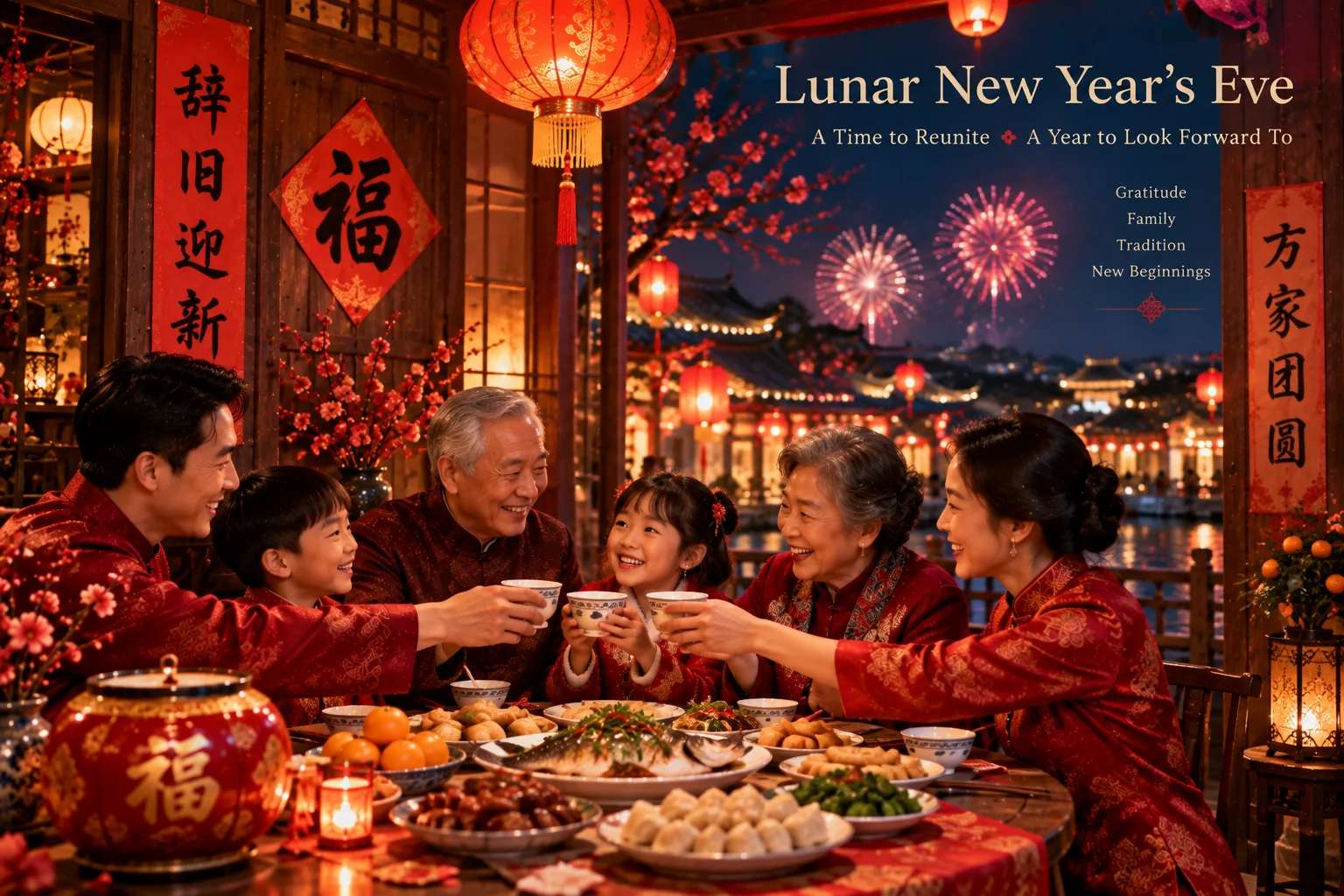
The reunion dinner, and in most families the more important half of the new year. The house is swept before dusk and not after, so the luck arriving that night is not swept out with the dust; the family sits up together until midnight.

When it falls

The last day of the twelfth lunar month, the night before Lunar New Year. The month is twenty-nine or thirty days by the moon and never by a rule, so the eve is whichever of those the month happens to end on.

The Phala almanac gives the exact day for your own city; the lunar and solar rules above are what it computes from.

The story

For most families this is the larger half of the festival. The reunion dinner is the meal everybody travels for, and an empty chair at it is the thing the whole journey exists to prevent.

The food is chosen for what its name sounds like: fish (yú) for surplus, because there is a phrase about having a surplus every year, and it is served last and not finished. Dumplings in the north are shaped like old ingots; nian gao in the south is a homophone for a higher year.

The house is cleaned before dusk and not after — sweeping on the day itself sweeps the arriving luck back out of the door.

How the day is kept

  • The reunion dinner (nián yè fàn), with the whole family at one table and the fish left partly uneaten.
  • Staying up to midnight — shǒusuì, guarding the year — and firecrackers or the fireworks that replaced them.
  • The CCTV New Year Gala has run since 1983 and is on in the background of a few hundred million of these dinners.
  • Korea keeps the eve as Seotdal Geumeum, when the house is cleaned and debts are settled before the year turns.

More family bonds

The Phala almanac shows this day where it falls for your own city — sunrise, tithi and all five limbs, anywhere on earth. See how the almanac works →