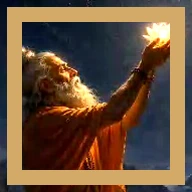
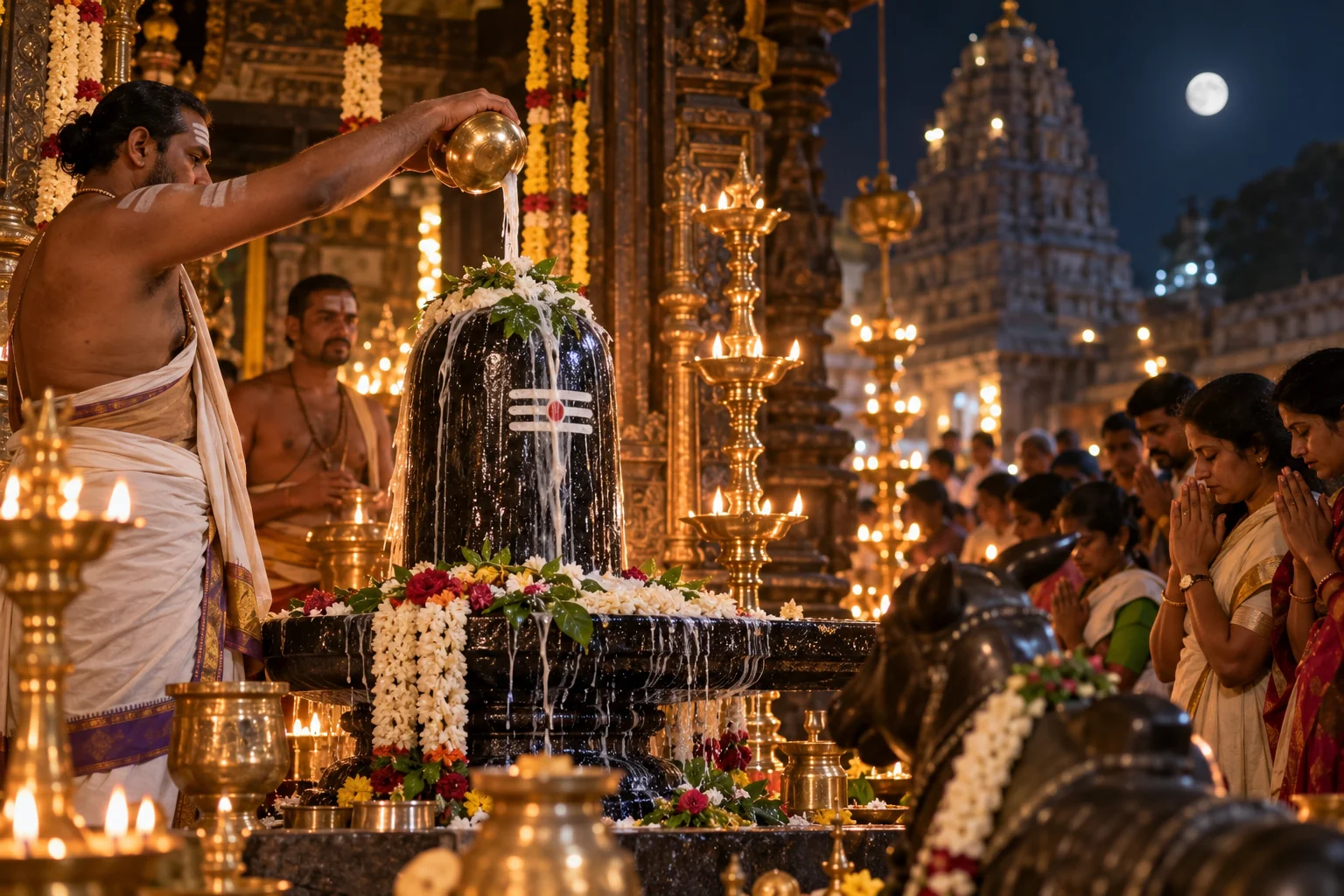
The great night of Śiva, the fourteenth of Māgha's dark half. Devotees keep an all-night vigil, offering bilva leaves in each watch of the night.
How Vedic Phala finds the date
Mahā Śivarātri is Māgha kṛṣṇa caturdaśī, the fourteenth tithi of the dark half, but the rite is an all-night vigil rather than a sunrise-only event. Vedic Phala calculates the underlying lunar day from the local Sun and Moon and marks the matching date in its calendar. Traditional observance then asks which night contains caturdaśī during niśītha, the midnight interval. When the tithi crosses midnight or two civil dates, a temple calendar may place the fast differently from a simple sunrise list.
The four watches of the night are central to the practice: water, milk, yoghurt, honey and bilva leaves are offered to the liṅga as the hours pass. That is also why Mahā Śivarātri should not be confused with Māsika Śivarātri, the monthly dark-fourteenth observance. The app carries both keys. The annual “great night” belongs to the Māgha cycle; the monthly vrata repeats the tithi without the same public scale. Local longitude, sunrise and the night interval can move the civil label, while the underlying caturdaśī remains the shared rule.
Month naming can add another apparent disagreement. Amānta calendars end the month at new moon, while northern pūrṇimānta calendars end it at full moon, so the same night may be described with a neighbouring month name. That difference does not move the Moon or create a second Śivarātri. Vedic Phala states its amānta basis and shows the reader’s city, allowing the astronomical condition and the printed regional name to be separated.
The story
Three stories are told for the night. Śiva and Pārvatī were married on it. Śiva drank the poison that rose from the churning of the ocean, holding it in his throat, and Pārvatī and the gods kept him awake through the night lest it spread. And on this night Śiva first appeared as a column of light (jyotirliṅga) without beginning or end, which neither Brahmā nor Viṣṇu could measure.
The Purāṇas add a hunter who spent the night in a bel tree to escape a tiger, and dropped leaves to stay awake, and did not know the leaves were falling on a liṅga below. The unknowing worship saved him. The story is told so that no one thinks their own is too small to count.
The night is also the last dark of winter; the moon is at its thinnest, and the vigil until dawn is the tradition's answer to it.