← All festivals

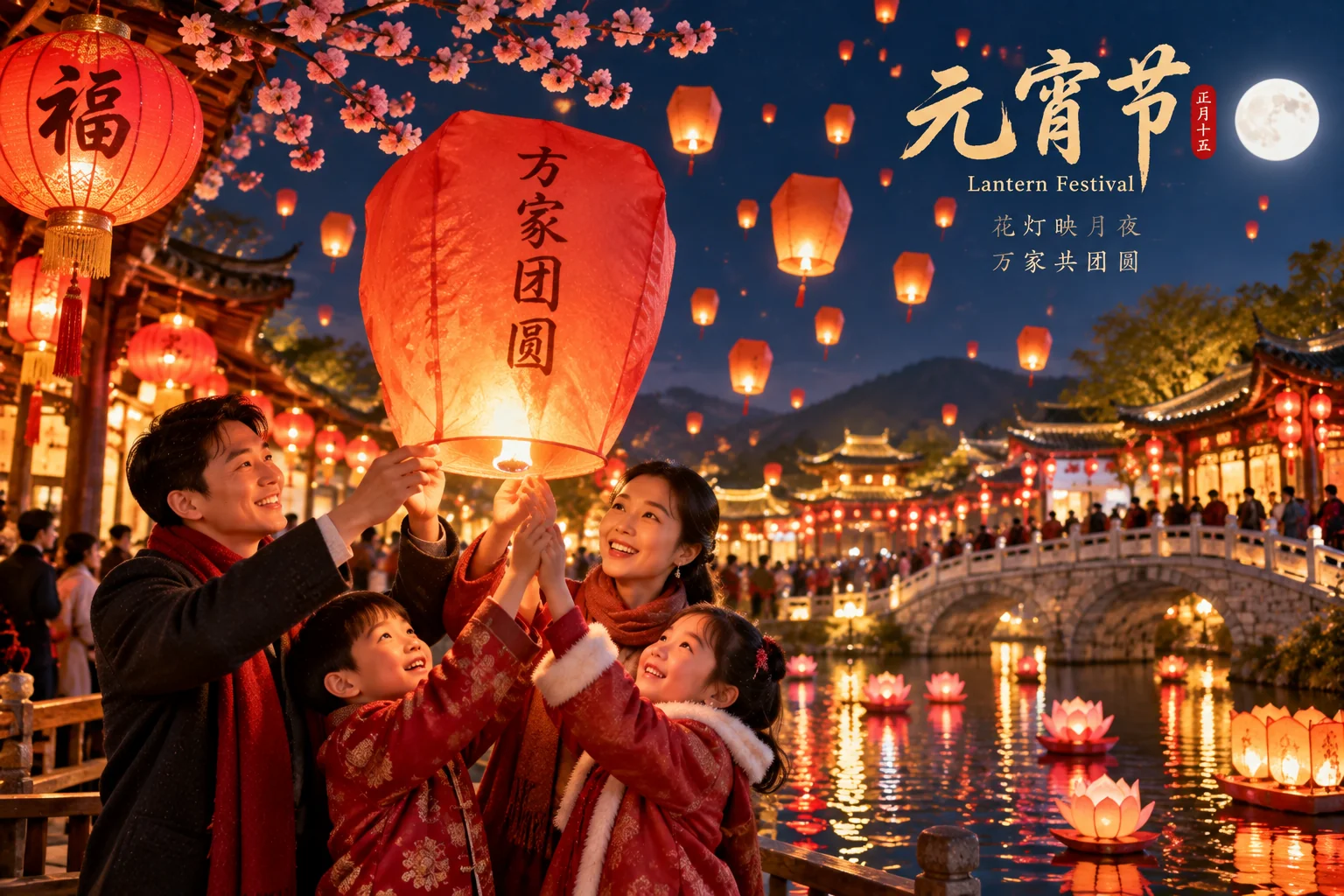
The fifteenth day closes the new-year fortnight under the first full moon of the year. Lanterns are hung and floated, riddles are written on them to be guessed, and tangyuan — round glutinous rice balls in syrup — are eaten for the roundness.

When it falls

The fifteenth day of the first lunar month, under the first full moon of the year, closing the fifteen days of new-year holiday.

The Phala almanac gives the exact day for your own city; the lunar and solar rules above are what it computes from.

The story

The lanterns are the point and the reason is variously told: a Han emperor honouring the Buddha, a Daoist festival of the upper origin, or a village that lit the whole valley so the Jade Emperor would think it already burnt and spare it. All three have been believed at once for a long time.

Riddles are written on the lanterns to be guessed by whoever stops. Getting one right earns a small prize and the right to say so.

It was for centuries the one night unmarried women could walk out after dark, which made it China's older lovers' night — the one Qīxī now shares.

How the day is kept

  • Lanterns hung, carried and floated; Pingxi in Taiwan releases thousands of sky lanterns and the Qinhuai river at Nanjing is lit end to end.
  • Tāngyuán or yuánxiāo — glutinous rice balls in sweet soup — eaten for the roundness, which stands for the family being whole.
  • Lion and dragon dances through the streets, and the stilt walkers where the local troupe still has them.
  • Korea keeps the same full moon as Daeboreum, cracking nuts at dawn and burning a moon house of pine branches at dusk.

More festivals of light

The Phala almanac shows this day where it falls for your own city — sunrise, tithi and all five limbs, anywhere on earth. See how the almanac works →