← All festivalsLohri

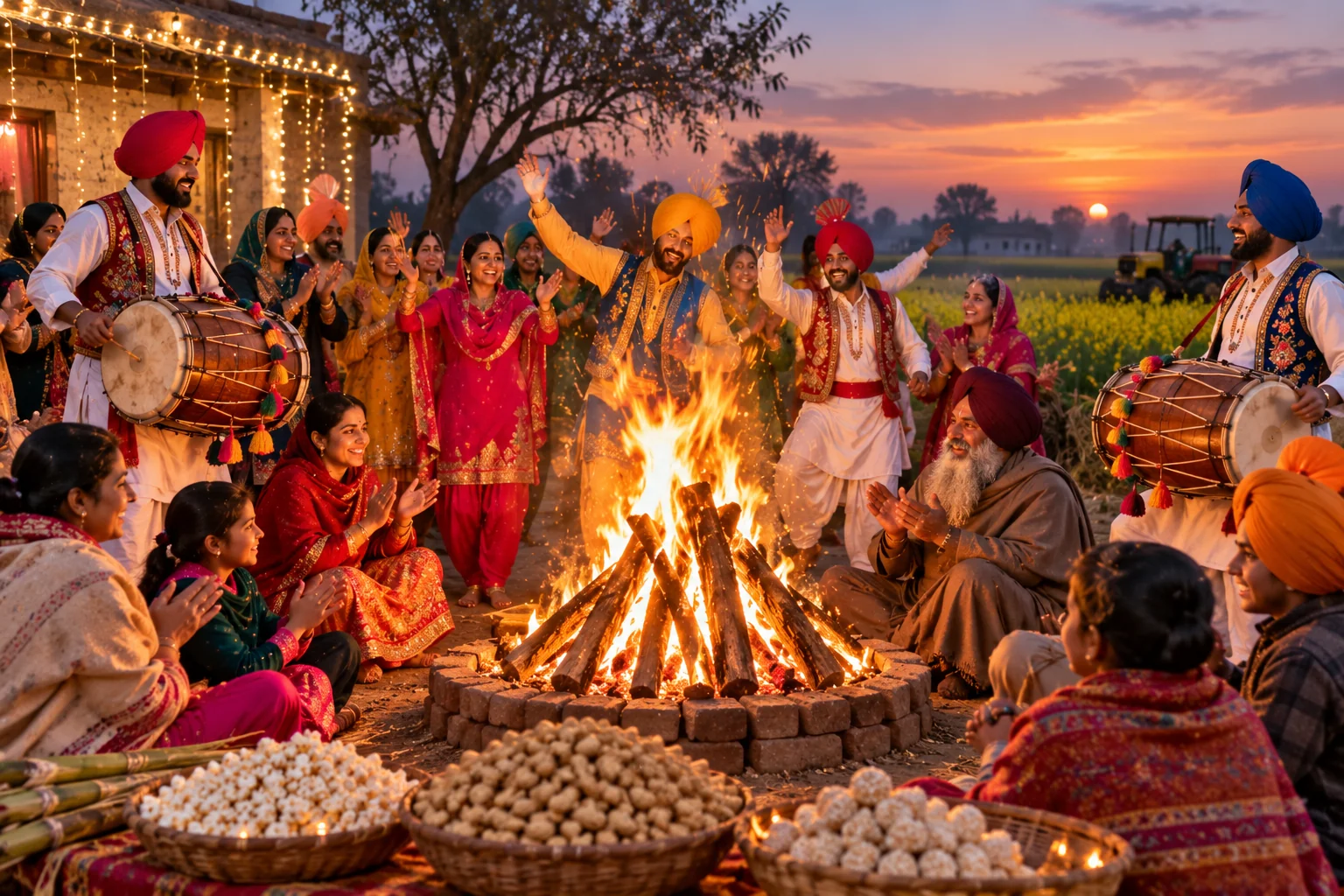
The Punjabi midwinter bonfire on the eve of Makara Saṅkrānti. Sesame, jaggery and popped rice are thrown into the fire, and the first Lohri after a wedding or a birth is the one the family keeps largest.

When it falls

13 January, the eve of Makara Saṅkrānti, fixed to the solar calendar and so falling on the same date almost every year.

The Phala almanac gives the exact day for your own city; the lunar and solar rules above are what it computes from.

The story

Lohri closes the coldest fortnight of the Punjab year and marks the sugarcane harvest brought in. The night after it is Māghī, the first day of the month of Māgh, and the days start to lengthen from there.

The songs of the night belong to Dullā Bhaṭṭī, a sixteenth-century Punjabi landholder who robbed the caravans of Akbar's officials and used the money to arrange marriages for poor girls who would otherwise have been sold. Children go door to door singing his story and are given sweets, jaggery and a little money.

The first Lohri after a wedding or the birth of a child is the one the family keeps largest, and the household that has one is expected to feed the street.

How the day is kept

  • A bonfire is lit at dusk in the courtyard or the street, and the family circles it, throwing in popcorn, sesame, jaggery, peanuts and rewṛī.
  • Children collect their Lohri from the neighbours through the afternoon, singing the Dullā Bhaṭṭī verses at each door.
  • Bhaṅgṛā and gidḍā are danced round the fire to the dhol, the men and the women in separate rings.
  • The meal is sarsoṃ kā sāg with makkī kī roṭī, mustard greens and cornmeal bread, and kheer or gur ki kheer after.
  • Kept across Punjab, Haryana, Himachal and Jammu, by Hindu and Sikh households alike, and wherever Punjabis have settled.

More harvest festivals

The Phala almanac shows this day where it falls for your own city — sunrise, tithi and all five limbs, anywhere on earth. See how the almanac works →