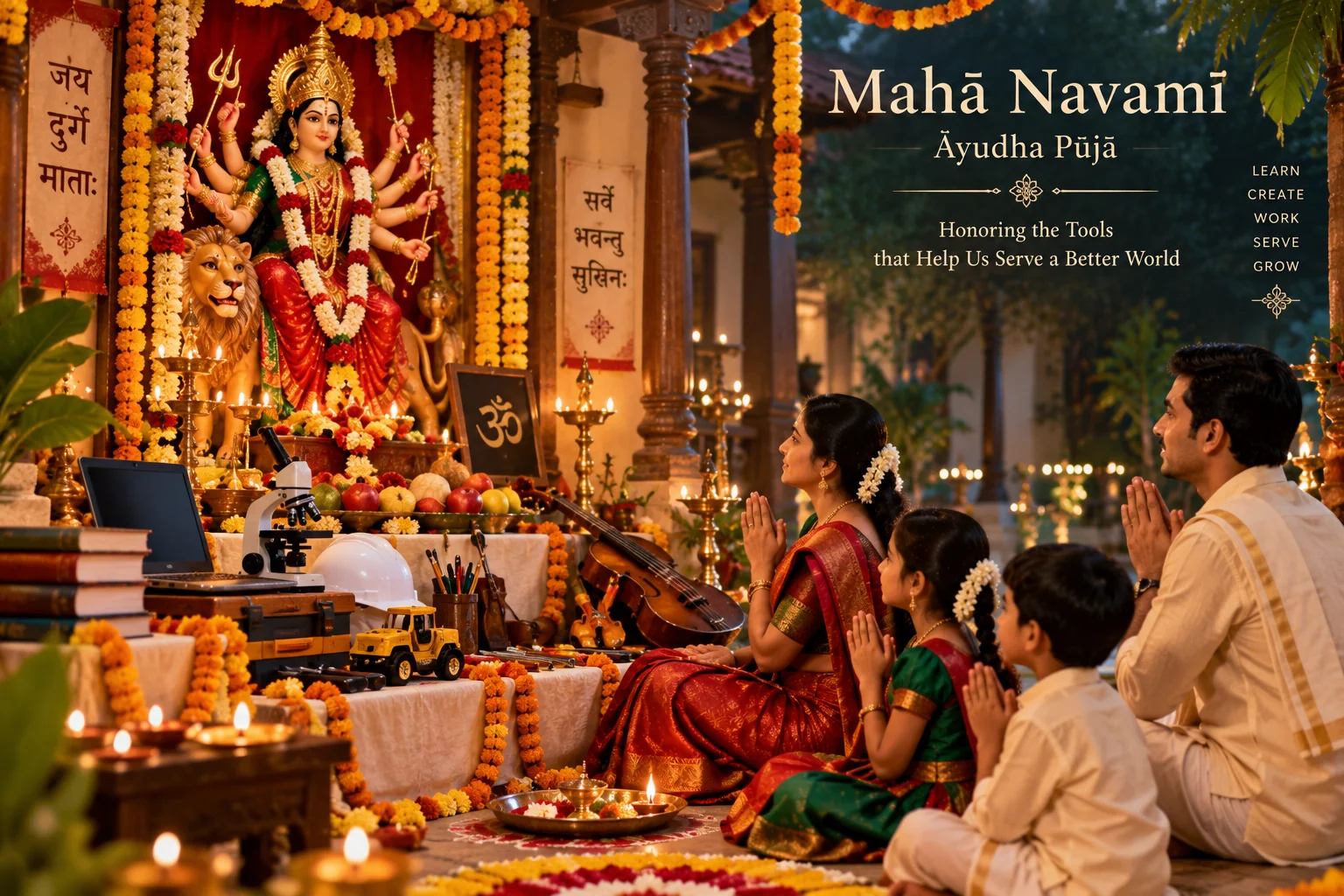
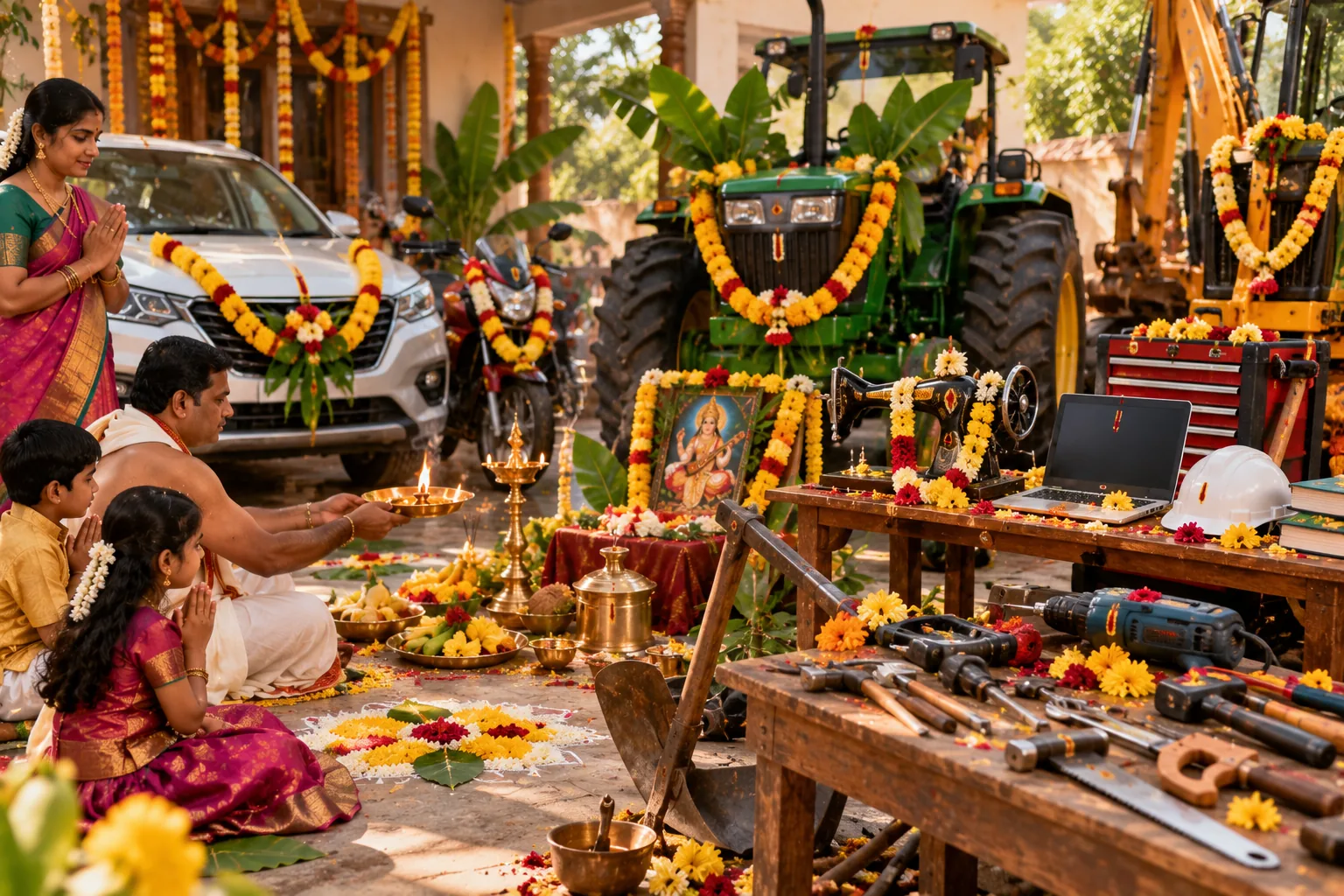
The ninth night closes the fight with Mahiṣāsura. In the south the day is Āyudha Pūjā: tools, instruments, machines and vehicles are cleaned, garlanded and left idle, because what you work with is worshipped rather than used.
The story
The ninth night ends the fight: Mahiṣāsura falls, and the goddess is Mahiṣāsuramardinī from that moment.
In the south the reading is different and the day belongs to what people work with. The Pāṇḍavas are said to have hidden their weapons in a śamī tree through their year in disguise and taken them back on this day, so the tools of a trade are laid down and worshipped rather than used.
Sarasvatī is invoked on the same day, which is why books are stacked before the lamp and not opened until tomorrow.
Where it is kept differently
- The whole of the south
- Āyudha Pūjā. Vehicles, machines, tools, instruments and books are washed, marked with sandalwood and vermilion, garlanded with banana leaf and lime, and left unused for the day. Factories and workshops shut; a bus with a garland on its bonnet is the day’s ordinary sight.
- Tamil Nadu
- Sarasvatī Pūjā is kept alongside it. Instruments are not played and books are not opened, and students put their year’s work in front of the Golu rather than at a shrine.
- Bengal
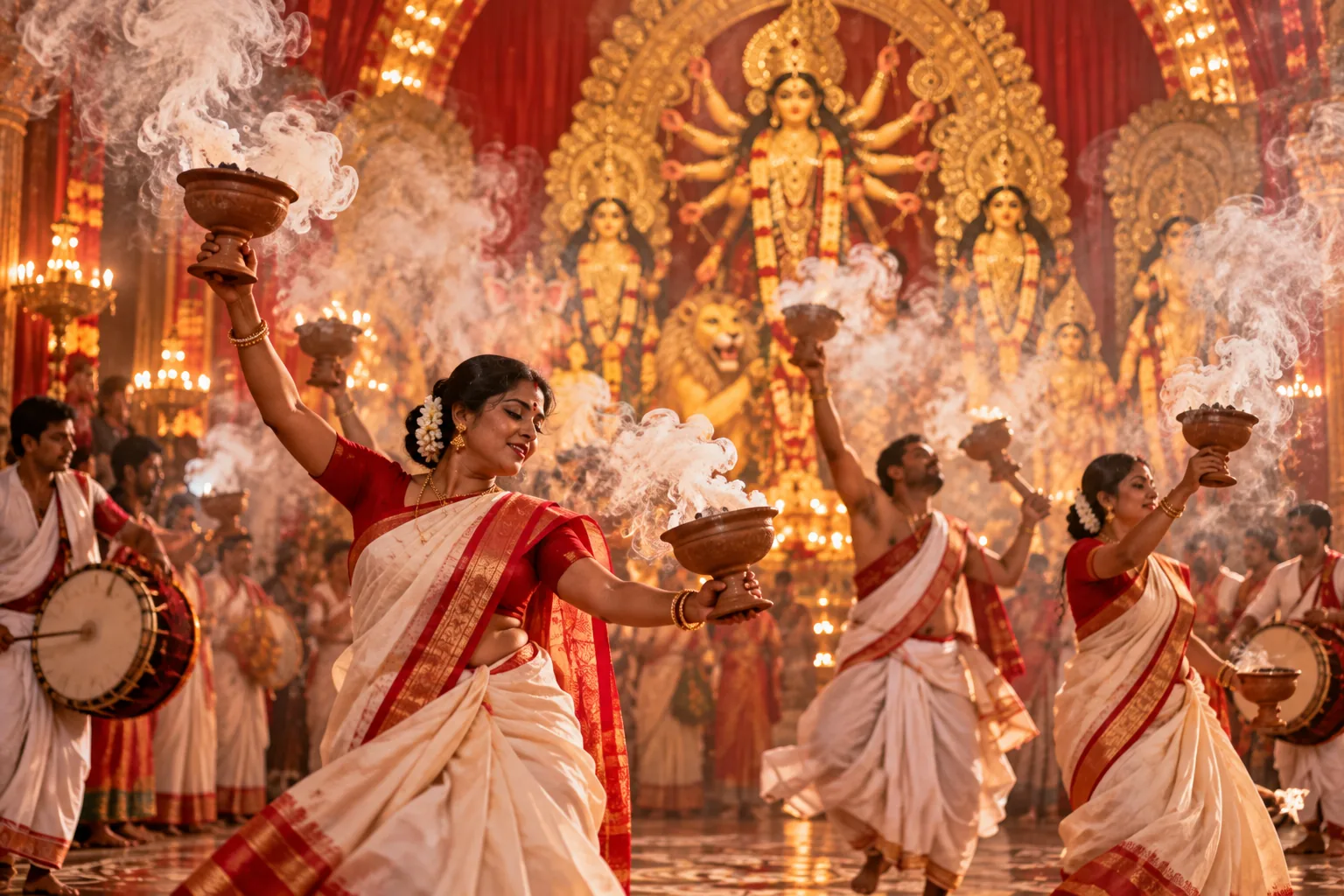
- Mahā Navamī is the last full day the goddess is at home, and the homa is offered in the morning. The evening is already the beginning of the leaving.
- Karnataka — Mysūru
- The palace holds its own Āyudha Pūjā, and the royal sword is carried in procession on an elephant — a rehearsal, in effect, for the Jambū Savārī the following day.
- Kerala
- The books stay shut. Mahā Navamī is the middle of the three days, and the one on which nothing at all is read, played or worked.
- Maharashtra and Rajasthan
- Khaṇḍe Navamī: the sword, and in Mewar the horse, are worshipped with the rest of the household’s implements — Aśva Pūjan is the one that has kept its stable.