
← All festivals

Kodomo no Hi (Children's Day)

Kodomo no Hi (Children's Day)

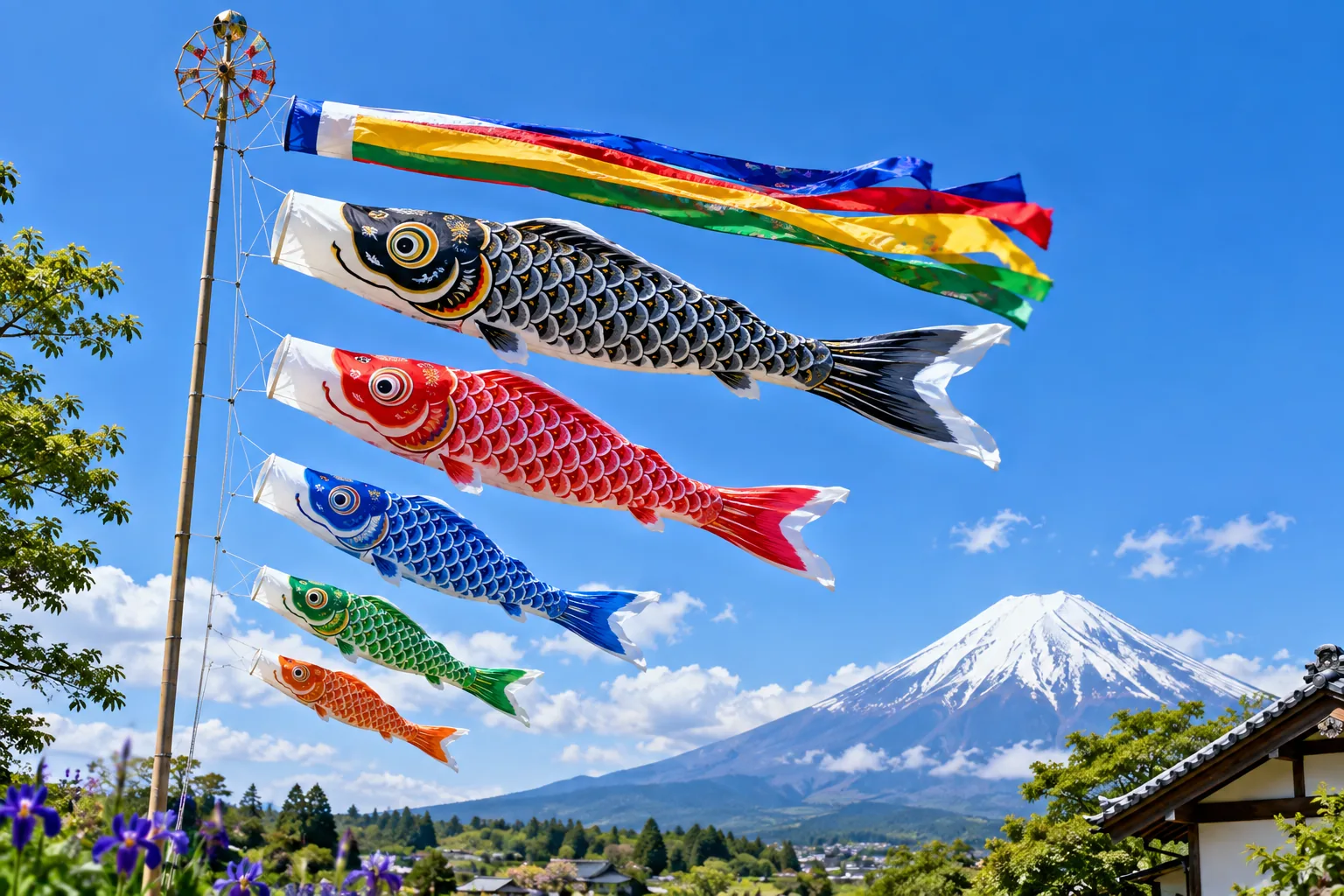
5 May, Children's Day, which grew out of the boys' festival Tango no Sekku. Carp streamers fly from poles for each child in the house, a warrior doll or helmet is set out, and kashiwa-mochi is eaten. Korea keeps its own Children's Day on the same date.

When it falls

5 May, the last day of Golden Week in Japan and a public holiday since 1948. Korea keeps its own Children's Day, Eorininal, on the same date.

The Phala almanac gives the exact day for your own city; the lunar and solar rules above are what it computes from.

The story

The date was Tango no Sekku, the boys' festival, one of the five seasonal festivals, on which samurai families set out armour and flew banners. After the war it was made a day for all children and their mothers by law, and kept the boys' emblems.

The carp is the emblem because of a Chinese story in which a carp swims up a waterfall and becomes a dragon: a child who keeps going against the current will make something of themselves.

Korea's Eorininal was founded in the 1920s by the writer Bang Jeong-hwan, who coined the word eorini for a child as a person in their own right, and landed on 5 May as a spring day when the whole family could be out of doors.

How the day is kept

  • Koinobori, carp streamers, flown from a pole in the garden: a black carp for the father, a red one for the mother, then one small carp per child.
  • A warrior doll or a miniature helmet set out indoors, and iris leaves in the bath, both against illness.
  • Kashiwa-mochi, rice cake wrapped in an oak leaf, and chimaki, sweet rice in bamboo leaves.
  • In Korea, a day out: zoos, parks and amusement parks are full, and children are given gifts.

More family bonds

The Phala almanac shows this day where it falls for your own city — sunrise, tithi and all five limbs, anywhere on earth. See how the almanac works →