← All festivals

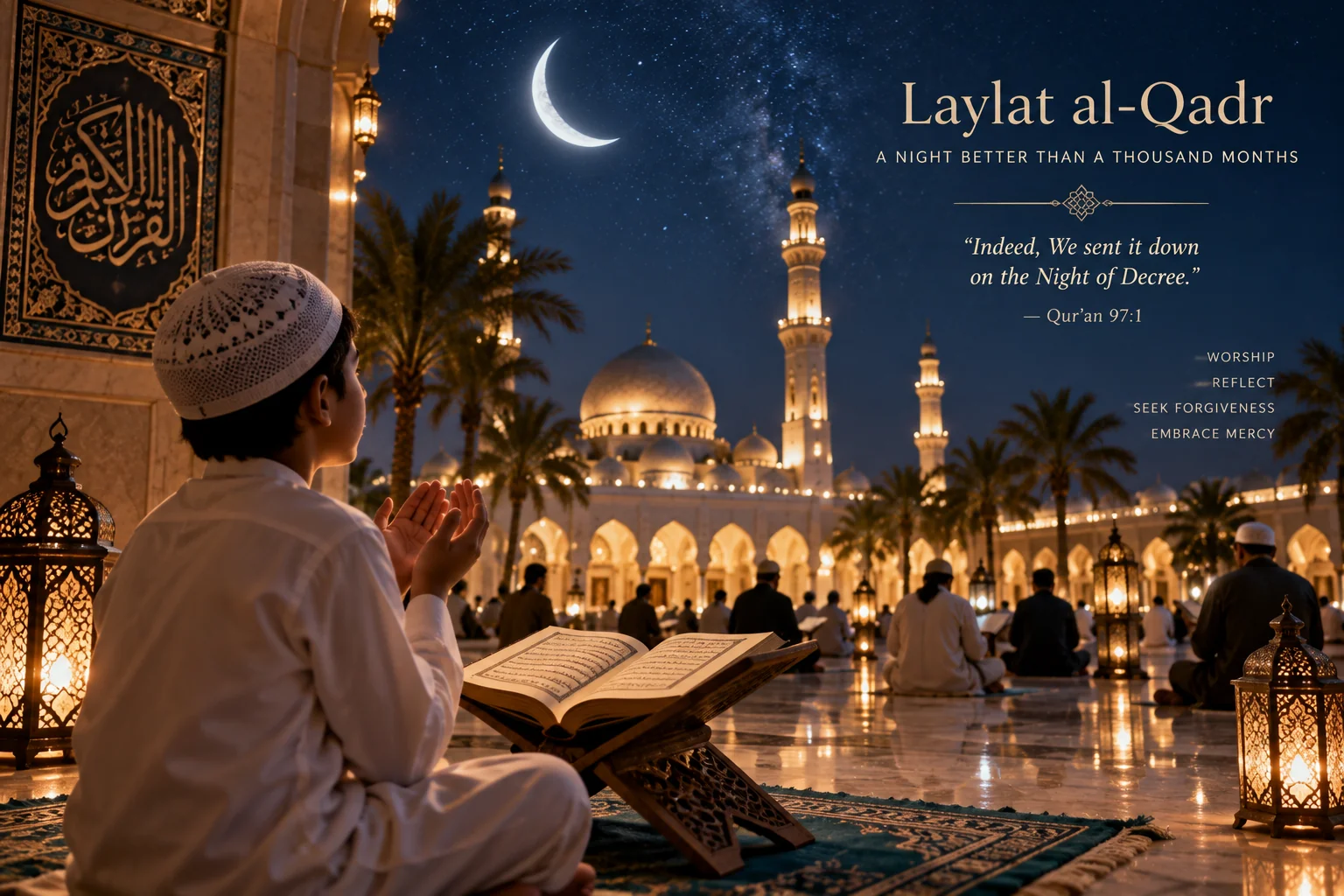
The Night of Power, when the first revelation came, better than a thousand months. It falls in the last ten nights of Ramaḍān and its exact date is not certain, so the odd nights are all kept; the twenty-seventh is the widest reckoning.

When it falls

One of the last ten nights of Ramaḍān, and not certainly known. The odd nights are all kept; the twenty-seventh is the most widely reckoned, and this calendar marks that one.

The Phala almanac gives the exact day for your own city; the lunar and solar rules above are what it computes from.

The story

The Qurʾān says the night is better than a thousand months. It is the night the first revelation came to Muḥammad in the cave at Hira, when the angel told him to read.

The exact date was deliberately not fixed. The account is that the Prophet was about to name it and an argument among two men made him forget, and he said it might be better that way — because not knowing keeps the whole last ten nights awake.

The word qadr carries both power and measure: what is decreed for the coming year is held to be set down on it.

How the day is kept

  • The last ten nights are kept in prayer, and many spend them in retreat at the mosque (iʿtikāf), leaving only for necessity.
  • The Qurʾān is recited through the night, and the short prayer asking for pardon is repeated.
  • Mosques fill after the night prayer and stay full until the pre-dawn meal.
  • Charity given on the night is held to count as though given for a thousand months.

More holy days

The Phala almanac shows this day where it falls for your own city — sunrise, tithi and all five limbs, anywhere on earth. See how the almanac works →