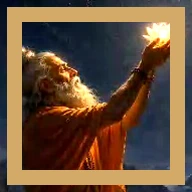
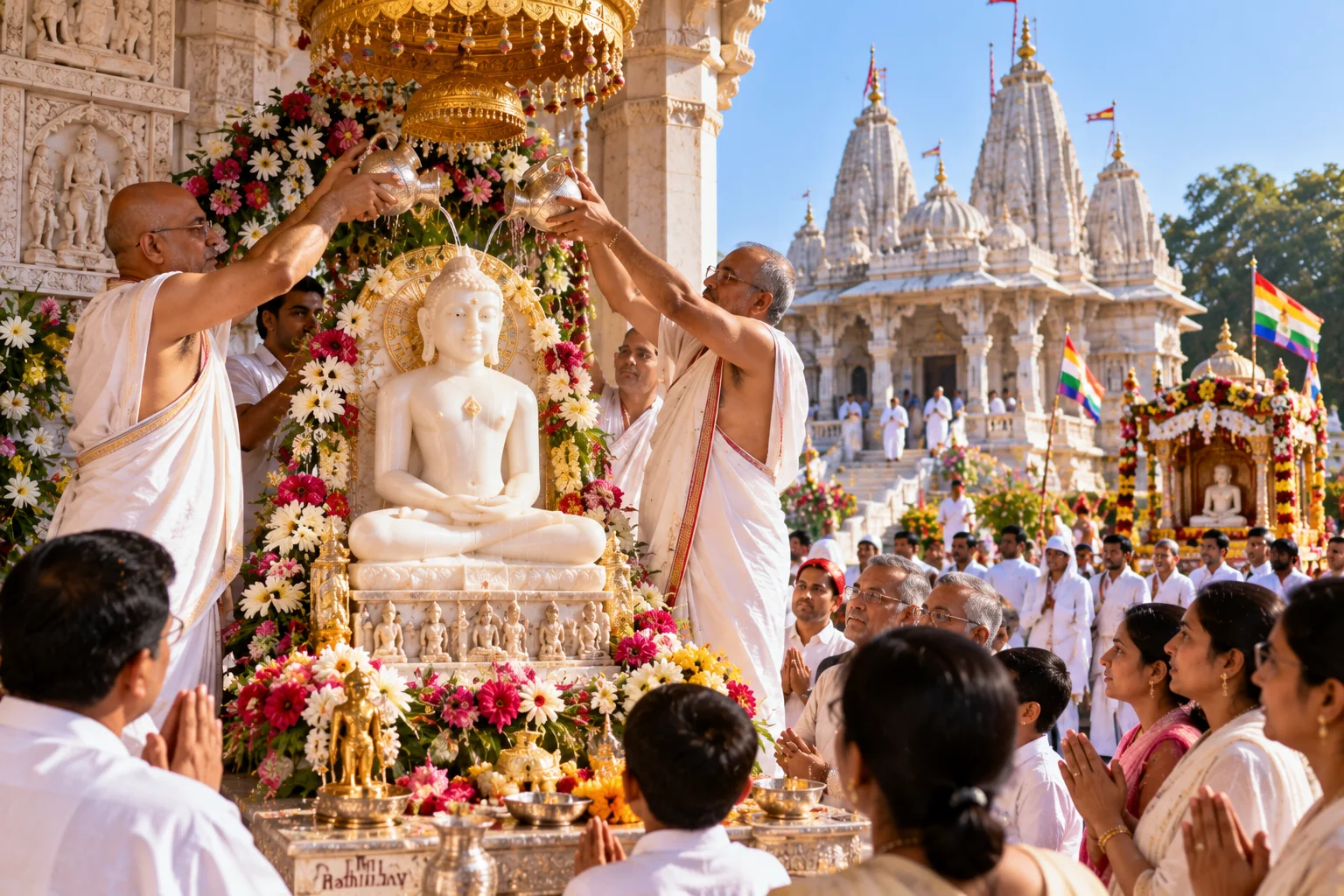
The birth of Mahāvīra, the twenty-fourth Tīrthaṅkara, on the thirteenth of bright Caitra.
When it falls
The thirteenth lunar day (trayodaśī) of the bright half of Caitra, in late March or April. It is the most widely kept Jain festival.
The Phala almanac gives the exact day for your own city; the lunar and solar rules above are what it computes from.
How Vedic Phala finds the date
Mahāvīra Jayantī is observed on Caitra śukla trayodaśī, the thirteenth tithi of the waxing fortnight. Vedic Phala derives Caitra, the bright half and trayodaśī from the local pañcāṅga at sunrise. The lunar date moves through March and April on the Gregorian calendar, and a tithi that spans two civil dates can produce different labels by location.
Śvetāmbara and Digambara communities share reverence for Mahāvīra while differing in texts, images and details of his biography. Processions carry an image to a ceremonial bathing, temples read from accounts of his life, and charity and ahiṃsā are emphasised. A local Jain organisation’s programme may use civic permissions or a weekend, but that practical schedule does not redefine trayodaśī.
This birth festival is separate from Mahāvīra Nirvāṇa on the Dīpāvali new moon. Keeping both entries prevents the life story from being collapsed into one generic Jain holiday. The app’s calendar rule states the lunar anchor; temple notices provide the precise worship and procession times.
The calendar also avoids treating every Caitra trayodaśī as the birthday: the lunar month, fortnight and ordinal tithi must all match. That full combination is why the date returns once in the religious year rather than twice each lunar month.
Mahāvīra is the twenty-fourth Tīrthaṅkara, not the founder of a faith understood to have begun with him. The festival retells the auspicious dreams before his birth, his renunciation, discipline and teaching of non-violence, truth, non-stealing, celibacy and non-possession. Public processions carry those teachings into view, while temple worship remains specific to the community.
Charity commonly takes forms consistent with ahiṃsā, including food, medicine and care for animals. Fasting and study may replace spectacle for some households. These differences in emphasis do not create competing dates: they are ways of keeping the same Caitra trayodaśī.
A civic holiday notice may cover an entire state or country, while a procession permit names particular hours. Neither changes the tithi. The app separates the calendrical answer from those practical schedules so the reader can verify each with the appropriate source.
The story
Vardhamāna, later called Mahāvīra, the great hero, was born in 599 BCE by the traditional count to King Siddhārtha and Queen Triśalā of the Licchavi clan at Kuṇḍagrāma near Vaiśālī in Bihar. His mother dreamed fourteen (or sixteen, in the Digambara count) auspicious dreams before his birth, and the dreams are the festival's emblems.
At thirty he left home, gave up his clothes and possessions, and spent twelve years in silent austerity before attaining kevala jñāna, complete knowledge. He is the twenty-fourth and last Tīrthaṅkara (ford-maker) of this age, the teacher who set the Jain path in its present form: non-violence (ahiṃsā) to every living being, truth, non-stealing, chastity and non-possession.
How the day is kept
The image of Mahāvīra is given a ceremonial bath (abhiṣeka) and carried in a chariot procession (rath yātrā) through the town, with the fourteen dreams displayed.
Temples are decorated with flags; lectures on his teaching and readings from the Kalpa Sūtra, the life of the Tīrthaṅkaras.
Charity of grain and money, and the freeing of animals from slaughterhouses on the day, which Jain communities pay for.
Pāvāpurī and Vaiśālī in Bihar, Girnar and Pālitānā in Gujarat, and Śravaṇabeḷagoḷa in Karnataka draw the largest gatherings.
Watch
Videos from YouTube, each credited to its channel. Tap one to play it here, or open it on YouTube.
The storyThe life of MahāvīraVardhamāna's birth, renunciation and teaching, and the Jain path he set out.Courtesy of Bookstawa · Watch on YouTube
Processions and paradesA Mahāvīra Jayantī processionThe Jain procession through Delhi on the day, with the image in its chariot.Courtesy of WildFilmsIndia · Watch on YouTube