Hanumān's birthday, most widely kept on the Caitra full moon. The Hanumān Cālīsā is recited; strength in service of devotion is the day's theme.
When it falls
Most of India keeps the full moon of Caitra, in late March or April. Andhra and Telangana keep the tenth day of dark Vaiśākha, about six weeks later; Karnataka keeps the full moon of Mārgaśīrṣa in December; Tamil Nadu the new moon of Mārgaḻi.
The Phala almanac gives the exact day for your own city; the lunar and solar rules above are what it computes from.
How Vedic Phala finds the date
The most widespread north Indian reckoning places Hanumān Jayantī on Caitra pūrṇimā. Vedic Phala uses that lunar rule for its common calendar marker: it computes Caitra and the full-moon tithi at the reader’s sunrise. A full moon is an astronomical phase boundary expressed as a tithi, not a permanent April date, and its local civil label can change with longitude and time zone.
There is no single pan-Indian birthday date for Hanumān. Tamil tradition commonly observes Hanumath Jayanthi in Mārgaḻi under Mūla nakṣatra; Karnataka and Andhra lineages use other reckonings, including a day in the Vaiśākha cycle. The site states the convention it follows instead of presenting regional dates as errors. Readers belonging to one of those lineages should follow their temple calendar while using this page for the shared story and forms of worship.
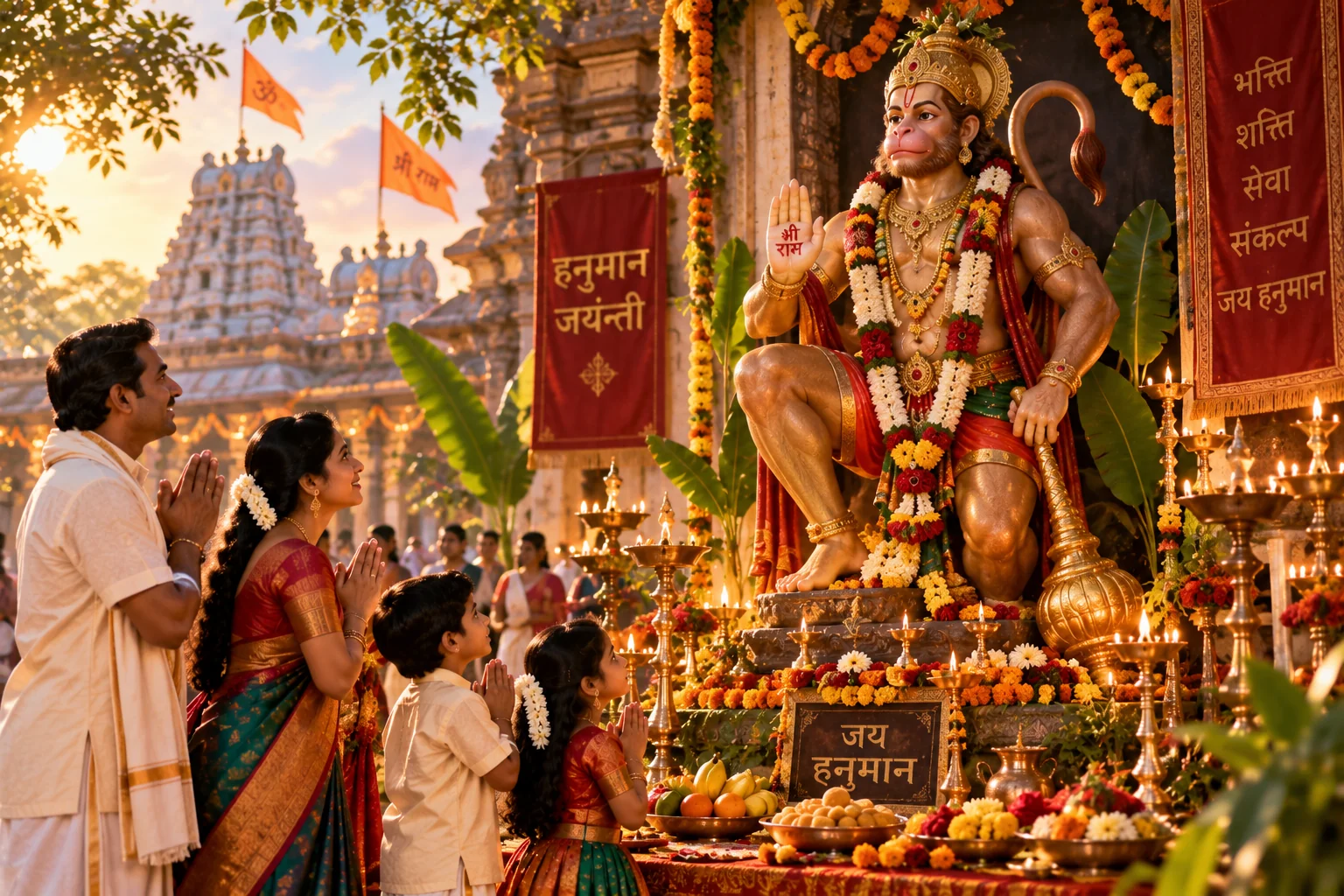
At the Caitra observance, recitation of the Hanumān Cālīsā, Sundara Kāṇḍa and offerings of sindūra are common. The practice often begins before sunrise, making local dawn relevant even when two sources print the same date. The app’s place-aware pañcāṅga is designed to make that boundary visible.
Hanumān’s worship joins physical strength to service rather than conquest. Temples may offer garlands of betel leaves, butter or vada, and akhāṛās honour him as the patron of disciplined training. Processions and continuous recitation can run through the day, while the birthday story may focus on the child Hanumān reaching for the Sun.
Regional disagreement deserves to remain visible because it reflects living calendars, not a missing database row. The common Caitra marker gives a broad reader one dependable reference, and the page names the southern alternatives so that someone meeting another date knows why it exists, which lineage uses it, and where to verify it locally.
The story
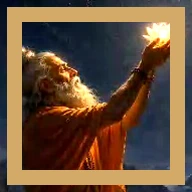
Hanumān is the son of the wind god Vāyu and Añjanā, and the greatest of Rāma's devotees. As a child he leapt for the sun, taking it for a fruit, and was struck down by Indra's thunderbolt; the gods made amends with the gifts that made him unstoppable.
In the Rāmāyaṇa he crosses the sea to Laṅkā in one leap to find Sītā, burns the city with his tail, and carries a whole mountain back because he cannot tell which herb will save Lakṣmaṇa. He asks for nothing but to serve. Strength placed wholly at the service of love is what the day honours.
How the day is kept
The Hanumān Cālīsā, Tulsīdās's forty verses of praise, is recited, often 108 times in a temple over the day.
Images are anointed with sindūr (vermilion) mixed in oil, since Hanumān once covered his whole body in it after learning that Sītā wore it for Rāma's long life.
Wrestlers and gymnasts keep the day; the akhāṛā (traditional gymnasium) is his shrine.
Readings of the Sundara Kāṇḍa, the book of the Rāmāyaṇa that is Hanumān's, run through the day.
Watch
Videos from YouTube, each credited to its channel. Tap one to play it here, or open it on YouTube.
The storyThe story of HanumānHanumān's life from his birth to Añjanā and Vāyu to the leap to Laṅkā and the mountain of herbs.Courtesy of THE HINDU SAGA · Watch on YouTube
Rituals and customsThe Hanumān Cālīsā · In HindiTulsīdās's forty verses of praise, sung by Hariharan; the recitation that fills Hanumān Jayantī.Courtesy of T-Series Bhakti Sagar · Watch on YouTube
CelebrationsHanumān Jayantī at a temple · In HindiThe birthday celebration at a Hanumān temple in Gujarat: the prakaṭya stuti, the sindūr, the crowds.Courtesy of Harni Hanumanji Official · Watch on YouTube