← All festivals

Kullu's Daśarā begins on the day the rest of India finishes, and runs a week. The village gods of the valley are carried down in palanquins to the Dhalpur maidān to attend Raghunāth, and it closes with Laṅkā Dahan by the Beas; no effigy is burnt on the first day.

When it falls

Seven days beginning on Vijayadaśamī, the day the rest of India finishes, in October. It closes on or just after the full moon of Āśvina.

The Phala almanac gives the exact day for your own city; the lunar and solar rules above are what it computes from.

The story

The valley’s Daśarā has no Rāvaṇa in it. Nothing is burnt on the first day and no effigy is built; what happens instead is a gathering of gods.

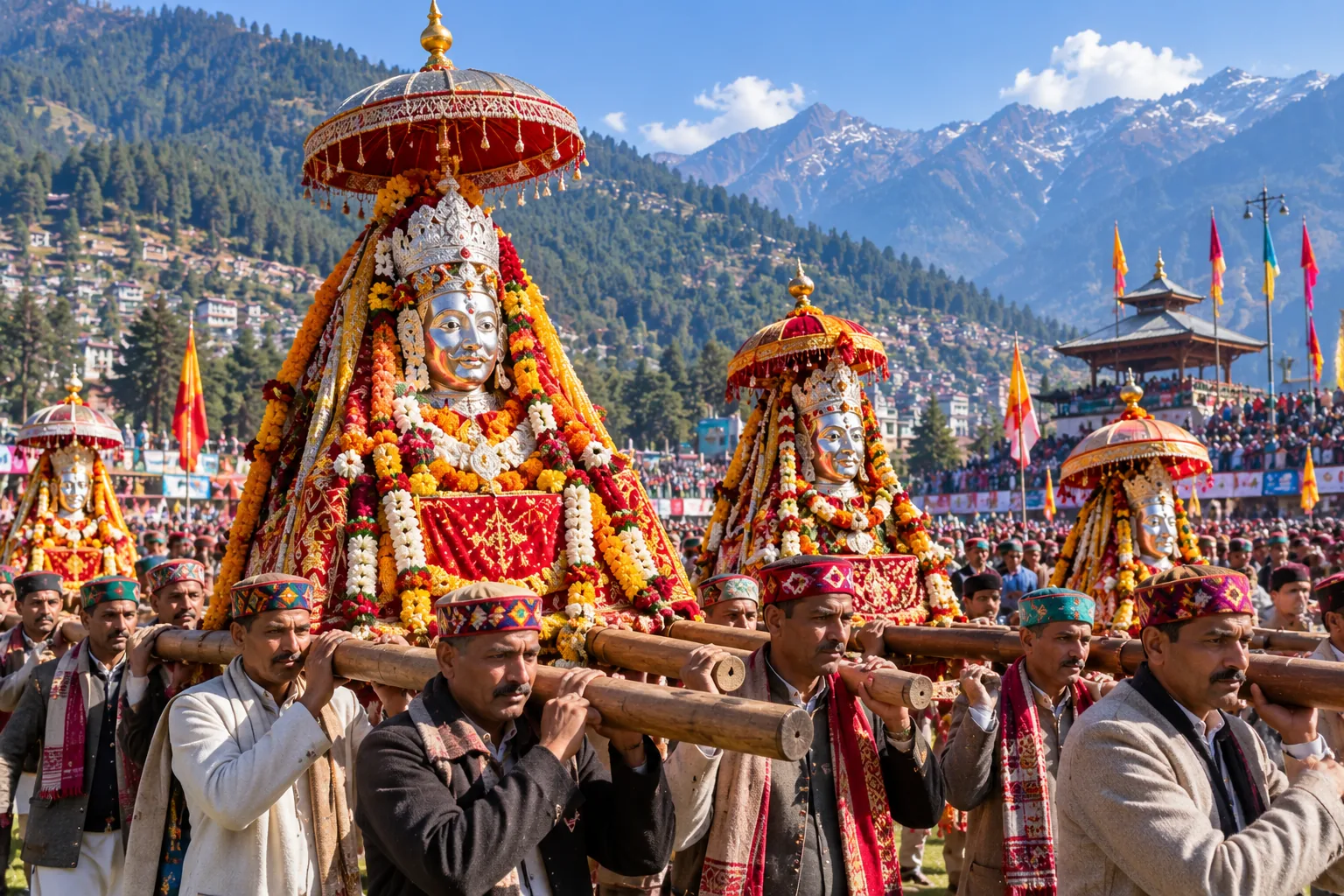
Raghunāth, an image of Rāma brought from Ayodhyā in the seventeenth century and installed by Raja Jagat Singh in expiation, is the valley’s presiding deity. The village devatās of Kullu — more than two hundred of them, each with its own palanquin, its own musicians and its own gūr who speaks for it — are carried down from their villages to the Dhalpur maidān to attend him.

The palanquins are covered in cloth and silver masks and carried on the shoulders of the village men, some walking two or three days to arrive. The gods visit one another on the ground, and which deity may sit where, and who calls on whom, follows an order older than the festival.

How the day is kept

  • The rath of Raghunāth is pulled across the maidān on ropes on the first day, with the assembled deities around it. Being on the rope is the point of attending.
  • The devatās camp on the ground for the week, and the fair that grows around them is the valley’s largest market of the year.
  • The valley’s own dance and music are performed nightly, and since 2017 an international folk festival has run alongside them.
  • On the last day the gods move to the bank of the Beas, a pile of thorn and grass is burnt as Laṅkā Dahan, and Raghunāth is carried back to his temple at Sultanpur.

At the table

Dhām, the valley’s sit-down meal served on leaf plates by the botis who cook it: rice, mādrā of chickpeas in curd, khaṭṭā, and sweet rice with raisins.

More victory and deliverance

The Phala almanac shows this day where it falls for your own city — sunrise, tithi and all five limbs, anywhere on earth. See how the almanac works →