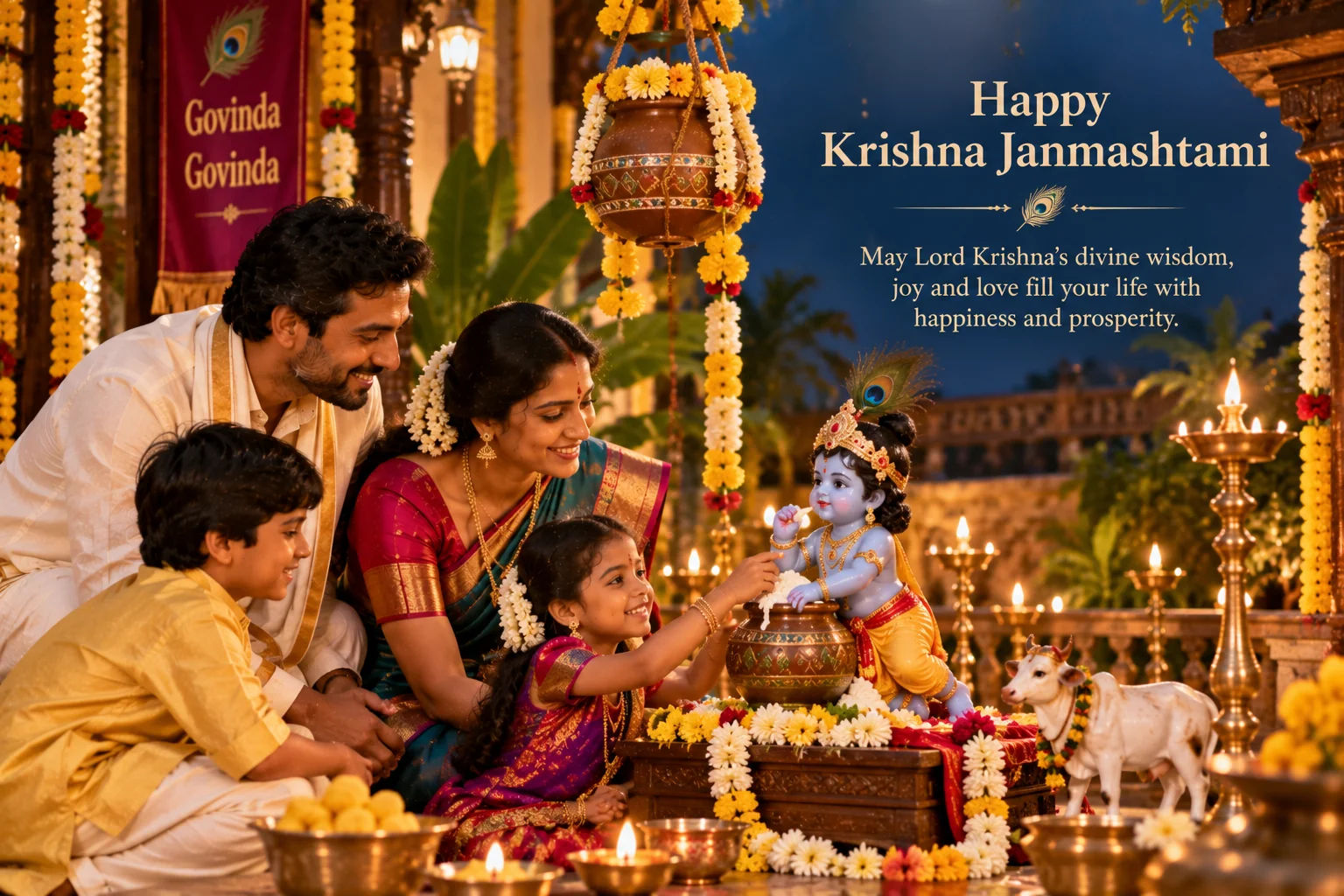
Kṛṣṇa's birth at midnight, on the eighth day of Śrāvaṇa's dark half. Fasts run to the midnight hour; hung pots of curd are broken the day after.
How Vedic Phala finds the date
Vedic Phala anchors Janmāṣṭamī to Śrāvaṇa kṛṣṇa aṣṭamī, the eighth tithi of the waning half. Its calendar derives the lunar month and tithi from local astronomical conditions and checks the day at sunrise. The worship itself culminates at midnight, which creates a real choice when aṣṭamī touches two civil dates. Some authorities privilege the night on which aṣṭamī and Rohiṇī nakṣatra meet; others distinguish the Smārta and Vaiṣṇava observance. A one-line date list often conceals that rule difference.
The app’s marker records the common aṣṭamī basis and does not pretend to replace a temple’s sampradāya calendar. Mathurā and Vṛndāvana focus on the midnight birth, Maharashtra follows with Dahi Handi, and Kerala commonly calls the day Aṣṭamirohiṇī and gives Rohiṇī special weight. These are not separate stories pasted onto a fixed holiday. They are regional decisions about which portion of a moving lunar day carries the principal rite. Readers planning a fast or a midnight pūjā should therefore use the local time shown by their own pañcāṅga, not another city’s calendar date.
The story
Kṛṣṇa was born at midnight in the prison of Mathurā, the eighth child of Devakī and Vasudeva. His uncle Kaṃsa had killed the first six because of a prophecy that the eighth would kill him. That night the chains fell open, the guards slept, and Vasudeva carried the baby across the flooding Yamunā to Gokula, where he was swapped for the newborn daughter of Nanda and Yaśodā.
He grew up a herder's son, stealing butter, playing the flute, dancing with the cowherd girls, and killing every demon Kaṃsa sent. He returned to Mathurā as a young man and did what the prophecy said. The Bhagavad Gītā is his teaching on the battlefield at Kurukṣetra.
Mathurā and Vṛndāvana, his birthplace and childhood, fill for the night; the Dvārakādhīśa temple and the Bāṅke Bihārī temple hold their midnight āratī to crowds of many thousands.