
← All festivals

Duānwǔ (Dragon Boat Festival)

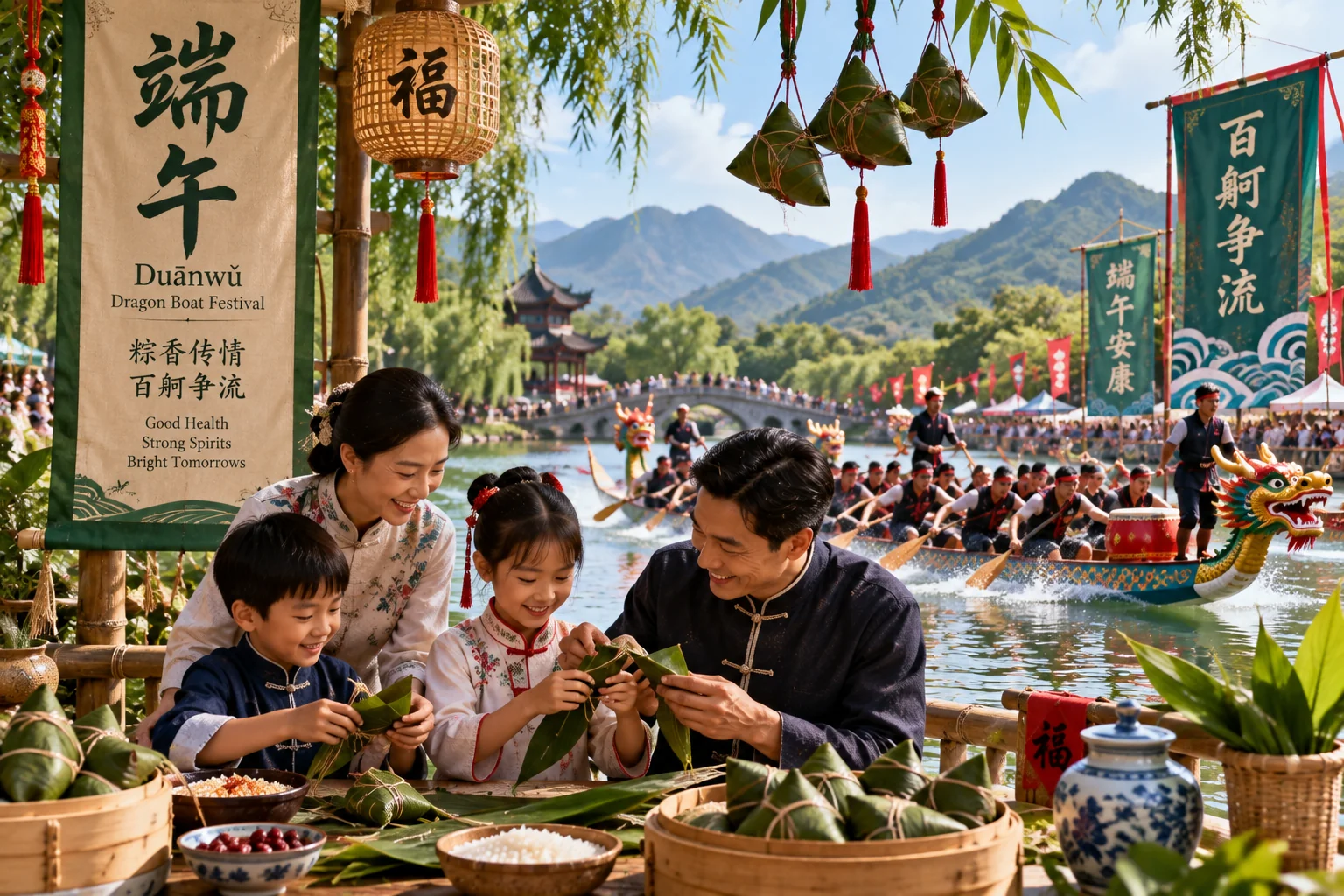
The fifth day of the fifth month, for Qū Yuán, the exiled poet-minister who drowned himself in the Mìluó. The people rowed out to save him and beat drums to keep the fish away, which is the dragon-boat race, and threw rice into the water, which is the zòngzi.

When it falls

The fifth day of the fifth lunar month, in late May or June — the double fifth, which is where the older name comes from.

The Phala almanac gives the exact day for your own city; the lunar and solar rules above are what it computes from.

The story

Qū Yuán was a minister and poet of the state of Chu, exiled for opposing an alliance he thought would destroy it. When the capital fell he walked into the Mìluó river holding a stone.

The people rowed out to look for him, which is the dragon-boat race, and beat drums and threw rice into the water so the fish would eat that instead of him, which is the zòngzi. Both explanations are given by everyone and both are almost certainly later than the festival.

What the day was first is a midsummer one: the fifth month was reckoned poisonous, the season when illness comes, and the mugwort, the calamus and the realgar wine are all about keeping that out of the house.

How the day is kept

  • Dragon-boat races, crews of twenty or more to a boat with a drummer in the bow; Hong Kong, Taiwan and a hundred overseas cities race the same day.
  • Zòngzi — glutinous rice with pork, bean paste or egg yolk, wrapped in bamboo or reed leaves and steamed. The north makes them sweet and the south savoury and the argument is annual.
  • Mugwort and calamus hung over the door, and coloured silk threads tied on children's wrists.
  • Standing an egg on its end at noon, which is said to work only on this day.

More spring and the seasons

The Phala almanac shows this day where it falls for your own city — sunrise, tithi and all five limbs, anywhere on earth. See how the almanac works →