← All festivalsʿĀshūrāʾ

The tenth of Muḥarram. Sunni tradition keeps it as a fast; for Shīʿa Muslims it is the day of Ḥusayn's death at Karbalā, marked with mourning processions and majlis.

When it falls

The tenth of Muḥarram, the first month of the Islamic year. The Islamic calendar is lunar and shifts about eleven days earlier each Gregorian year, so it walks the seasons.

The Phala almanac gives the exact day for your own city; the lunar and solar rules above are what it computes from.

The story

For Sunni Muslims the day is a fast. The Prophet found the Jews of Medina fasting on it in memory of the parting of the sea before Moses, and said that Muslims had a better claim to Moses than they did — so the fast was kept, and remains a recommended one.

For Shīʿa Muslims the day is the death of Ḥusayn, the Prophet's grandson, at Karbalā in 680. He refused allegiance to the caliph Yazīd, rode out with about seventy men and his family, was surrounded, cut off from the Euphrates for three days, and killed. His half-brother ʿAbbās died trying to bring water to the children.

The two observances share a date and almost nothing else. One is a quiet fast; the other is ten days of public mourning that end in the streets.

How the day is kept

  • Sunni households fast on the ninth and tenth, or the tenth and eleventh, and treat the day as one for charity.
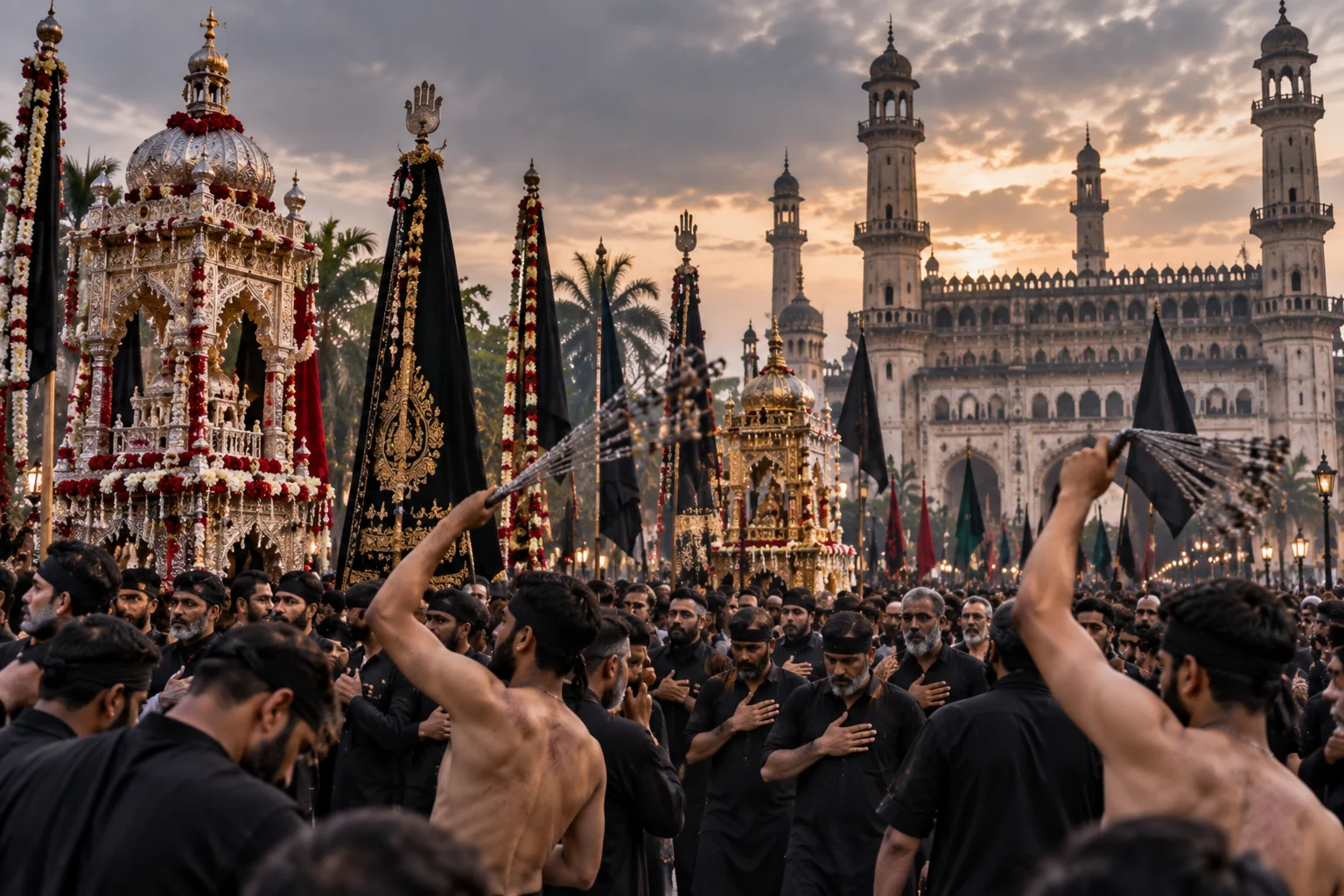
  • Shīʿa communities hold majlis through the first ten nights — a gathering where the events of Karbalā are recounted and wept for — and process on the tenth with black banners.
  • Ta'zia, paper and bamboo replicas of Ḥusayn's tomb, are carried through the streets in India and buried or immersed at the end of the day.
  • Some processions include self-flagellation with chains or blades; many clerics discourage it and direct the community to blood donation instead, which is now organised on the day in several countries.
  • Water is given away free at the roadside in Ḥusayn's memory, because his party died thirsty.

More ancestors and remembrance

The Phala almanac shows this day where it falls for your own city — sunrise, tithi and all five limbs, anywhere on earth. See how the almanac works →