The festival of sacrifice at the height of the Hajj, remembering Ibrāhīm's offering; the meat is shared in thirds.
When it falls
The tenth day of Dhū al-Ḥijjah, the last month of the Islamic year, the day after the pilgrims stand at ʿArafāt during the Hajj. The Islamic year is eleven days shorter than the solar one, so the day moves earlier each year and walks the whole calendar in thirty-three years.
The Phala almanac gives the exact day for your own city; the lunar and solar rules above are what it computes from.
How Vedic Phala finds the date
Eid al-Adha is the tenth day of Dhū al-Ḥijjah, the month of the Hajj. Vedic Phala obtains the civil marker through its Hijri calendar layer. As with the start of Ramadan and Eid al-Fitr, communities may follow local sighting, a national authority or Saudi announcements, so the observed civil date can differ. The tabular result is a planning date, not a substitute for the authority a mosque follows.
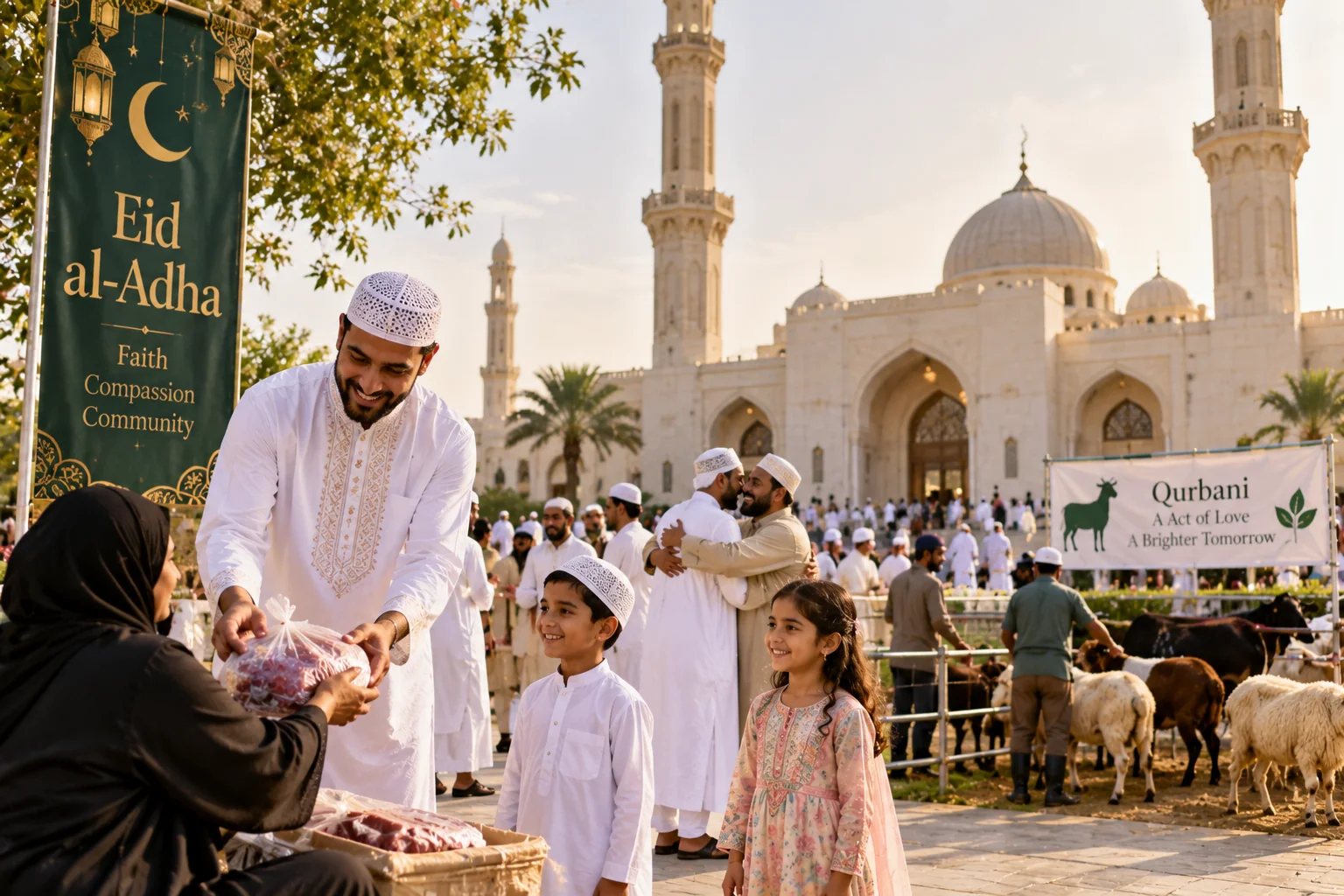
The festival prayer is followed by the sacrifice where law and circumstance permit it, and the meat is distributed among household, neighbours and people in need. For pilgrims, the day belongs to the Hajj sequence at Minā after ʿArafāt; for Muslims elsewhere it is a congregational feast linked to Ibrāhīm’s willingness to offer his son. The following days are also days of sacrifice, which is why public observance extends beyond one morning.
A calendar entry should not confuse the religious date with an employer’s holiday or a community event moved to a weekend. Vedic Phala shows the Hijri basis; local announcements determine prayer time, sighting convention and practical arrangements.
The story
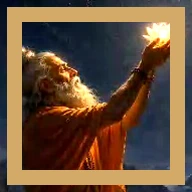
Ibrāhīm (Abraham) dreamed that God asked him to sacrifice his son, Ismāʿīl in the Islamic telling, and both father and son submitted. At the moment of the sacrifice God replaced the boy with a ram. The festival keeps that submission and that mercy, and every family that can afford an animal sacrifices one and shares the meat in three parts: for the family, for relatives and friends, and for the poor.
It is the greater of the two Eids and the one that closes the Hajj: on the same morning the two million pilgrims at Minā stone the pillars, sacrifice, and cut their hair, and the whole Muslim world keeps the day with them.
In India it is Bakrīd, from the goat (bakrā) most families sacrifice; Delhi's Jāmaʿ Masjid and Hyderabad's Mecca Masjid hold the largest of the morning prayers.