← All festivals

Dōngzhì (Winter Solstice Festival)

The winter solstice, the year's turn back toward the light and one of the oldest festivals in the calendar. The north eats dumplings and the south tangyuan; Korea keeps it as Dongji with red-bean porridge, whose colour is held to keep the year's ghosts out.

When it falls

The December solstice, 21 or 22 December — a solar term, and the one the whole Chinese calendar is anchored to, because the month containing it is always the eleventh.

The Phala almanac gives the exact day for your own city; the lunar and solar rules above are what it computes from.

The story

It is among the oldest festivals in the calendar and was once the new year: the shortest day is the point the yang begins to return, so the count of the year began where the light did.

There is a saying that the winter solstice is as big as the new year, and in parts of the south it still is.

The dumplings in the north are attributed to Zhāng Zhòngjǐng, a physician who found villagers with frostbitten ears and cooked mutton and herbs wrapped in dough shaped like ears to warm them.

How the day is kept

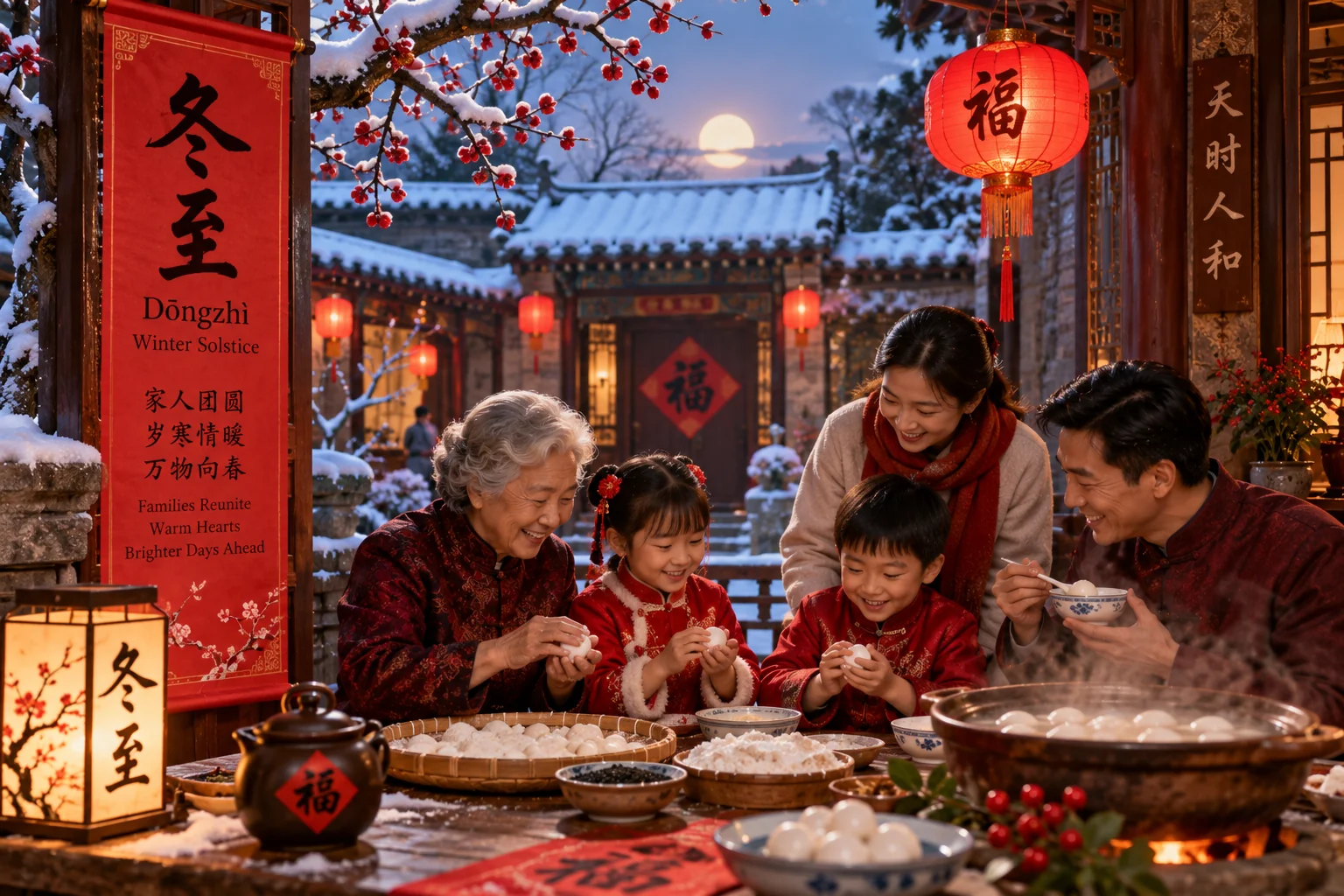
  • Dumplings in the north, tāngyuán in the south — the round rice balls again, and eating them is said to add a year to your age.
  • The family eats together and offerings are made to the ancestors; in Taiwan nine-layer cakes are steamed in the shapes of auspicious animals.
  • Korea keeps it as Dongji with patjuk, red-bean porridge, some of it flicked at the gate and the walls because the colour is held to turn back the year's ghosts.
  • Japan keeps it as Tōji, with a hot bath of floating yuzu and a dish of pumpkin.

More solar turning points

The Phala almanac shows this day where it falls for your own city — sunrise, tithi and all five limbs, anywhere on earth. See how the almanac works →