
← All festivals

Hinamatsuri (Doll Festival)

Hinamatsuri (Doll Festival)

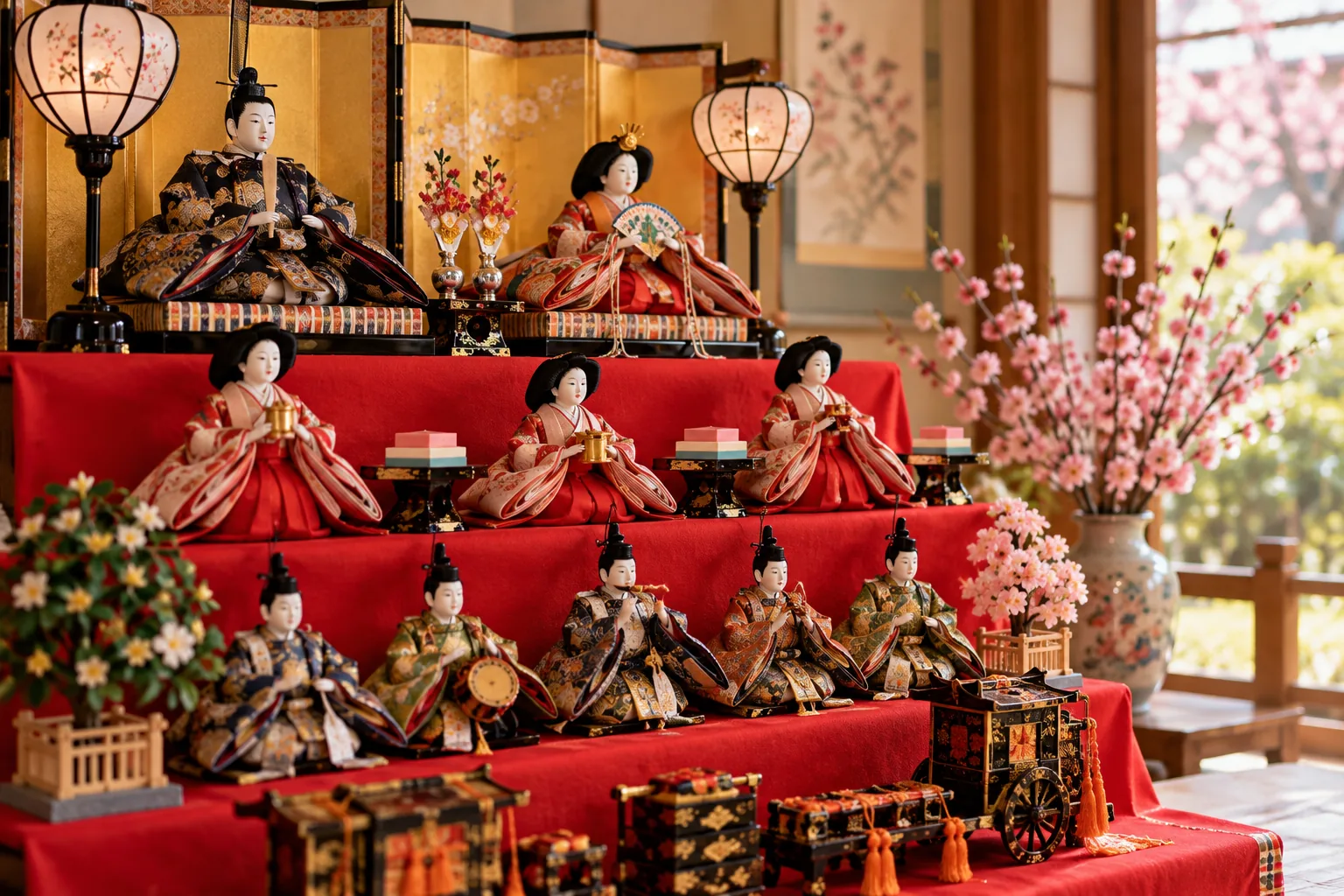
3 March, the Doll Festival, kept for daughters. A tiered stand of court dolls in Heian dress is set out in the house through February and put away promptly on the day, since a set left standing is said to delay the girl's marriage. Chirashi-zushi, clam soup and hishi-mochi are eaten.

When it falls

3 March every year. Some regions keep it a month later on 3 April, the old lunar date carried over, when the peach trees the day is named for are actually in bloom.

The Phala almanac gives the exact day for your own city; the lunar and solar rules above are what it computes from.

The story

The day began as Momo no Sekku, the peach festival, one of the five seasonal festivals brought from China. Paper dolls were stroked over the body to take on its ill fortune and floated down the river, and a few places still send them off that way as nagashi-bina.

In the Edo period the dolls stopped floating and started being kept, and became the tiered display of an emperor and empress with their court in Heian dress. A first set is given to a girl by her grandparents in her first year and comes out every February after that.

The display goes up early and comes down promptly. A set left standing past the day is said to delay the daughter's marriage, which is the one rule every family keeps whatever else it does.

How the day is kept

  • The hina dolls are set out on red-covered steps from mid-February: the imperial pair on top, then three court ladies, five musicians, two ministers, three servants, and the household furniture in miniature.
  • Chirashi-zushi, a clear clam soup, hishi-mochi in pink, white and green, and hina-arare crackers, with white sweet sake for the children.
  • Peach blossom in the house, for the season and for the name.
  • The whole display is packed away on the evening of the third, or the next dry day at the latest.

More family bonds

The Phala almanac shows this day where it falls for your own city — sunrise, tithi and all five limbs, anywhere on earth. See how the almanac works →