← All festivals

Día de Muertos (Day of the Dead)

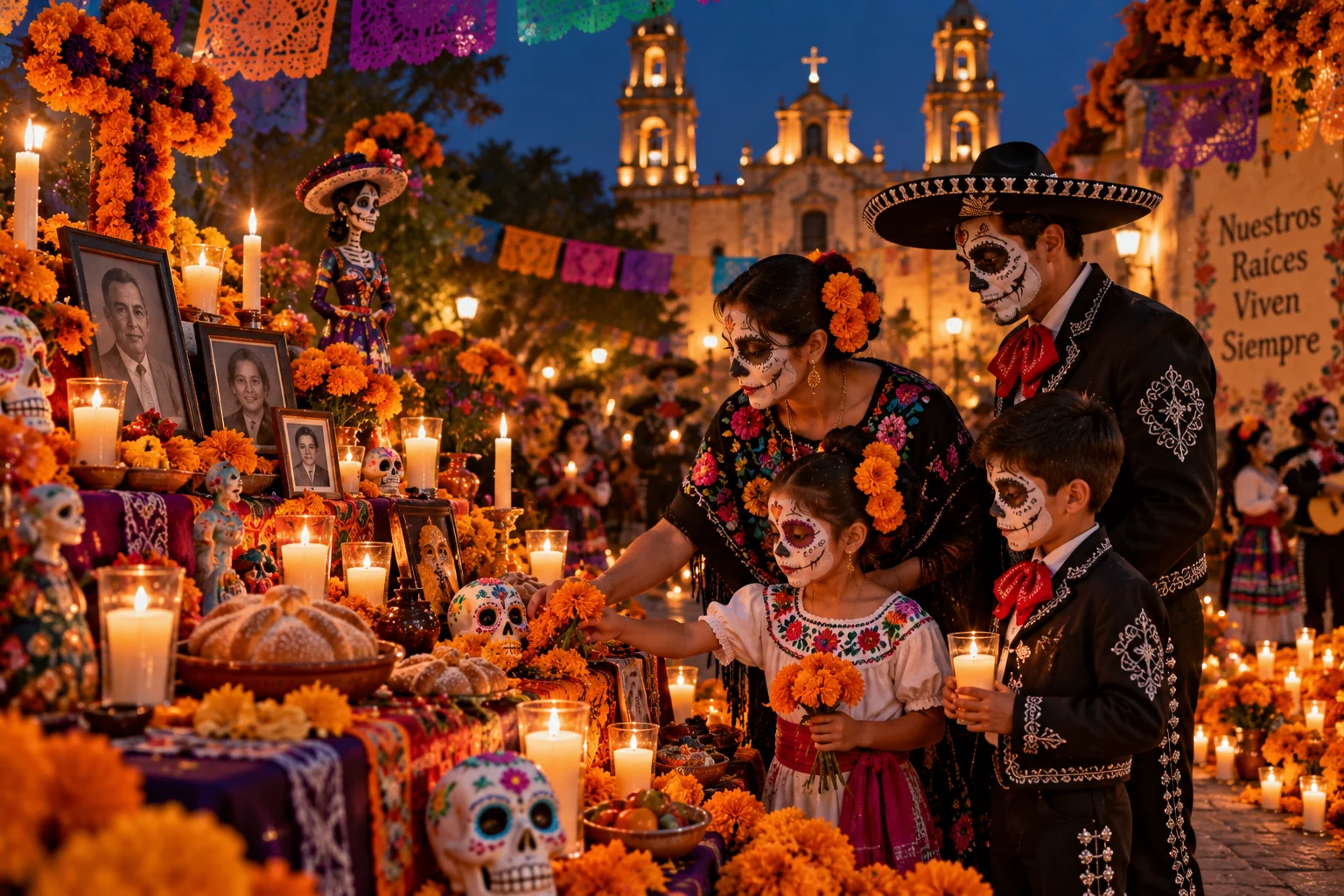
Mexico's two days for the dead: an altar at home with photographs, marigolds, salt, water and the food the person liked, so they can find their way and eat. Grief kept as welcome rather than as mourning.

When it falls

1 and 2 November: the first day for children who have died, the second for adults. The preparation begins days before.

The Phala almanac gives the exact day for your own city; the lunar and solar rules above are what it computes from.

The story

The dead are held to come back for the night, and the house prepares for guests rather than for grief. An altar is built with their photograph, and with what they liked to eat and drink.

Marigolds are laid in a path from the door because their smell is said to be what the dead follow. Water is set out because the journey is long, and salt, and a candle for each person expected.

It is not Mexican Halloween, and it is older than either name: the church calendar was set over an existing observance rather than replacing it.

How the day is kept

  • The ofrenda at home, in tiers, with photographs, marigolds, candles, salt, water, pan de muerto and the person's own drink.
  • Families sit at the graves overnight with food and music; the cemeteries at Mixquic and Pátzcuaro are candlelit end to end.
  • Sugar skulls carry the name of a living person, and calaveras — short mocking verses about someone not yet dead — are written and read out.
  • Recognised by UNESCO in 2008 and now kept well beyond Mexico by the diaspora.

More ancestors and remembrance

The Phala almanac shows this day where it falls for your own city — sunrise, tithi and all five limbs, anywhere on earth. See how the almanac works →