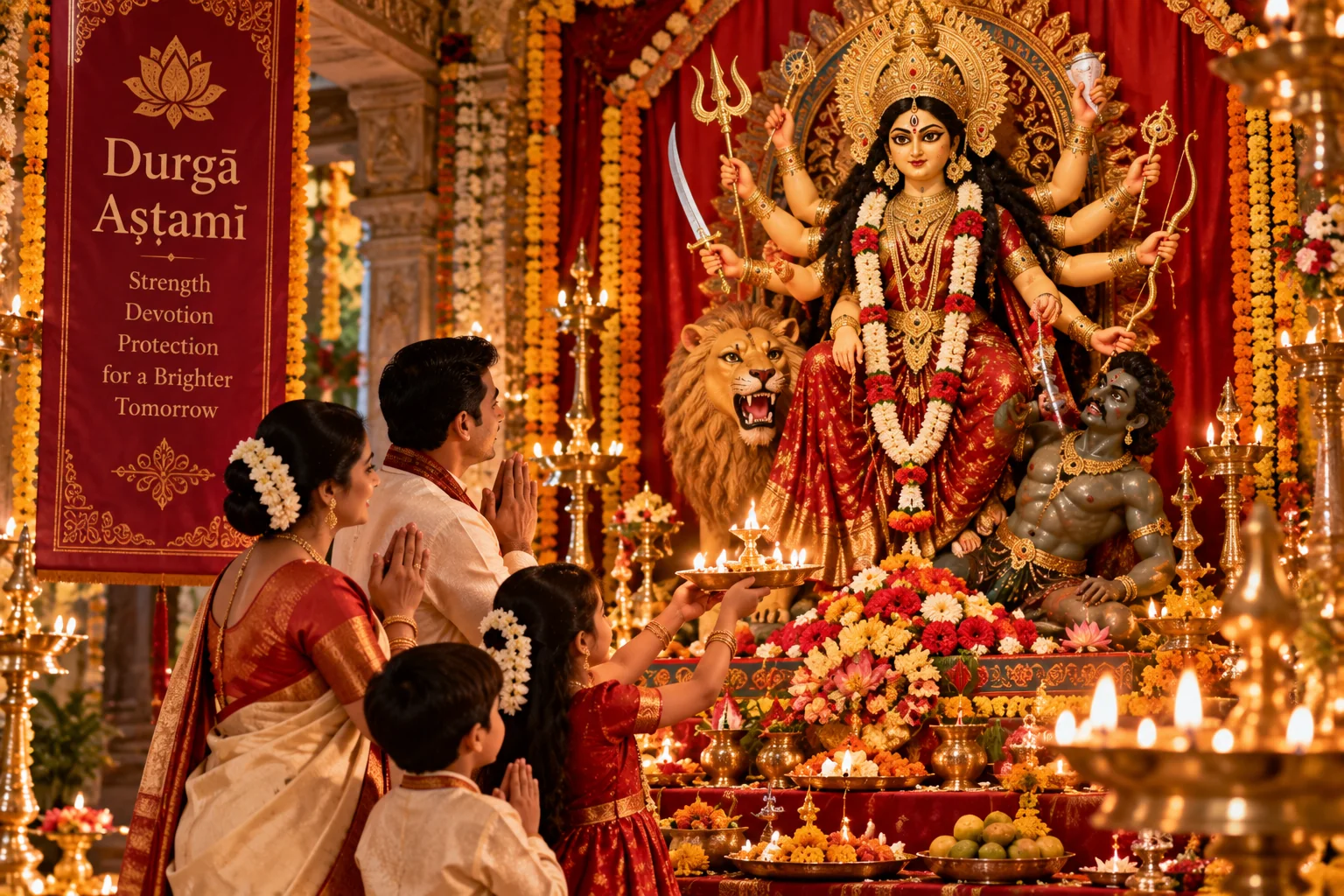
The eighth night of Navarātri, the fiercest of the nine. Weapons and the goddess's own arms are worshipped, and in Bengal the Sandhi Pūjā falls at the joint between aṣṭamī and navamī.
The story
Navarātri is nine nights of a single fight: Mahiṣāsura, a demon who could not be killed by any god or man, against a goddess assembled out of the anger of all of them. The eighth night is when it turns.
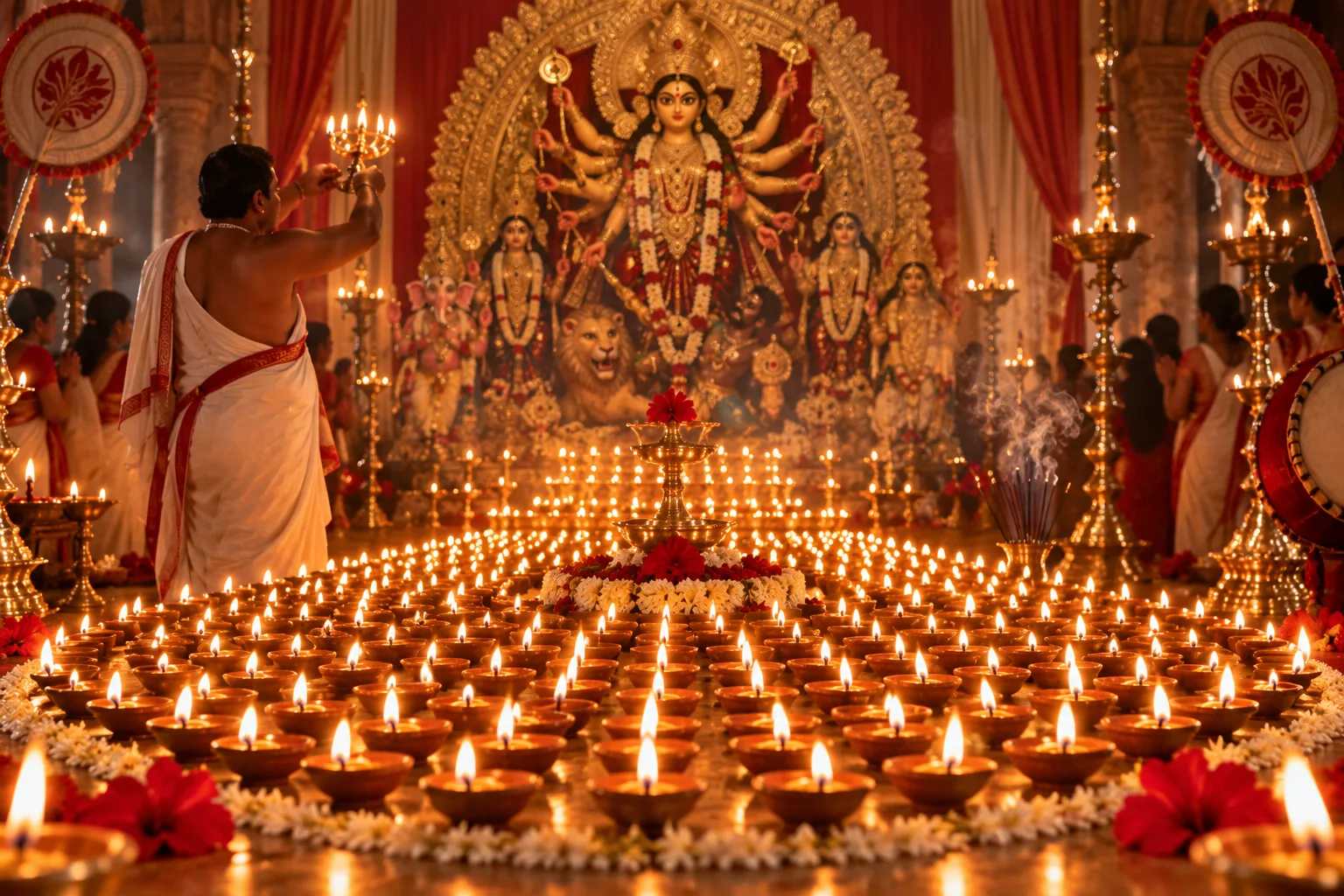
Bengal reads it through Durgā coming home to her parents with her children for five days, and the eighth day is the height of that visit. The Sandhi Pūjā falls at the joint of the eighth and ninth tithis, forty-eight minutes long, and the whole pandal waits for it.
In the north the day is Kanyā Pūjā: nine young girls are seated, their feet washed, and fed as the goddess herself.
Where it is kept differently
- Bengal
- Sandhi Pūjā falls at the joint where aṣṭamī ends and navamī begins — 108 lamps and 108 lotuses in forty-eight minutes, the moment the goddess is held to have killed Cāṇḍa and Muṇḍa. Kumārī Pūjā, a girl worshipped as the goddess herself, is kept the same morning at Belur Math.
- Telangana
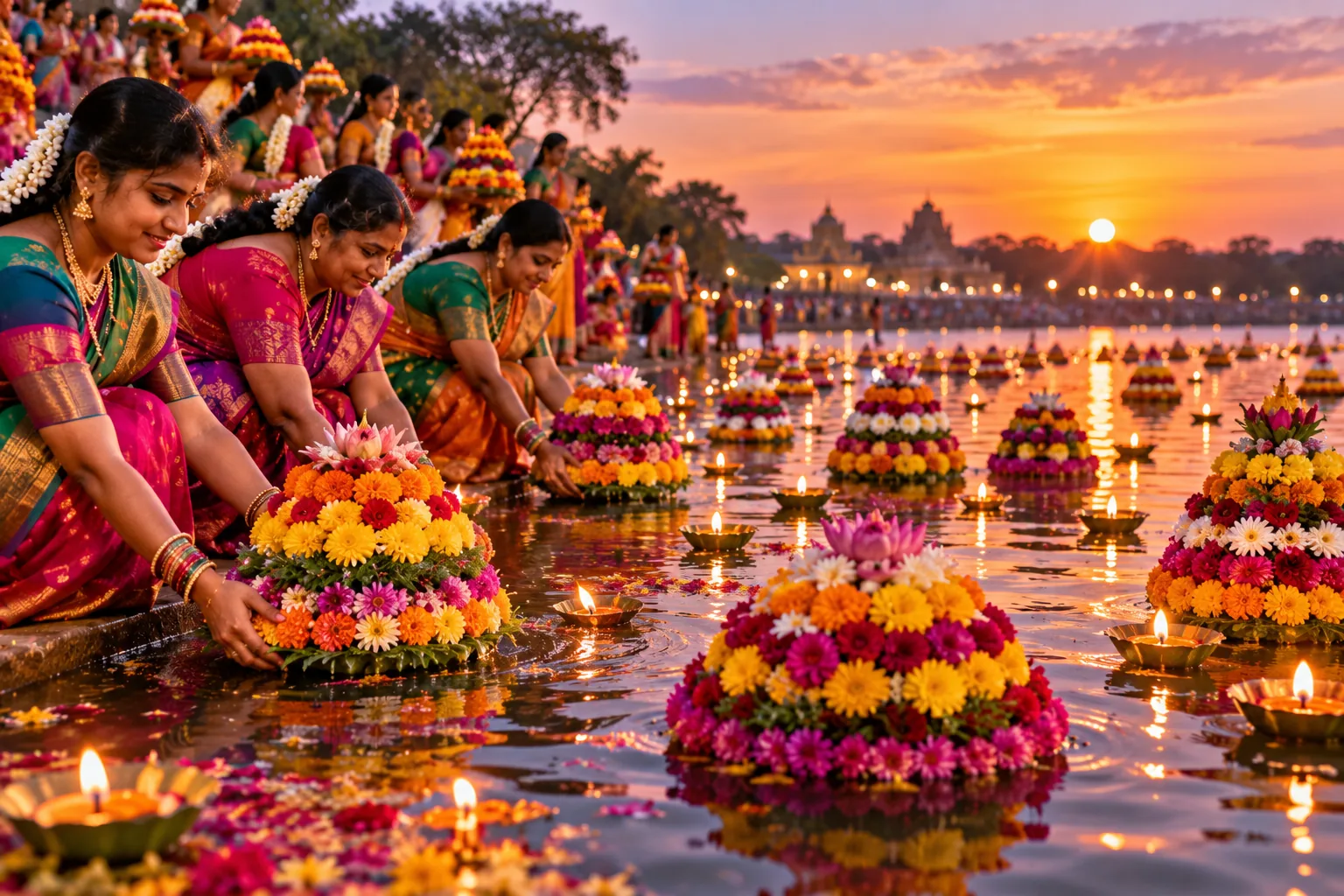
- Saddula Bathukamma, the ninth and largest of the flower stacks, is built today and floated tonight. Telangana’s festival ends here, two days before the rest of the country reaches its own tenth day.
- Kerala
- Pūjāveppu at dusk: books, ledgers, tools and instruments are stacked before Sarasvatī and a lamp is lit. Nothing is taken from that pile again until the morning of the tenth.
- The north and Punjab
- Kanyā Pūjan, or Kanjak: nine young girls are seated, their feet washed, and fed halvā, chanā and pūrī, with a small gift and a red thread when they leave. Many families break the nine days’ fast on their plates.
- Maharashtra and Rajasthan
- The weapons and the tools come out to be cleaned and garlanded on the eve of Khaṇḍe Navamī, and in Rajput households the sword is worshipped by name.
- Tamil Nadu and Karnataka
- Durgāṣṭamī at the Golu: the goddess forms on the upper steps are given the day’s offering, and the sundal is made from the pulse that belongs to the eighth evening.