
The story
For three days Kerala stops reading. Books, tools and instruments are laid before Sarasvatī on aṣṭamī evening (Pūjāveppu), left untouched through Mahā Navamī, and taken back on Vijayadaśamī morning (Pūjāyeduppu). Learning is put down so that it can be picked up deliberately.
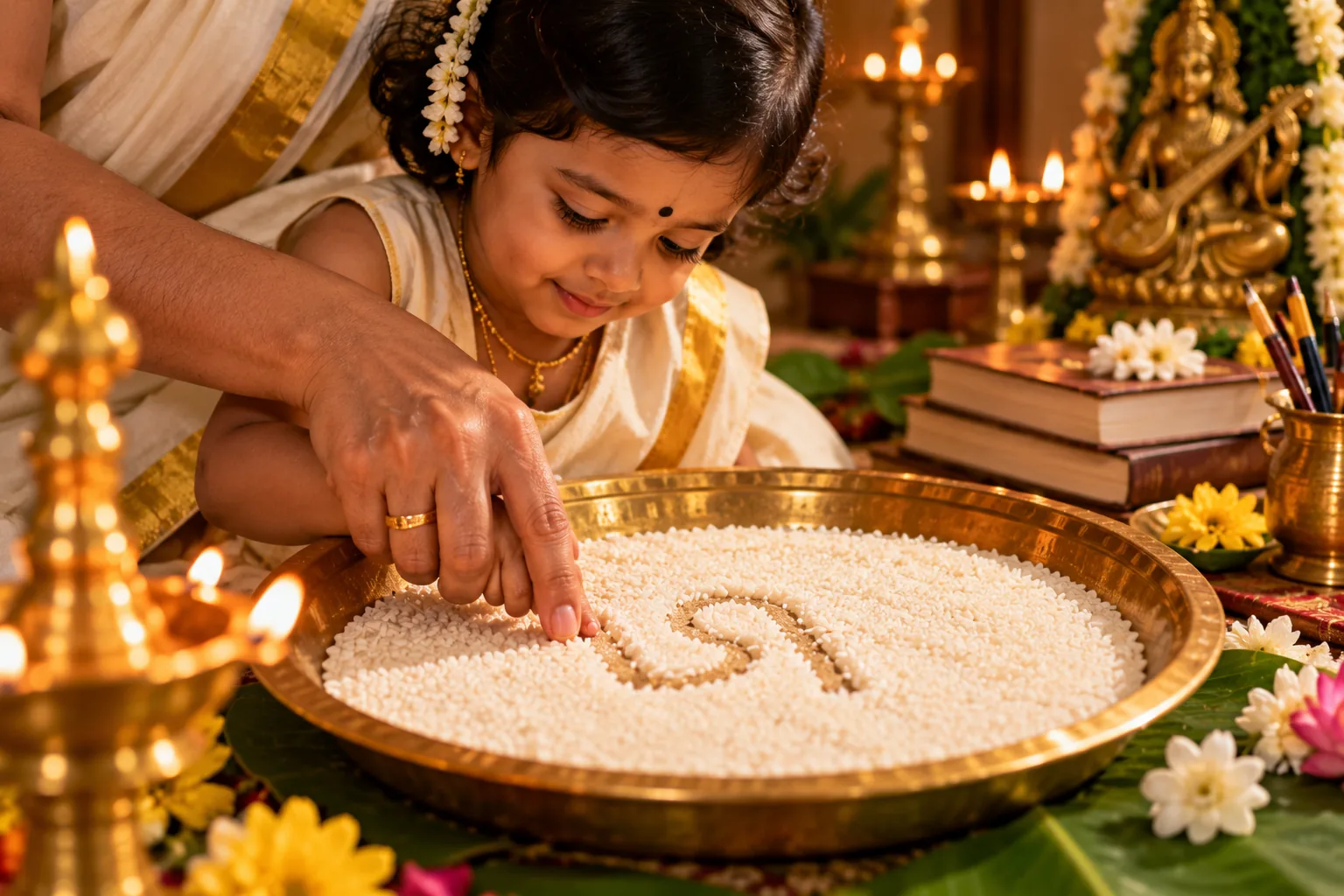
The taking-back is the child’s beginning. A child of about three is seated on the lap of a teacher or an elder, who guides its index finger to write in a tray of raw rice, and then writes the same letters on its tongue with a gold ring dipped in honey. The words are Hari Śrī Gaṇapataye Namaḥ, the invocation every Malayalam schoolbook once opened with.
The queues form before dawn at Panachikkad near Kottayam and at Thunchan Parambu in Tirur, where Thunchath Ezhuthachan, the father of modern Malayalam, is remembered. Thousands of children are started in a single morning, and the newspapers print their photographs the next day.