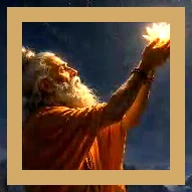
The Sun's entry into Makara (Capricorn), the turn toward longer days — kites in the west, til-gud sweets in the north, harvest thanks everywhere.
How Vedic Phala finds the date
Makara Saṅkrānti is solar, not lunar. Vedic Phala watches the sidereal Sun cross from Dhanu into Makara and assigns the ingress to the reader’s local civil date. This is different from the December solstice used in the tropical seasonal calendar. Precession has separated the two markers, and the sidereal ingress now falls around 14 or 15 January. Because the instant can occur before or after a local day boundary, cities in different time zones may label it differently.
The religious day can also depend on whether the ingress falls before or after sunset, since the puṇya-kāla bathing and giving period is derived from the saṅkrānti instant. The app’s calendar marker identifies the solar transition; it does not invent one worldwide clock interval. Uttarāyaṇa, kite-flying in Gujarat, Gaṅgāsāgar bathing, Māgh Bihu, Khicaṛī and the Telugu three-day sequence all gather around this same solar event. Pongal receives its own page because its household and agricultural sequence is larger than a synonym.
A Gregorian calendar that prints 14 January every year is therefore a convenient approximation. The sidereal longitude is the deciding value, and over long periods the civil date drifts. Vedic Phala keeps the astronomical rule visible so that a future date is calculated rather than inherited from a modern holiday table.
The story
Saṅkrānti is the Sun's passage from one sign into the next. Of the twelve in a year this is the one India keeps, because it opens Uttarāyaṇa, the Sun's northward run and the lengthening of days. Bhīṣma, wounded on the battlefield of Kurukṣetra, lay on a bed of arrows for weeks waiting for this turn before he let go of life, since a death in Uttarāyaṇa carries no return.
The same day is Pongal in Tamil Nadu, Māgh Bihu in Assam, Uttarāyaṇ in Gujarat, Pedda Paṇḍuga in Andhra, Māghī after Lohṛī in Punjab, Pouṣ Saṅkrānti in Bengal, Khicaṛī in the Hindi belt, and Māghe Saṅkrānti in Nepal. Every region has its own harvest to give thanks for.