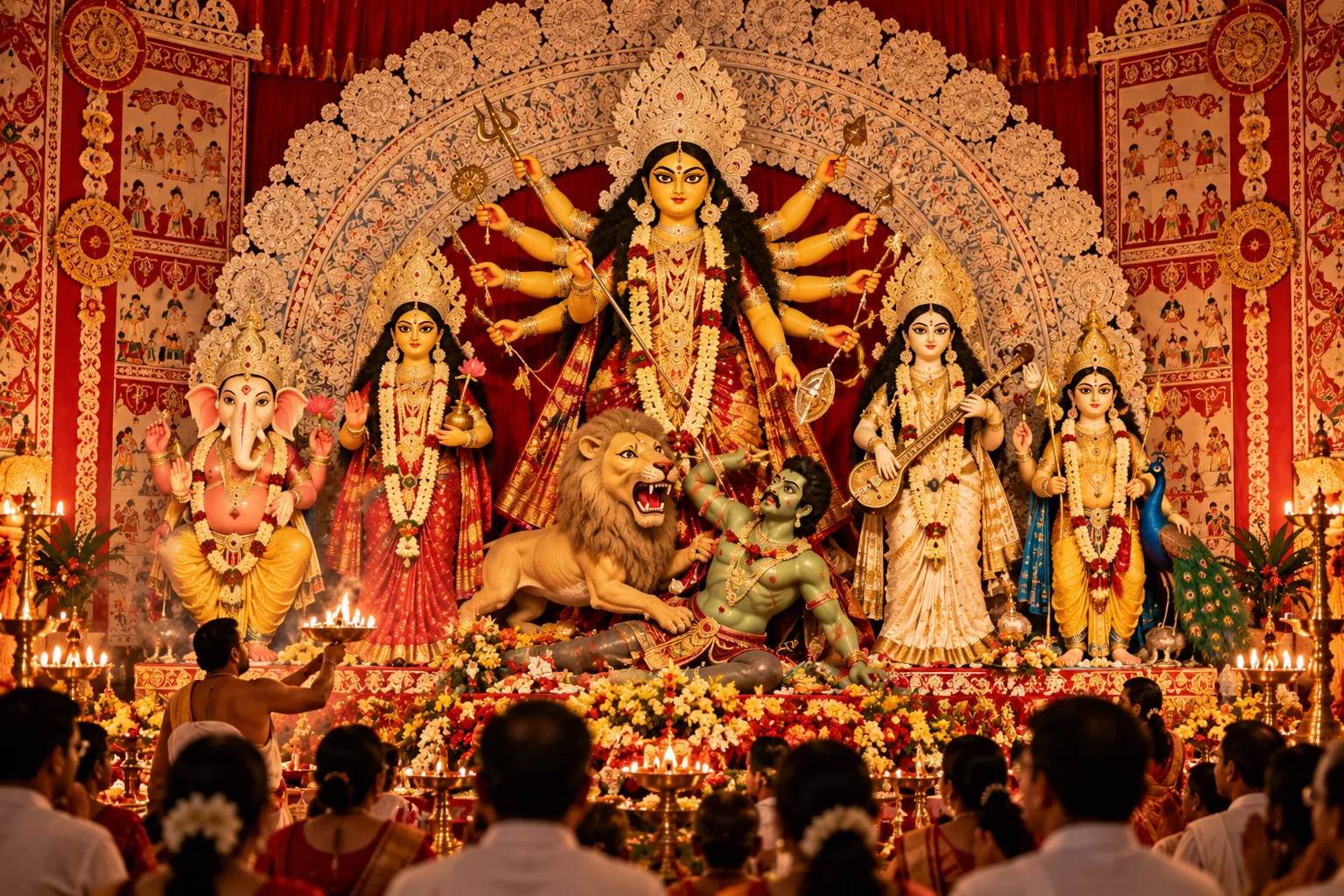
Durgā Pūjā proper is five days, ṣaṣṭhī to daśamī, not the full nine: the goddess is woken at Bodhon, the nine plants are bathed at dawn on saptamī, and the lamps of Sandhi Pūjā are lit at the joint between aṣṭamī and navamī. On the tenth the married women smear one another with vermilion and the images go to the river.
How Vedic Phala finds the date
Durgā Pūjā is tied to the autumn Navarātri cycle but its public five-day form is counted from ṣaṣṭhī through daśamī. Vedic Phala first establishes the lunar month and tithi from the local pañcāṅga. The page then explains the Bengali sequence rather than assigning the generic first night of Navarātri to the opening of every paṇḍāl. Bodhon on ṣaṣṭhī, the Nabapatrikā bath on saptamī, Sandhi Pūjā at the aṣṭamī–navamī junction and immersion on daśamī are separate timing points.
The junction matters because Sandhi Pūjā is observed in the final twenty-four minutes of aṣṭamī and the first twenty-four minutes of navamī. That forty-eight-minute window follows the tithi boundary, not a fixed clock time, and changes by city and year. A generic holiday feed cannot represent it honestly. The app’s day marker is therefore an entry point: the exact local interval belongs to the calculated pañcāṅga or temple notice. Odisha and Assam share much of the eastern sequence, while household rites and immersion timing still vary by community.
The story
Durgā comes home. In Bengal the goddess is a daughter visiting her parents for five days with her four children — Lakṣmī, Sarasvatī, Gaṇeśa and Kārttikeya — and the tenth day is her leaving. That is why the last day is grief rather than triumph.
The image is built new every year on a straw and bamboo frame packed with clay from the river, and by tradition the clay includes a handful taken from outside a prostitute’s door and given by her own hand. The eyes are painted last, before dawn on Mahālayā, and the artist paints them without looking straight at them.
Rāma is said to have woken the goddess out of season to ask her help against Rāvaṇa, which is why the autumn worship is called akāl bodhon, the untimely waking. Kolkata’s Durgā Pūjā was inscribed by UNESCO in 2021, the first festival in India to be listed.