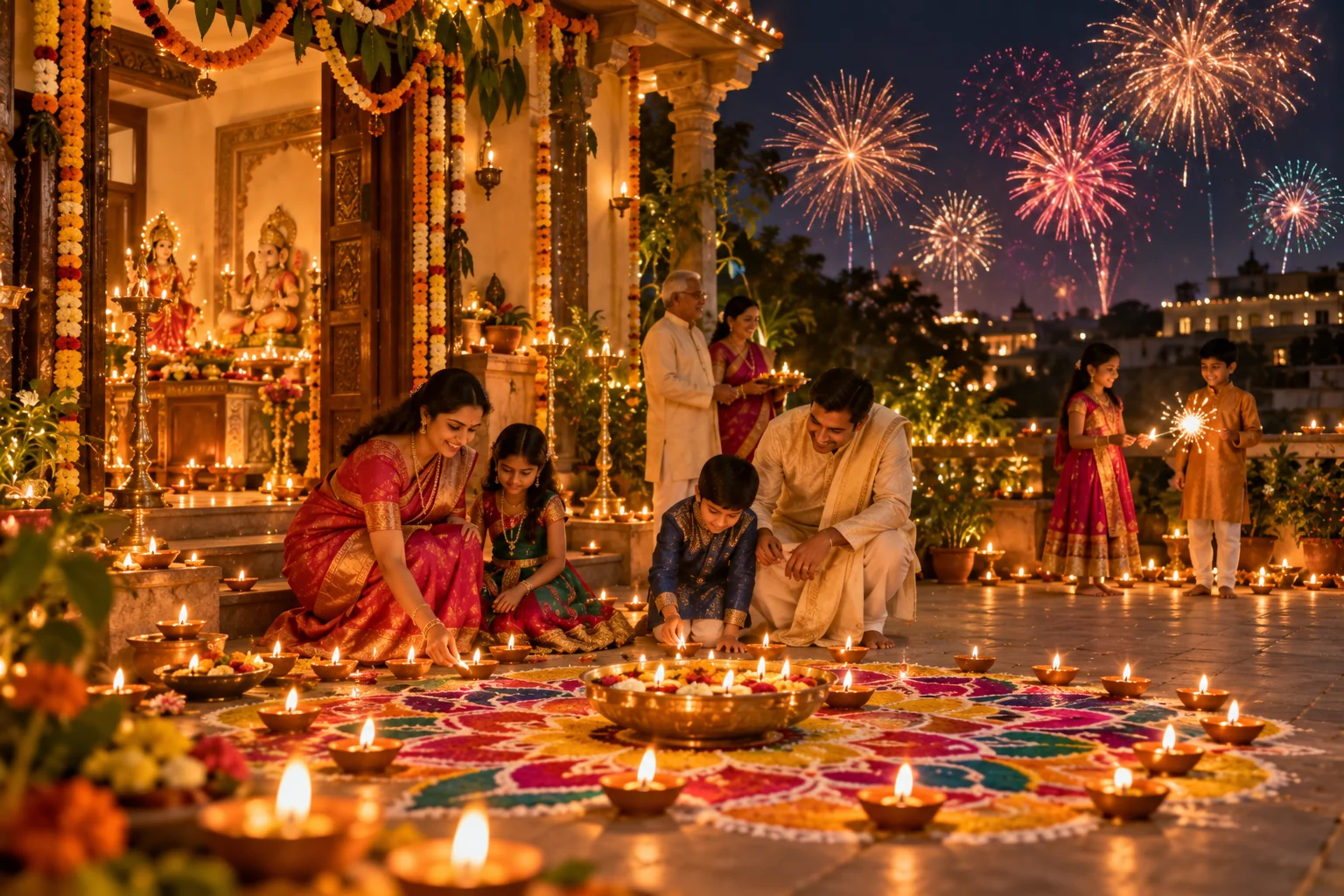
The festival of lamps on the Kārttika new moon: rows of oil lamps, new clothes, Lakṣmī Pūjā at dusk. The darkest night of the month made the brightest of the year.
When it falls
The new moon (amāvāsyā) of Kārttika, which falls in late October or early November. It is the middle day of a five-day festival: Dhanteras, Naraka Caturdaśī, Dīpāvali itself, Govardhana Pūjā and Bhāī Dūj.
The Phala almanac gives the exact day for your own city; the lunar and solar rules above are what it computes from.
How Vedic Phala finds the date
Vedic Phala does not attach Dīpāvali to a fixed October date. It computes the local pañcāṅga at sunrise and looks for the amāvāsyā, or new-moon tithi, in the month of Āśvayuja/Kārttika used by its amānta reckoning. A tithi is not a civil day: it is one thirtieth of the changing angle between the Sun and Moon, so it can begin at noon, end before dawn, or touch parts of two dates. Location and time zone therefore matter. The calendar assigns the observance from the tithi present in that city rather than copying a date published for India.
That rule also explains why lists can appear to disagree by a day. Regional almanacs may use pūrṇimānta month names, apply a night-time worship rule, or choose the date on which amāvāsyā covers the Lakṣmī Pūjā period after sunset. The app’s festival card is a calendar marker, not a claim that every temple follows one national clock. Dhanteras, Naraka Caturdaśī, Govardhana Pūjā and Bhāī Dūj are calculated as their own lunar days, so the five-day sequence remains visible instead of being compressed into one “Diwali date.”
The story
Dīpāvali means 'a row of lamps'. In the north the lamps are for Rāma: the people of Ayodhyā lit the road home for him, Sītā and Lakṣmaṇa on their return from fourteen years in exile and the defeat of Rāvaṇa. In the south the day before belongs to Kṛṣṇa's victory over Narakāsura, and in the west it is the day Lakṣmī, goddess of wealth, walks the earth and enters the houses that are lit and clean.
Jains keep the same night for Mahāvīra's liberation, Sikhs for Guru Hargobind's release from prison (Bandī Chhoṛ Divas), and in Bengal the night is Kālī Pūjā. One dark night, many reasons for the light.
The astronomy is the plainest explanation of all: it is the darkest new moon of the year, after the monsoon has cleared the sky, and every house answers it with fire.