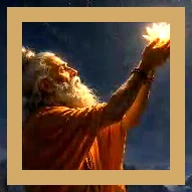
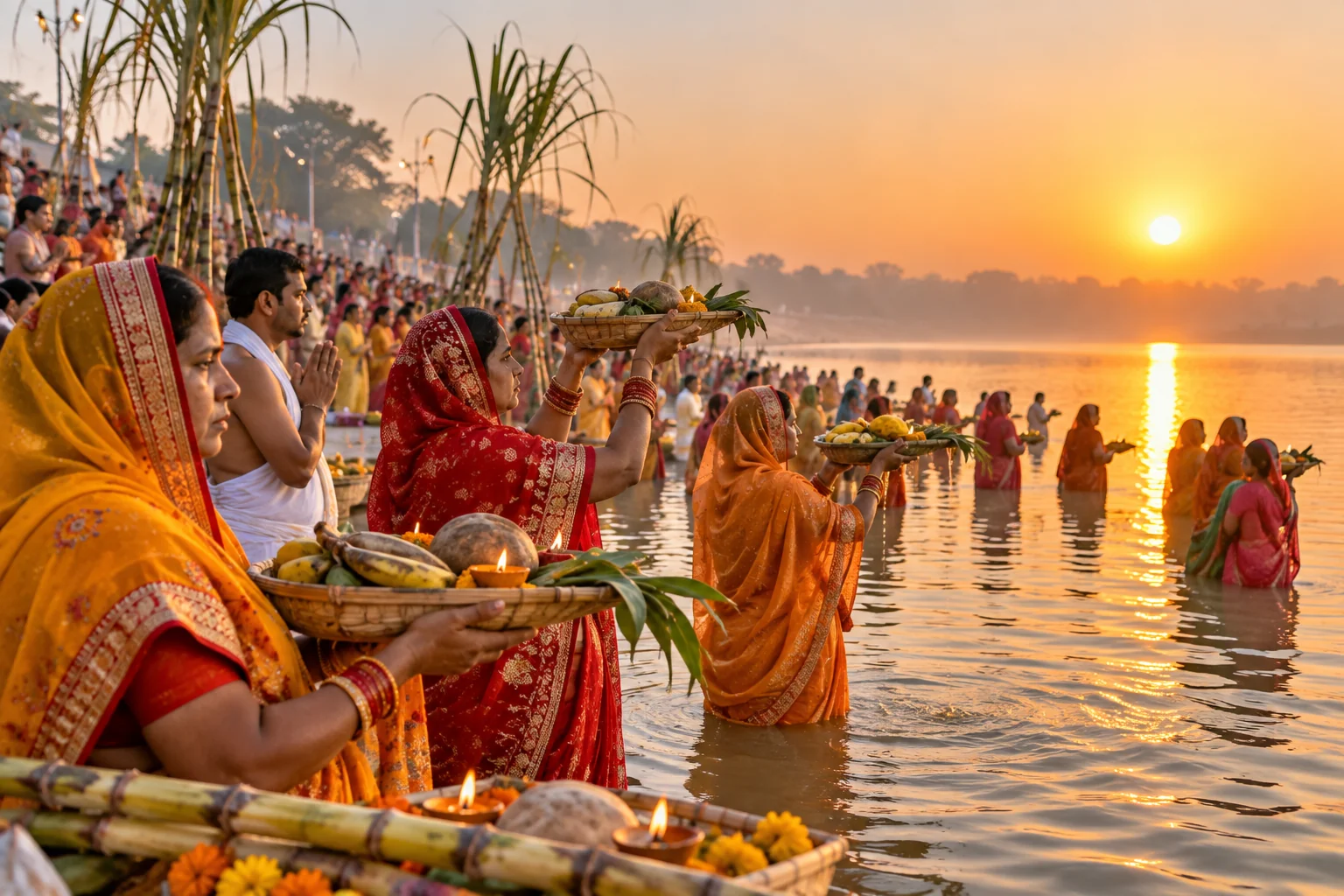
The austere sun festival of Bihar: standing in river water at dusk and again at dawn, offering the setting and the rising Sun from the same ghat.
How Vedic Phala finds the date
The principal Chhaṭh evening is Kārttika śukla ṣaṣṭhī, the sixth tithi of the bright fortnight after Dīpāvali. Vedic Phala calculates the month and tithi at local sunrise, but the observance is a four-day sequence: Nahāy Khāy, Kharna, the sunset offering and the sunrise offering. The evening and dawn are linked across two civil dates, so naming only one “Chhath date” leaves out half of the central rite.
Sunset and sunrise must be local. The devotee stands in water for the setting Sun and returns for the rising Sun at the same ghāṭ, which means timings copied from another city are not adequate. Bihar, eastern Uttar Pradesh, Jharkhand and Nepal’s Terai share the sequence, and diaspora communities reproduce it at permitted lakes and rivers. The water site and civil arrangements change; the ṣaṣṭhī anchor and paired solar offerings remain.
A second observance, Caitī Chhaṭh, occurs in the Caitra cycle. The app page focuses on the much larger Kārttika festival. Treating both as one fixed November holiday would lose the lunar rule and the existence of the spring form.
The story
The festival belongs to the Sun and to Chhaṭhī Maiyā, the sixth-day goddess, the Sun's sister and the protector of children. The Mahābhārata attaches it to Karṇa, the Sun's son, who stood in water and offered to his father each day, and to Draupadī, who kept the fast for her husbands' return. Nothing in it needs a priest: the family performs everything itself.
It is the festival of Bihar, Jharkhand, eastern Uttar Pradesh and the Terai of Nepal, and it has travelled with them: the ghats of Delhi, Mumbai and Kolkata fill with it, and the tanks of New Jersey and Toronto too.
Where most festivals worship the rising Sun, Chhaṭh offers first to the setting one. Thanks to the day that has ended come before the request to the day that begins.