← All festivals

Vaikuṇṭha Ekādaśī

Vaikuṇṭha Ekādaśī

The bright ekādaśī of the Dhanus solar month, when the northern gate of Viṣṇu's temples — the Vaikuṇṭha Dvāram — is opened and the queue passes through it once a year. Śrīraṅgam, Tirupati and Guruvāyūr keep it largest.

When it falls

The eleventh lunar day (ekādaśī) of the bright half of the month in which the Sun stands in Dhanus (Sagittarius) — Mārgaśira or Pauṣa by the lunar reckoning, late December or early January. Because the rule is solar, the same day is Mokṣadā Ekādaśī in some years and Putradā Ekādaśī in others.

The Phala almanac gives the exact day for your own city; the lunar and solar rules above are what it computes from.

The story

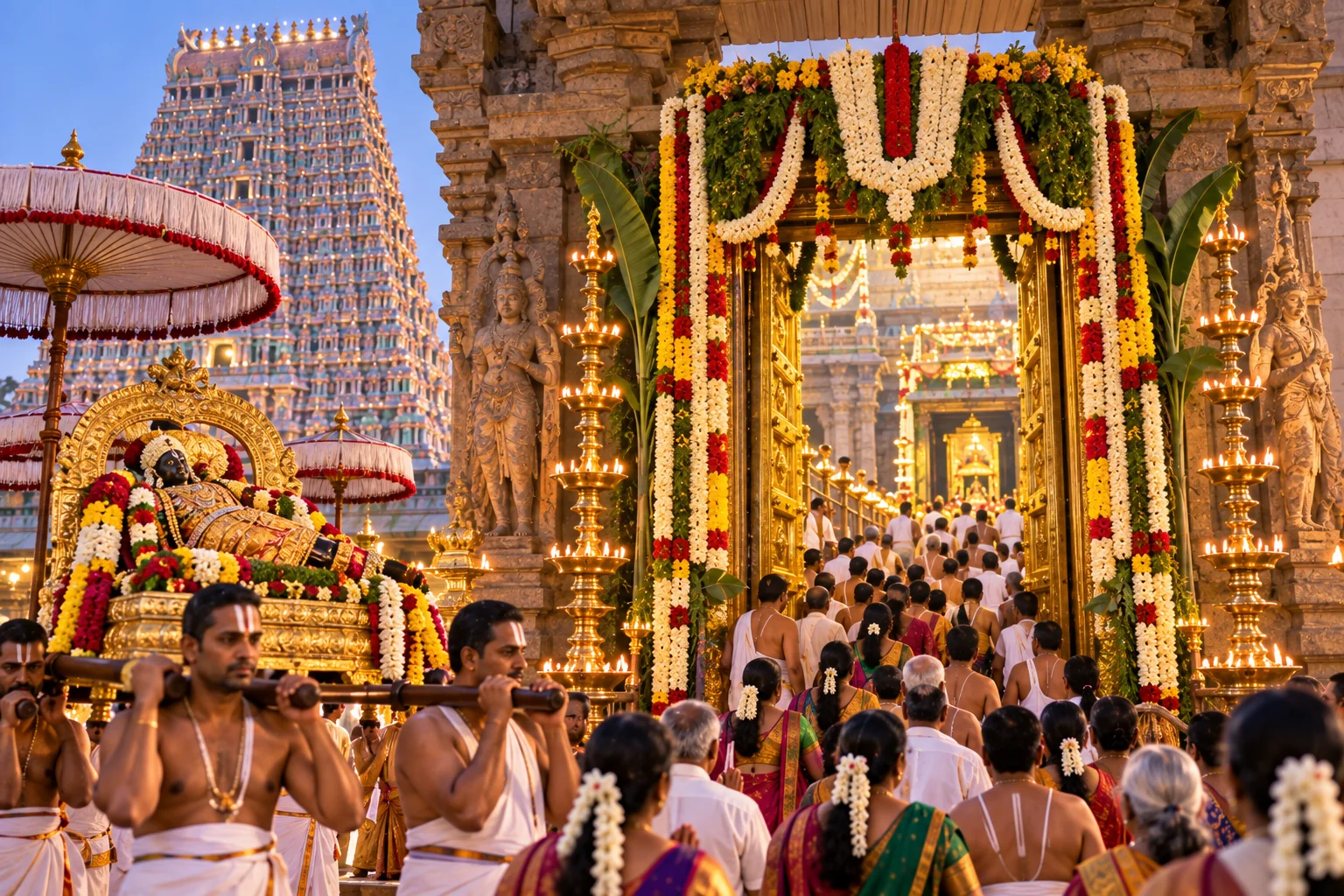
Viṣṇu's heaven is Vaikuṇṭha, and its northern gate is held to stand open for this one day. Temples that have such a gate — the Paramapada Vāsal at Śrīraṅgam, the Vaikuṇṭha Dvāram at Tirumala — open it before dawn and let the queue pass through.

The Padma Purāṇa gives the day a personification: a maiden born of Viṣṇu who defeated the demon Murā while he slept, and was granted that whoever fasts on her day is freed from what they have done. Her name is Ekādaśī, and every eleventh day of every fortnight belongs to her; this is the one the texts call the greatest.

Telugu speakers call it Mukkoṭi Ekādaśī, the ekādaśī of the thirty million, because the gods are said to come down to earth that day. In Kerala the great day is Guruvāyūr Ekādaśī at the Kṛṣṇa temple there.

How the day is kept

  • A full fast from the previous sunset, kept awake through the night with recitation and song, and broken the next morning after the dvādaśī begins.
  • The gate is opened in the small hours; at Śrīraṅgam the deity passes through it at dawn and the crowd follows, and the temple keeps the festival for twenty-one days around it.
  • The Bhagavad Gītā is read: the day is also kept as Gītā Jayantī, the day Kṛṣṇa is held to have spoken it to Arjuna on the field.
  • Grain and pulses are avoided by those who fast partially; fruit, milk and the root vegetables allowed on an ekādaśī take their place.

More fasts and vigils

The Phala almanac shows this day where it falls for your own city — sunrise, tithi and all five limbs, anywhere on earth. See how the almanac works →