
← All festivals

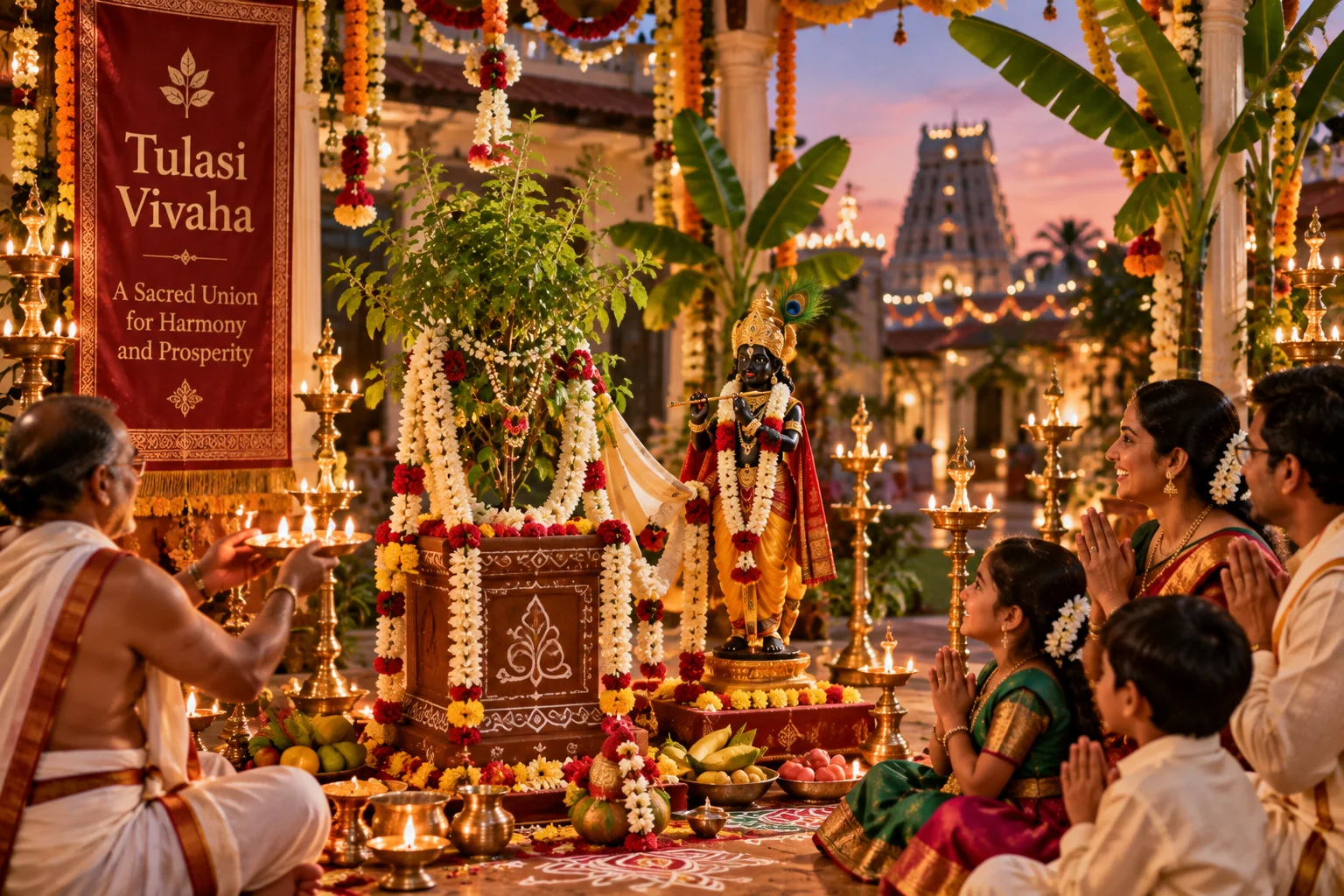
The tulasī plant in the courtyard is married to Viṣṇu as Śāligrāma, with a full wedding: canopy, garlands, turmeric, and the same rites a household would give a daughter. It opens the wedding season that Cāturmāsya closed.

When it falls

The twelfth lunar day (dvādaśī) of the bright half of Kārttika, the day after Prabodhinī Ekādaśī, in November. It opens the wedding season that the four months of Cāturmāsya closed.

The Phala almanac gives the exact day for your own city; the lunar and solar rules above are what it computes from.

The story

Vṛndā was faithful to her husband Jalandhara, and that faithfulness made him unbeatable. Viṣṇu took his form to break it, and when she understood she cursed him to become a stone. He accepted the curse, became the śāligrāma, and gave her the tulasī plant as her form so that no offering to him would ever be complete without her.

The marriage today is that promise kept. The plant in the courtyard is married to Viṣṇu with the full rite, and the household gives its own daughter away.

It is why a tulasī leaf sits on every Vaiṣṇava offering, and why the plant stands in a raised, decorated pot rather than in the ground.

How the day is kept

  • The tulasī pot is painted and decorated, dressed in a small sari with bangles and a nose ring, and a canopy of sugarcane is set over it.
  • A śāligrāma stone or a small Kṛṣṇa image is the groom; the rites are a real wedding, down to the thread, the turmeric and the maṅgalāṣṭaka verses.
  • Amla branches, tamarind and sugarcane are offered, and the fruits of the new season are eaten from today.
  • Families that have no daughter of their own count the giving away of the tulasī as the merit of one.

More family bonds

The Phala almanac shows this day where it falls for your own city — sunrise, tithi and all five limbs, anywhere on earth. See how the almanac works →