
← All festivals

Tanabata (Star Festival)

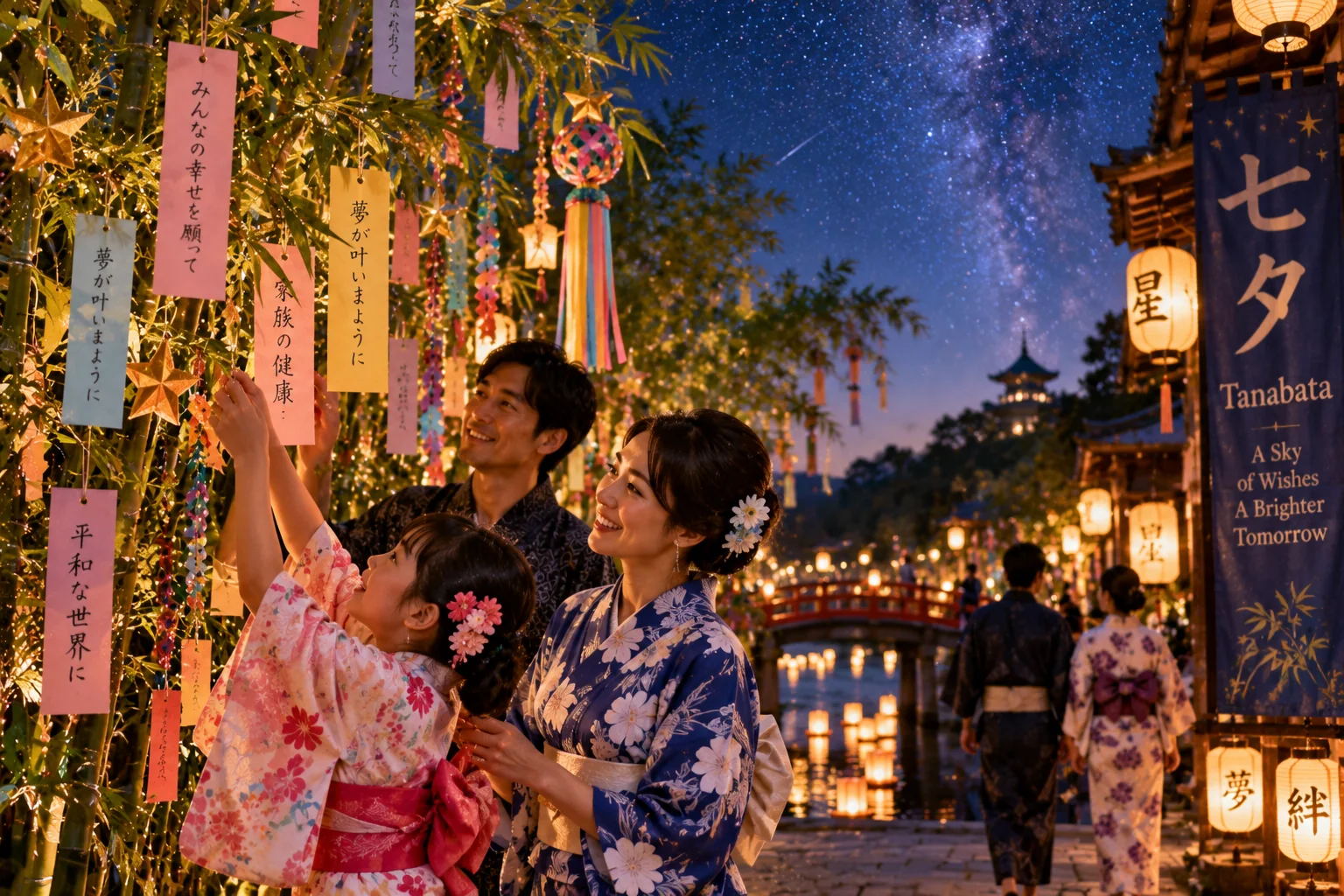
The one night the weaver star and the herdsman star, separated across the Milky Way, are allowed to meet. Wishes are written on paper strips and tied to bamboo; the same story is told in China as Qixi.

When it falls

7 July on the Gregorian calendar in most of Japan; some places, Sendai among them, keep it a month later on 7 August, closer to the original lunar date.

The Phala almanac gives the exact day for your own city; the lunar and solar rules above are what it computes from.

The story

Orihime the weaver and Hikoboshi the herdsman — the stars Vega and Altair — married and neglected their work, and her father set them on opposite banks of the Milky Way. They are allowed to meet one night a year, and only if the sky is clear; if it rains, magpies cannot bridge the river and they wait another year.

The story came from China as Qixi and is kept there and in Korea as Chilseok. The Japanese festival added the paper.

How the day is kept

  • Wishes are written on tanzaku, coloured paper strips, and tied to bamboo branches set outside houses and stations; the bamboo is floated or burnt afterwards.
  • Sendai's festival in August hangs the streets with streamers metres long and draws two million people.
  • Children write for skills rather than things — better handwriting, better at the piano — which is the older sense of the day.

More world days

The Phala almanac shows this day where it falls for your own city — sunrise, tithi and all five limbs, anywhere on earth. See how the almanac works →