← All festivals

The ekādaśī the purāṇas call Jayā and the southern almanacs call Bhīṣma's, for the discourse he began from the bed of arrows. The Viṣṇu Sahasranāma, the thousand names, is what he spoke, and it is read end to end today.

When it falls

The eleventh lunar day (ekādaśī) of the bright half of Māgha, in late January or February. The purāṇas name this ekādaśī Jayā; the southern almanacs print Bhīṣma, and both names are current for the same day.

The Phala almanac gives the exact day for your own city; the lunar and solar rules above are what it computes from.

The story

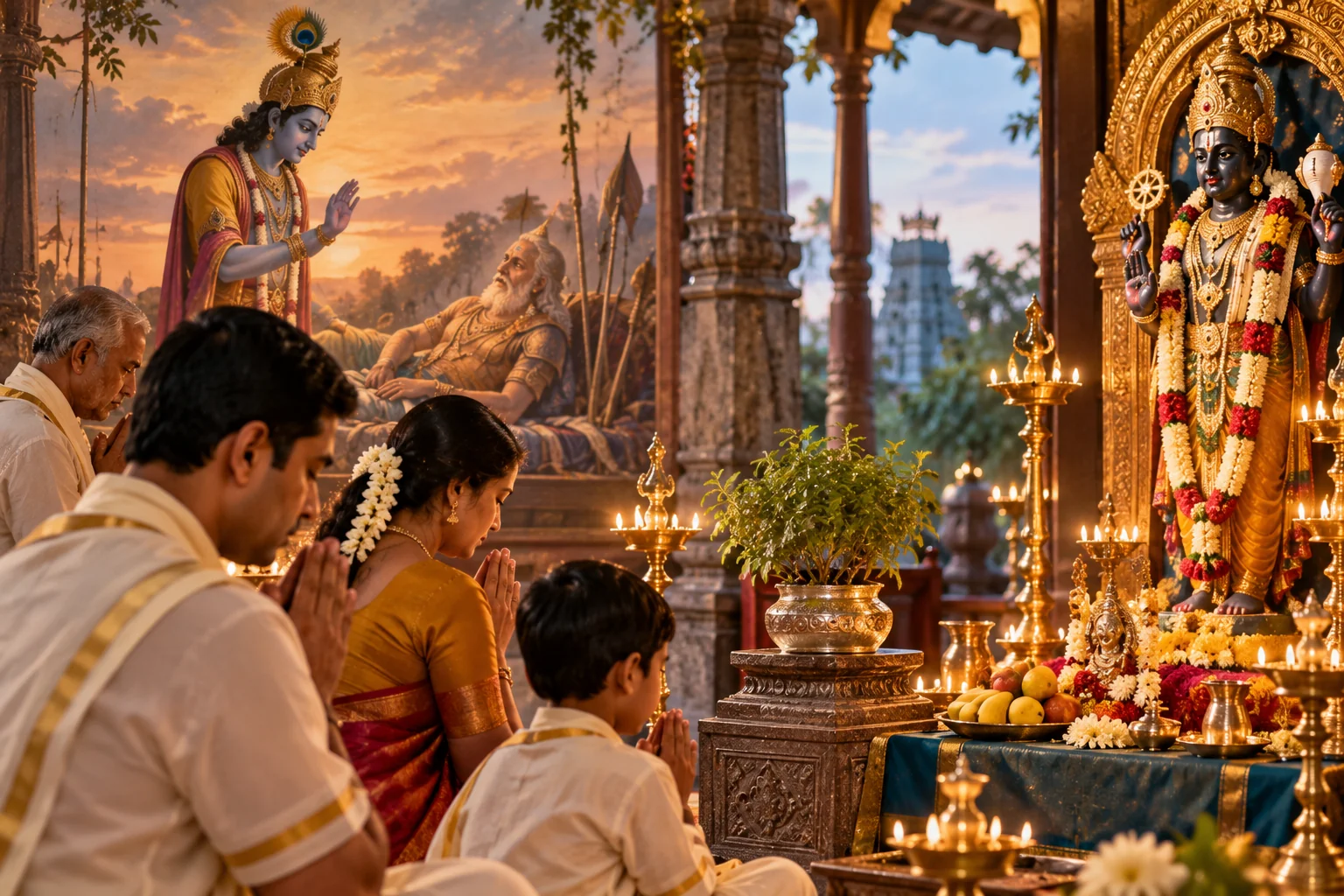
Bhīṣma lay on a bed of arrows at Kurukṣetra, holding off his own death because he could choose the hour of it. The war was over and Yudhiṣṭhira came to him with questions about duty, and the old man answered for days.

Asked what was the surest and shortest path, he gave the thousand names of Viṣṇu — the Viṣṇu Sahasranāma. It is the single best-known Sanskrit recitation in Vaiṣṇava practice, and it is read end to end today.

He waited for the northward turn of the Sun before letting go. The eighth day of the same bright half, Bhīṣma Aṣṭamī, is kept as the day he died, and water is offered for him by name even by those who are not his line.

How the day is kept

  • A fast from the previous sunset, broken on the twelfth after the morning offering.
  • The Viṣṇu Sahasranāma is recited, at home or at the temple, usually in one sitting.
  • Water and sesame are offered to Bhīṣma, who left no descendants, which is why anyone at all may make the offering.
  • Kept largest in Andhra Pradesh, Telangana, Tamil Nadu and Karnataka, and at the Vaiṣṇava temples of the south.

More fasts and vigils

The Phala almanac shows this day where it falls for your own city — sunrise, tithi and all five limbs, anywhere on earth. See how the almanac works →