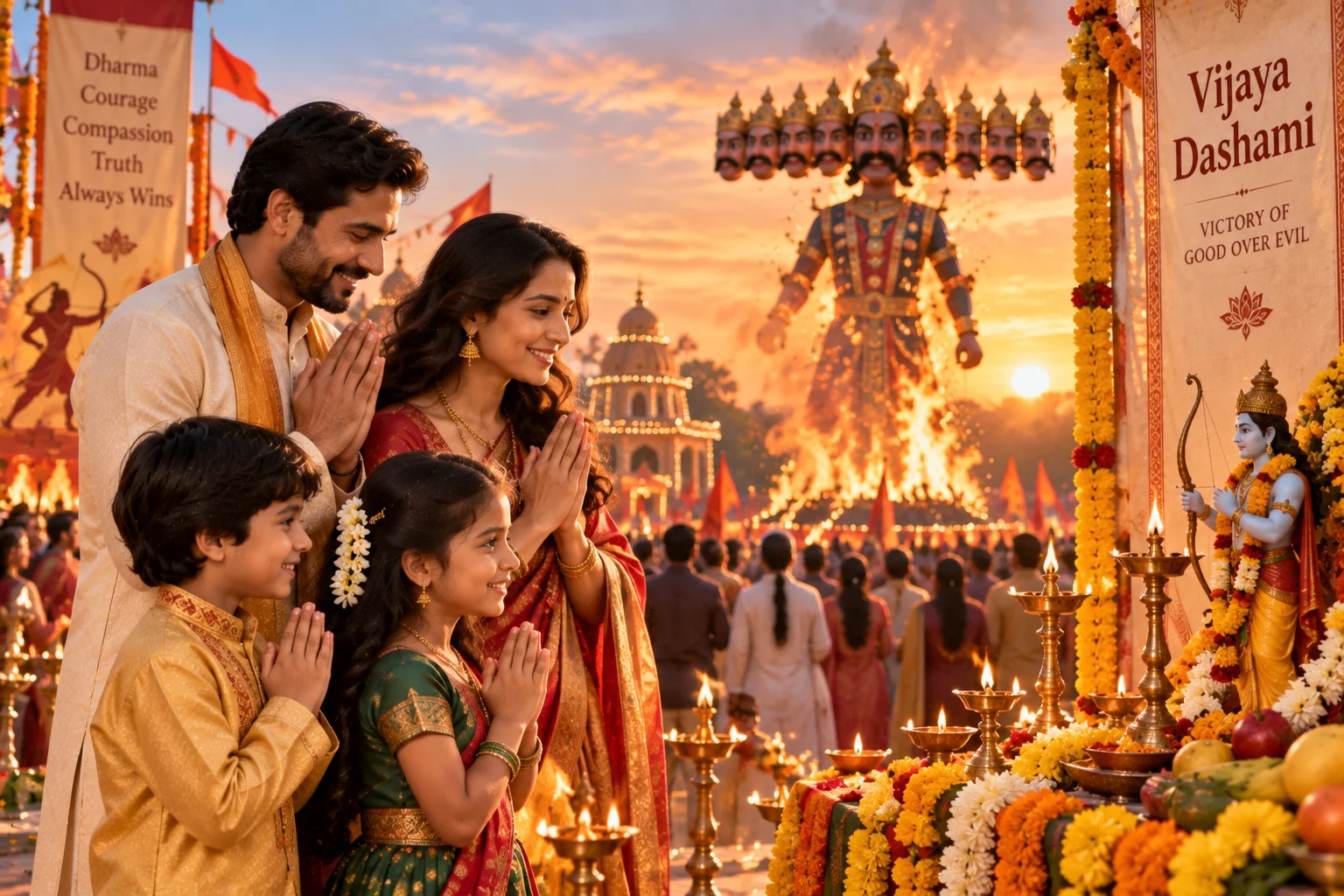
Vijayā Daśamī (meaning 'the victorious tenth'): Rāma's victory over Rāvaṇa, Durgā's over Mahiṣāsura. New learning is traditionally begun today.
How Vedic Phala finds the date
Vijayadaśamī is the tenth tithi of the bright autumn fortnight. Vedic Phala calculates śukla daśamī at the reader’s sunrise and places the day after the nine-night sequence without assuming that every preceding tithi lasted one civil day. The same astronomical day closes Durgā Pūjā, completes Navarātri and begins Kullu’s Daśarā. Its name and public action change by region, but the lunar anchor is shared.
Some traditions also watch the aparāhna, the afternoon division, or the brief Vijayā muhūrta when choosing the principal rite. Those intervals depend on local sunrise and sunset and cannot be copied safely from a national date. Bengal’s immersion, the north’s Rāvaṇa effigies, Mysūru’s Jambū Savārī and Kerala’s Vidyārambham therefore belong on one page without being collapsed into one ceremony. The app supplies the local day; the regional section identifies what a reader should expect to see there.
The story
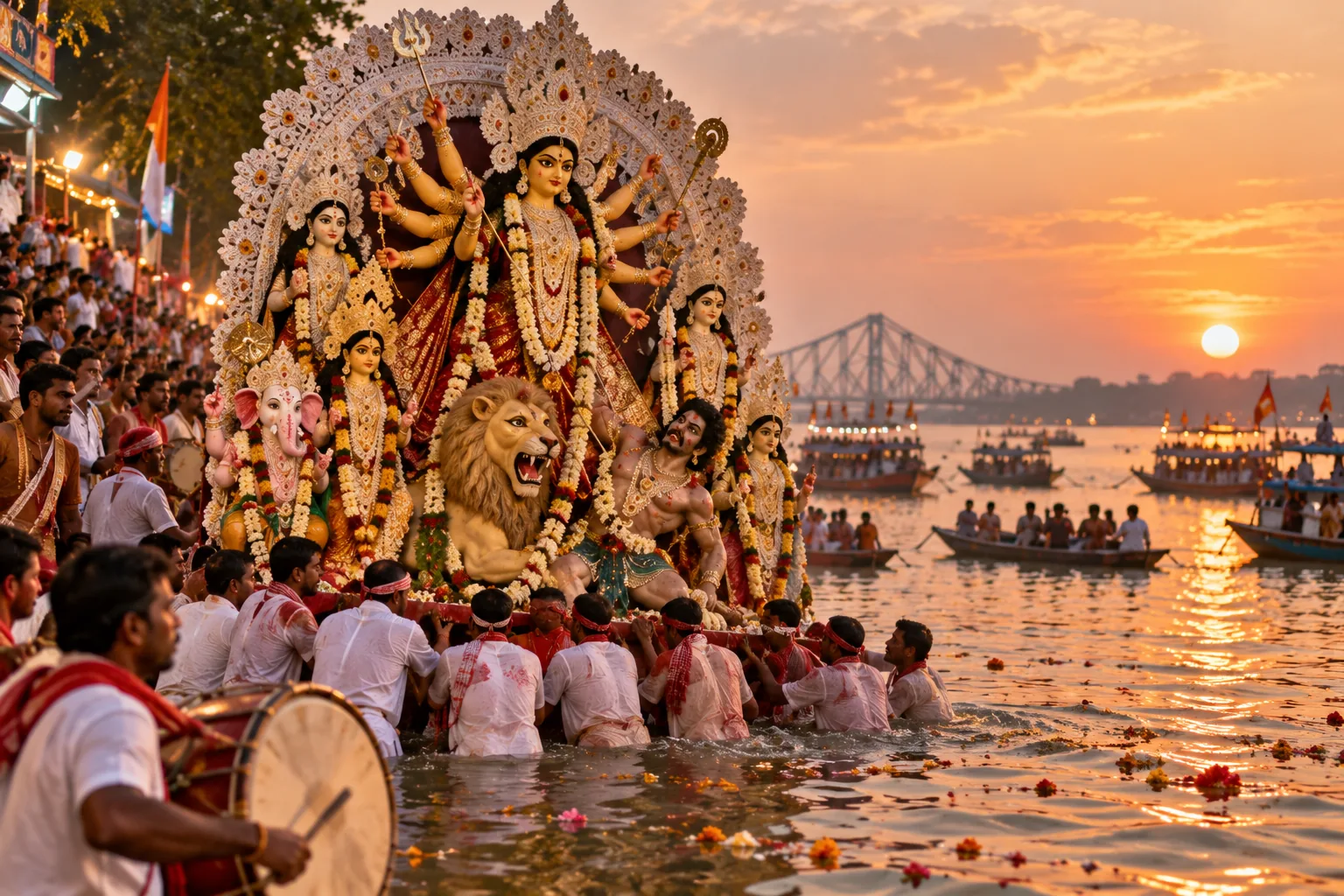
Two victories on one day. Durgā killed the buffalo demon Mahiṣāsura at the end of the nine nights' battle; Rāma killed Rāvaṇa and won Sītā back, after worshipping the Goddess for the same nine nights before the final fight. The north burns Rāvaṇa; the east sends Durgā home; the south lays out its tools and weapons for the Goddess to bless.
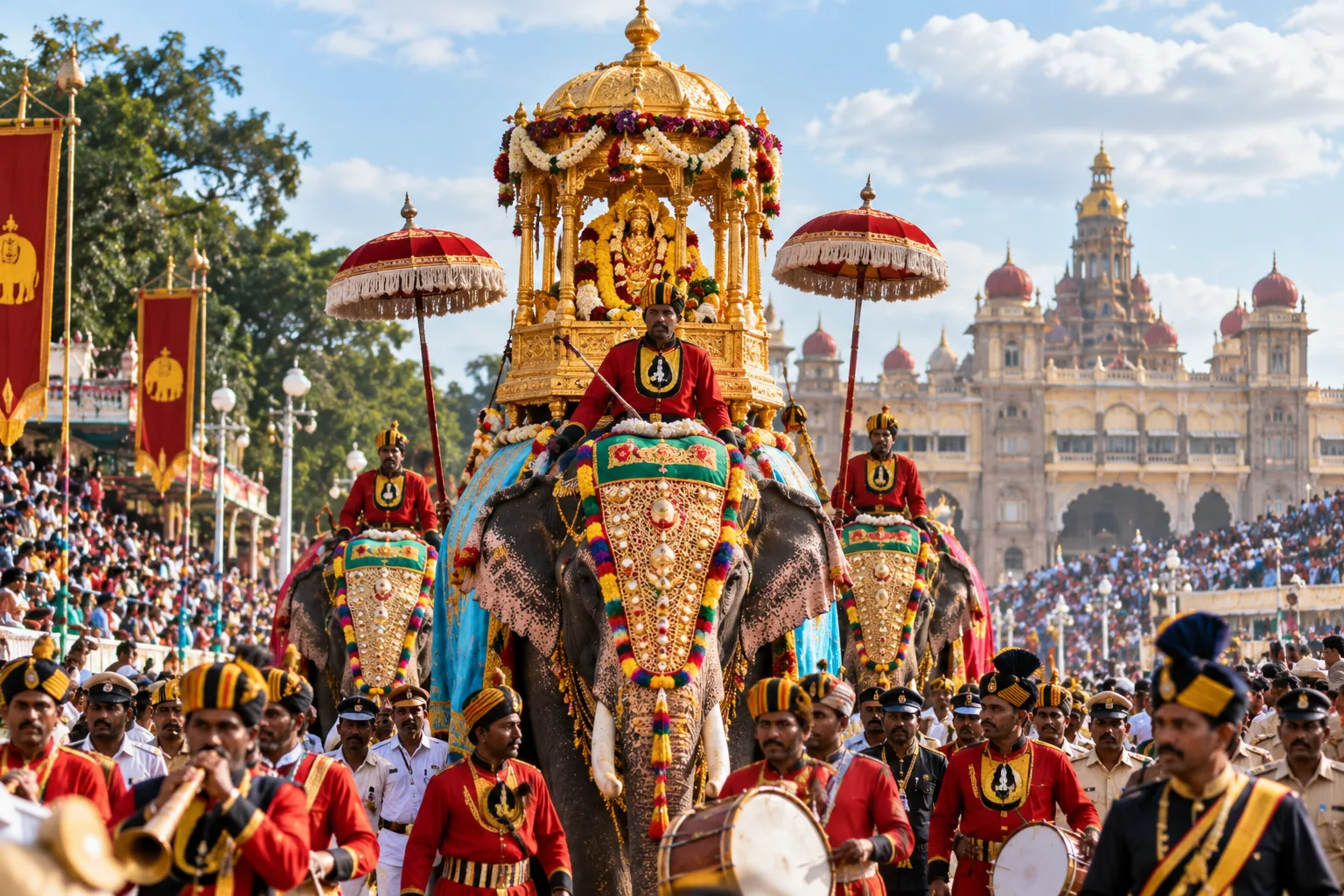
Mysore's Dasarā is the day's royal form, four hundred years old: the goddess Cāmuṇḍeśvarī rides through the city in a golden howdah on the back of an elephant (the Jambū Savārī), with the palace lit behind her. Kullu in Himachal begins its week of Dasarā today, when the valley's village gods come down in palanquins to visit Raghunāth.
Nepal keeps it as Dashain, the country's largest festival, ten days ending with the elders' ṭīkā of rice, curd and vermilion on the forehead of every younger member of the family.
Where it is kept differently
- The north
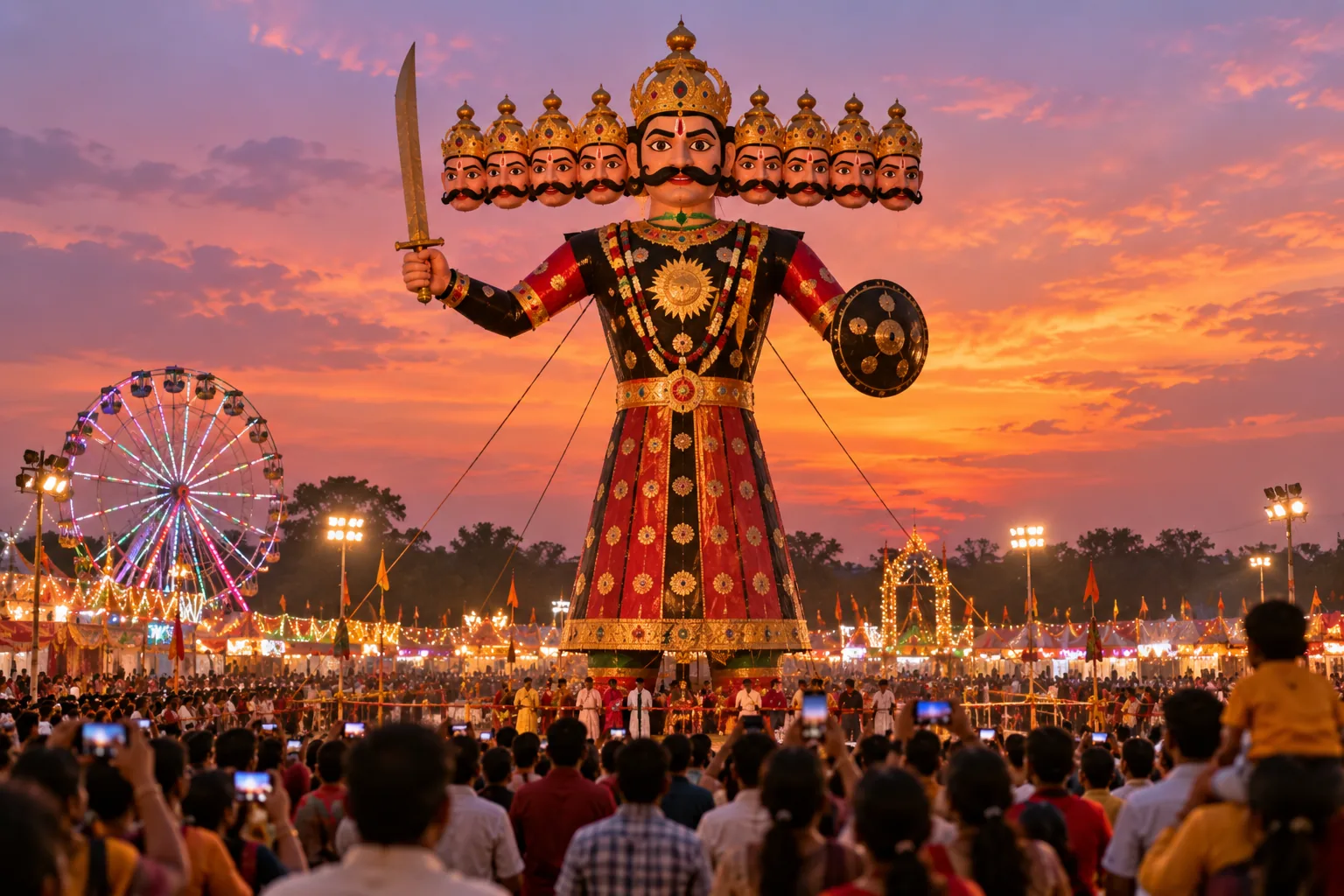
- Rāvaṇa, Kumbhakarṇa and Meghanāda are burnt in effigy at dusk, packed with fireworks, after nine evenings of Rāmlīlā leading to it. Delhi’s Ramlila Maidan draws the prime minister.
- Bengal, Odisha and Assam
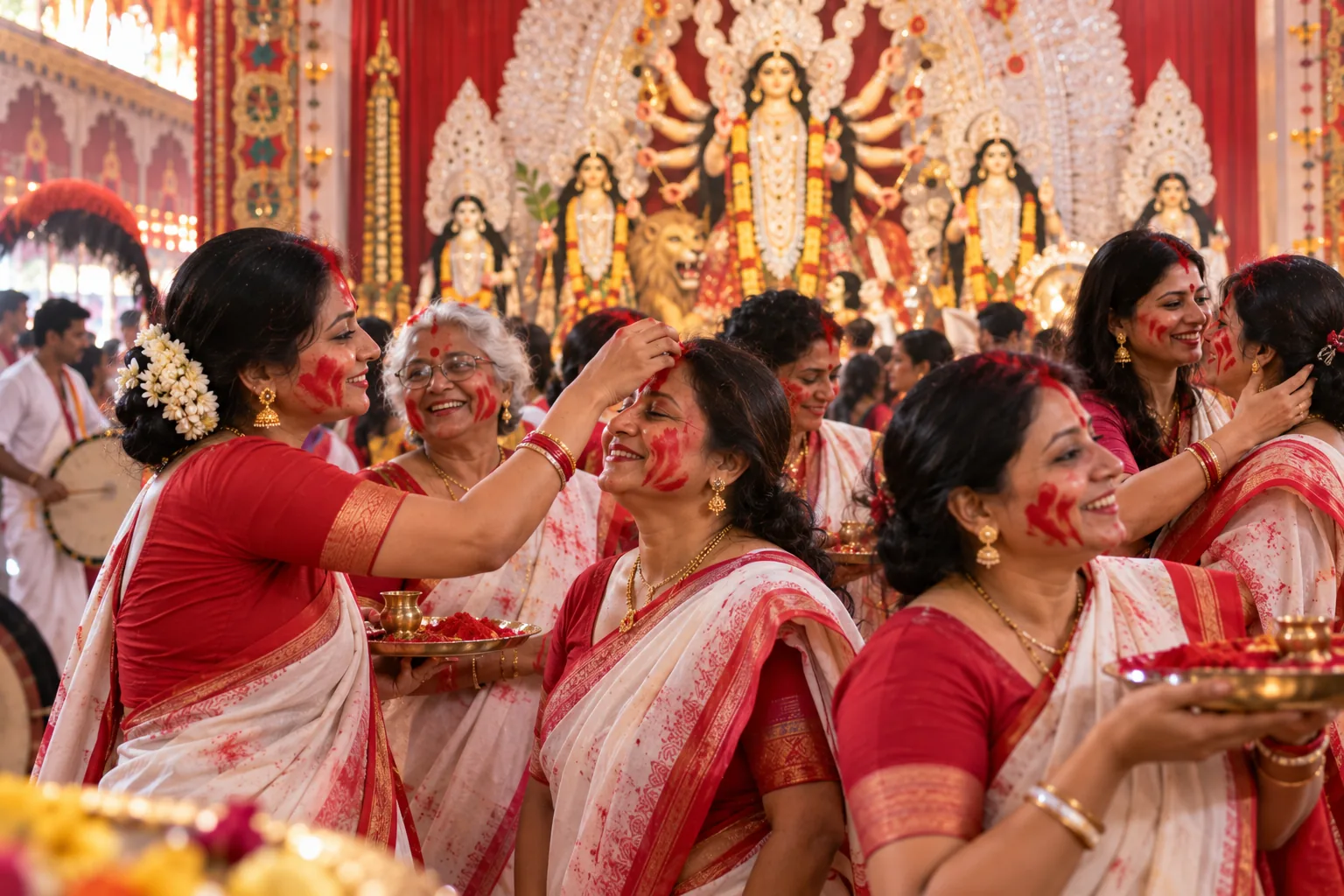
- The married women feed the goddess sweets and smear one another with vermilion (Sindūr Khelā), and the images go to the river. The greeting for the days that follow is Śubho Bijoyā, and the visiting that goes with it lasts a fortnight.
- Karnataka — Mysūru
- The Jambū Savārī: Cāmuṇḍēśvarī rides through the city in a golden howdah on the back of an elephant, with a torchlight parade at Bannimantap where the banni (śamī) tree is worshipped at the end of the route.
- Kerala
- Vidyārambham. The books are taken back from Sarasvatī at first light, and a child of about three is guided to write its first letter in a tray of rice and then on its tongue in gold.
- Tamil Nadu
- One doll is laid on its side to put the whole Golu to sleep, and the display is wrapped and packed away for the year. At Kulaśēkarapaṭṭiṇam the ten-day Daśarā ends with the devotees themselves in costume and disguise.
- Maharashtra
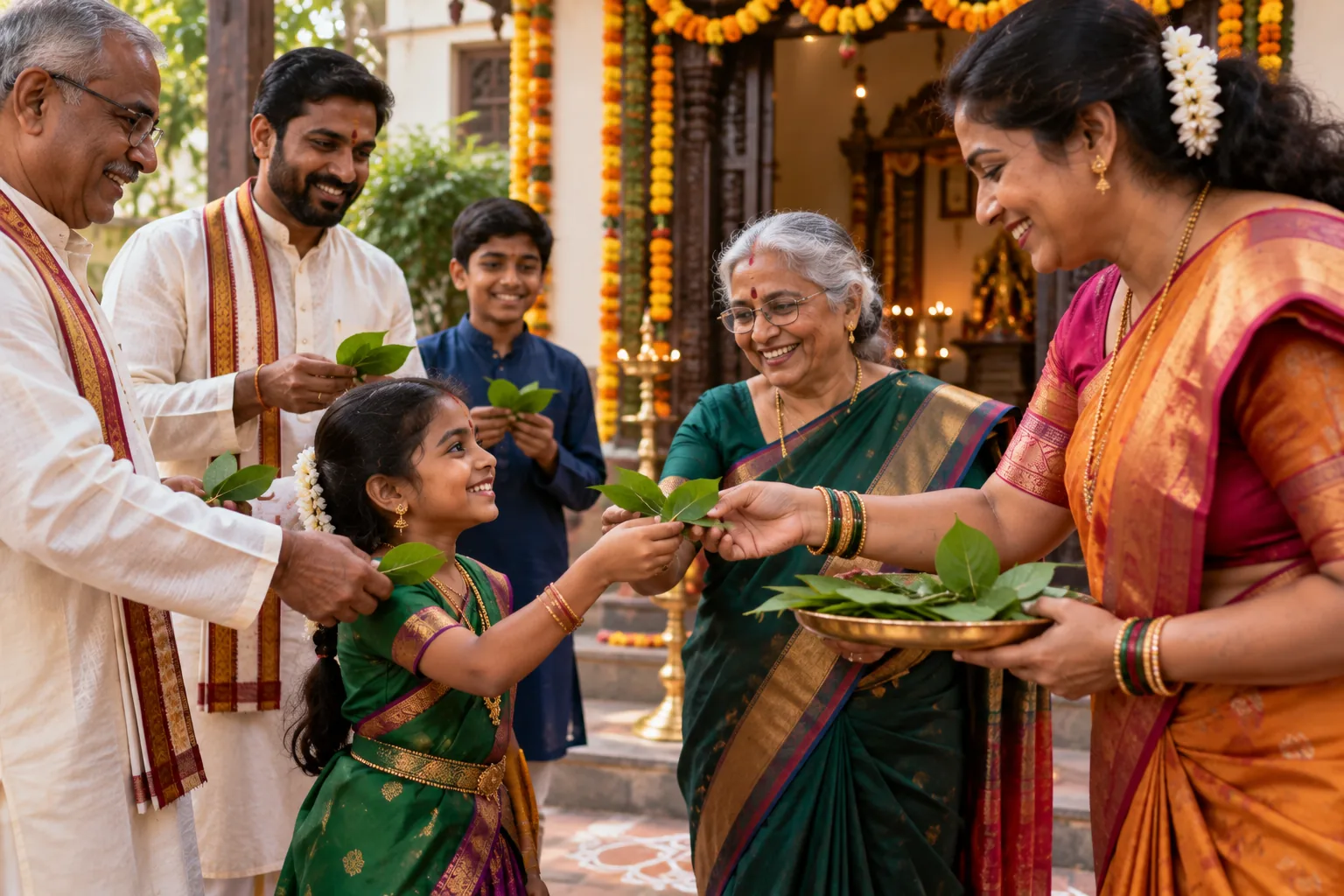
- Sīmollaṅghana, the crossing of the village boundary, and the exchange of āptā leaves as gold with the words sonẽ ghyā, sonyāsārkhe rāhā — take gold, and stay as gold.
- Andhra and Telangana
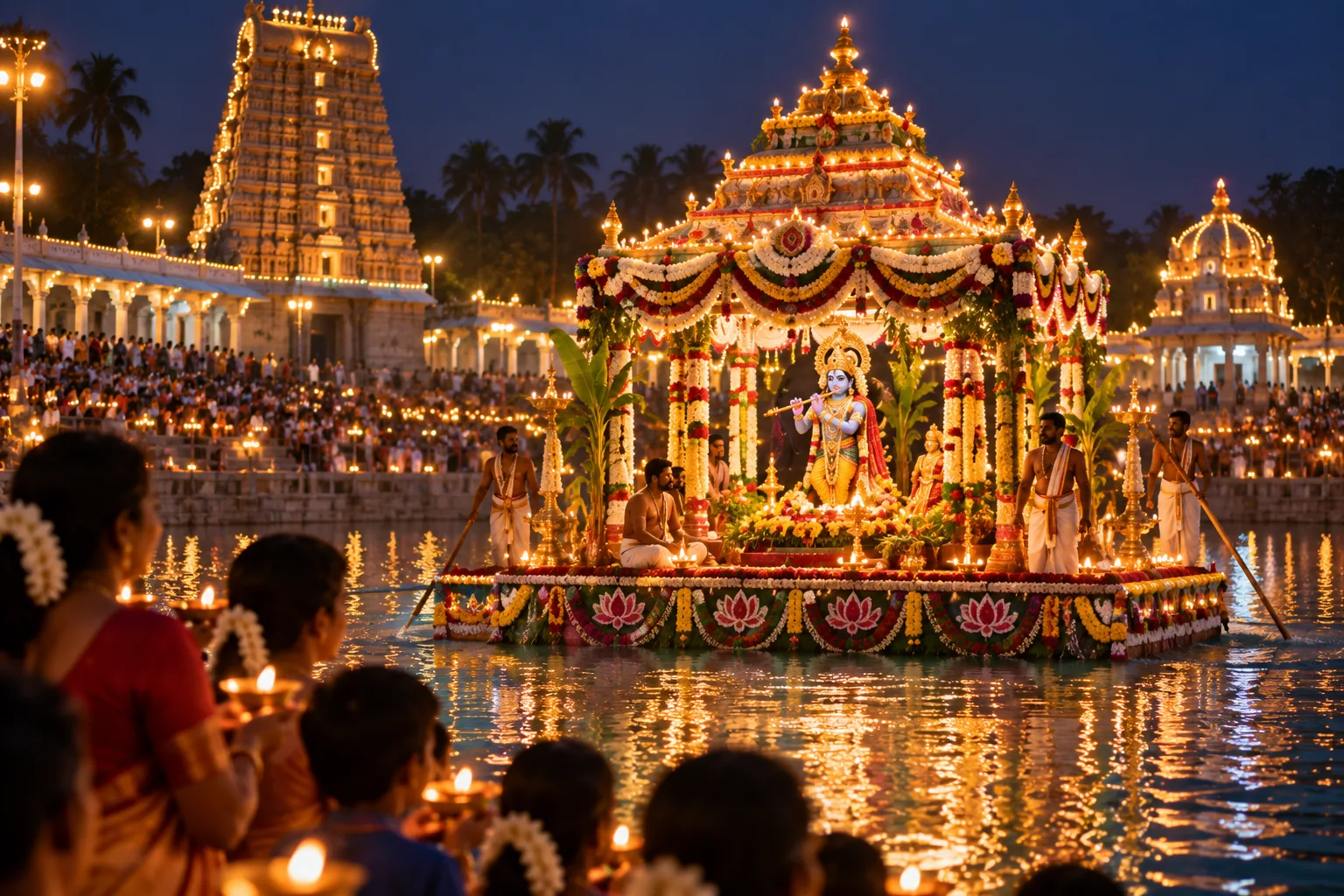
- Jammi (śamī) leaves are exchanged the same way, and at Vijayawada the goddess is taken onto the Kṛṣṇa in a lit float. Vizianagaram keeps the Sirimānu Utsavam for Pyḍithalli Ammavāru, the priest carried at the end of a long wooden pole.
- Himachal — Kullu
- The valley’s Daśarā does not end today, it begins: more than two hundred village gods are carried down in palanquins to the Dhalpur maidān to attend Raghunāth, and it runs a week. Nothing is burnt on this first day.
- Nepal
- The elders mark every younger member of the family on the forehead with a ṭīkā of rice, curd and vermilion and set jamarā behind the ear. The visiting takes days, and the country stops for it.
- Everywhere
- Anything begun today is held to prosper without consulting a muhūrta: a first lesson, a new shop, a journey, a return to an instrument put down years ago.