← All festivals

Epiphany (Three Kings' Day)

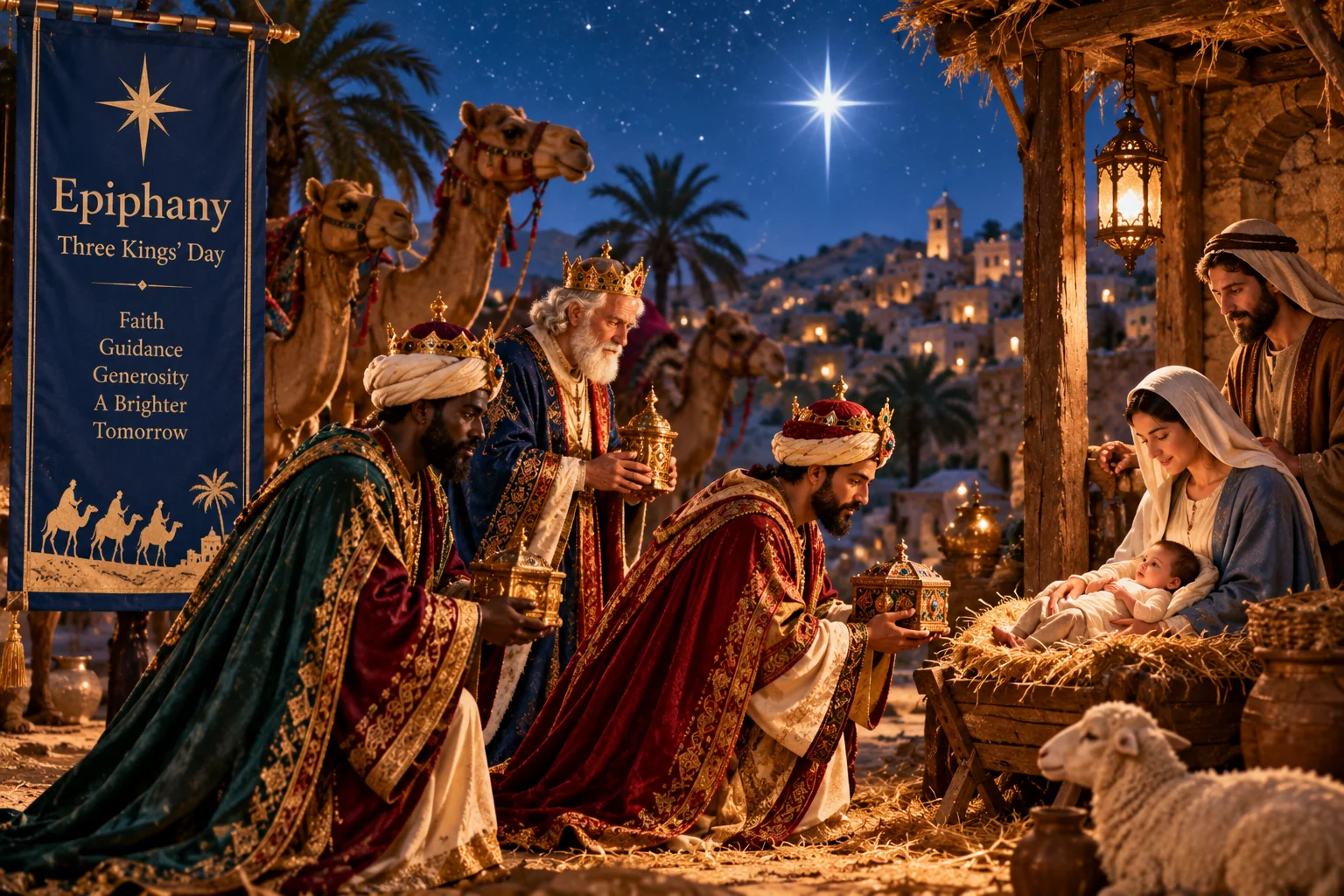
Twelve days after Christmas, the day the magi reached the child. In Spain and Latin America the Three Kings, not Santa, bring the presents; in Germany children chalk C+M+B over the door.

When it falls

6 January, twelve days after Christmas. Eastern churches keep the same date as Theophany, for the baptism in the Jordan rather than the visit of the magi.

The Phala almanac gives the exact day for your own city; the lunar and solar rules above are what it computes from.

The story

The magi followed a star from the east and brought gold, frankincense and myrrh. Epiphany means a showing: the point of the day is that the child was shown to strangers, from outside the people he was born into.

The twelve days between Christmas and today are the reason for Twelfth Night, and in much of the Spanish-speaking world the presents come now, from the three kings, rather than on the 25th.

How the day is kept

  • Children in Spain and Latin America leave shoes out on the night of the 5th and find them filled in the morning; the Reyes parade the night before is the year's largest for them.
  • A ring cake with a figure baked inside — roscón de reyes, galette des rois, king cake — is cut, and whoever finds the figure has an obligation for the year.
  • German-speaking children go door to door as the three kings and chalk C+M+B and the year over the doorway, collecting for charity.

More holy days

The Phala almanac shows this day where it falls for your own city — sunrise, tithi and all five limbs, anywhere on earth. See how the almanac works →