The story
The Bengali calendar was fixed in the reign of Akbar, who wanted a solar year for collecting the land tax that the lunar Islamic year could not give the farmers, and Boiśākh is its first month. The merchants' custom of clearing the year's debts and opening a new ledger (hāl khātā) on the day is the festival's oldest ritual.
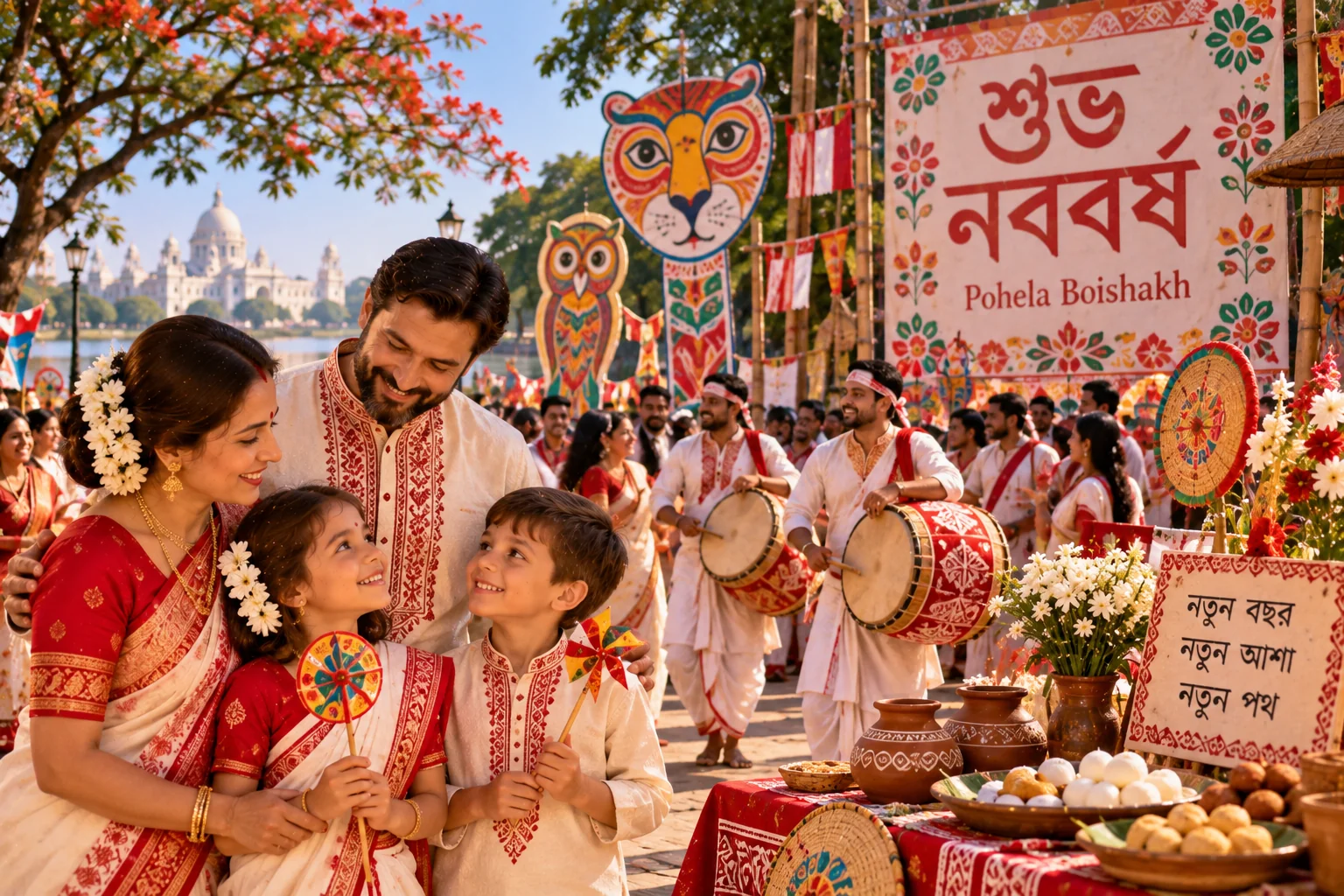
In Dhaka the day is the country's largest secular festival. The Chhāyānaṭ singers greet the dawn under the banyan at Ramna Park with Tagore's Eso he Boiśākh, and the Fine Arts students carry the Maṅgal Śobhājātrā, the procession of huge painted masks and animals, through the streets, a custom of 1989 that UNESCO inscribed in 2016.